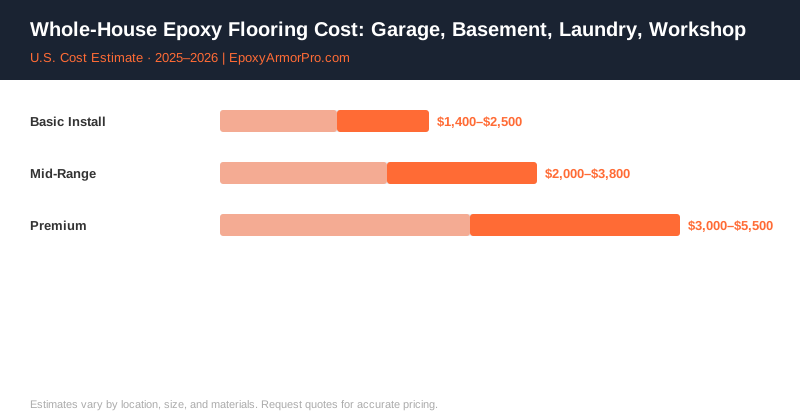
Dave’s full project came in at $8,400. That covered a two-car garage, a 900-square-foot basement, a utility room, and a small workshop off the back of the house. His contractor quoted each space separately, then knocked 12% off the total because he was doing all four at once. That bundled discount is real — and it’s the biggest reason the whole-house approach makes financial sense if you’re planning to coat multiple spaces anyway.
Here’s the full room-by-room cost picture.
Why People Do Whole-House Epoxy Projects
Most homeowners start with one room — usually the garage — then realize two things. First, the floors in the basement and laundry room are the same cracked, dusty concrete that the garage used to be. Second, the mobilization cost (contractor travel, equipment transport, setup, mixing supplies) is largely fixed whether you’re doing 480 square feet or 1,800 square feet.
Doing everything at once spreads that fixed cost across more square footage and typically yields:
- 10–20% contractor discount for bundled work
- One disruption period instead of three separate ones
- Consistent finish across all spaces if you want matching floors
Room-by-Room Cost Breakdown
Two-Car Garage (400–500 sq ft)
The most common starting point. A standard chip/flake epoxy system professionally installed runs:
$1,400–$2,500 for a typical 480-square-foot garage
Most of the cost is prep — diamond grinding the entire surface, patching cracks, and ensuring proper adhesion. Garages also need a UV-stable topcoat if there’s any sun exposure, which adds marginally to material cost. For a full breakdown, see garage floor coating costs.
Full Basement (600–1,200 sq ft)
Basement floors are often larger than people realize. A 1,200-square-foot basement is a substantial project:
$1,800–$5,000 depending on size and system
Basements come with one complication garages don’t: moisture. Ground-level and below-grade concrete often has elevated vapor transmission. Professional installers should test moisture vapor emission rate (MVER) before proceeding. If moisture is high, a moisture-mitigating primer adds $0.50–$1.00/sq ft but is non-negotiable. See basement epoxy flooring cost for the full picture.
Laundry Room (100–200 sq ft)
Small square footage, but doesn’t scale down proportionally in cost. Minimum mobilization charges and the labor of edgework in tight spaces keep the per-square-foot rate higher:
$400–$900 for a typical 150-square-foot laundry room
Laundry rooms benefit most from the bundled approach — adding this to a larger project costs far less than having a contractor make a separate trip for it.
Utility/Mechanical Room (80–150 sq ft)
Same dynamic as the laundry room. Small square footage, high per-square-foot rate when done standalone:
$300–$700 as a standalone project
$200–$400 when bundled into a larger project
Workshop or Studio (200–500 sq ft)
Workshops often have heavier use cases — grinding, welding sparks, chemical spills, heavy equipment. A more durable system may be warranted:
$700–$2,000 for a typical 300-square-foot workshop
If you’re running heavy machinery or using solvents regularly, consider a commercial-grade system with higher chemical resistance. The industrial epoxy flooring cost guide covers higher-grade options.
Total Project Costs by Home Size
| Project Scope | Total Square Footage | Estimated Cost | Per Sq Ft |
|---|---|---|---|
| Garage only | 480 sq ft | $1,400–$2,500 | $2.90–$5.20 |
| Garage + basement | 1,200 sq ft | $3,200–$5,500 | $2.65–$4.60 |
| Garage + basement + laundry | 1,400 sq ft | $3,800–$6,500 | $2.70–$4.65 |
| Full interior + workshop | 1,800 sq ft | $5,000–$9,000 | $2.80–$5.00 |
| Large home, all spaces | 2,400+ sq ft | $7,000–$15,000+ | $2.90–$6.25 |
What Drives the Wide Price Range
Floor Condition
Old homes with decades of cracked, spalled, or patched concrete cost more to prep. A basement with previous moisture damage, efflorescence staining, or multiple old sealers can add $500–$2,000 to the total just in prep work.
System Choice
Not every room needs the same system. A garage that sees daily vehicle traffic and direct sunlight warrants a full chip/flake with polyaspartic topcoat. A laundry room used only for foot traffic can do just fine with a solid-color epoxy system at lower cost. Mixing system levels intelligently saves money without sacrificing performance.
| System Type | Best For | Installed Cost Range |
|---|---|---|
| Solid-color epoxy | Utility rooms, workshops | $2.00–$3.50/sq ft |
| Chip/flake system | Garages, living spaces | $3.00–$5.50/sq ft |
| Metallic decorative | Showroom basements | $5.00–$10.00/sq ft |
| Commercial-grade | Workshops with heavy use | $4.00–$8.00/sq ft |
Access and Layout Complexity
Open-plan basements are fast to grind and coat. Finished basements with walls, columns, bathroom enclosures, and utility runs are much slower. Every obstacle means more edgework, slower equipment movement, and more masking. Budget 20–30% higher for complex layouts.
Regional Labor Rates
A whole-house project in Dallas might run $5,500. The same scope in San Francisco could reach $11,000. According to HomeAdvisor’s 2024 cost data, labor rates for specialty flooring installation vary by up to 60% between markets. Getting local quotes is the only reliable way to budget accurately.
How to Sequence a Multi-Room Project
If you’re doing several rooms, order matters:
- Garage last — or first, if it’s isolated. Since vehicles need to park somewhere, sequencing the garage when you can be without it for 72 hours is key.
- Basement before finishing — if you’re also planning drywall or finishing work, coat the floor first. Contractors won’t risk damaging a freshly coated floor during construction.
- Start with the hardest rooms — rooms with moisture issues or major crack repairs should be first. If problems are discovered, you want maximum time to address them before the project wraps.
Is the Whole-House Approach Worth It?
For most homeowners planning to coat 2 or more spaces in the next 2 years: yes. The bundled discount, single mobilization cost, and consistent finish make it financially smarter than piecemealing the work.
The exception: if your budget is tight, prioritize the garage first. It delivers the most visible transformation, protects the highest-traffic concrete, and adds real resale value that buyers notice immediately.
For everything else — basement, utility room, workshop — do it when the garage project is already planned. The marginal cost of adding rooms is always lower than treating each as a separate project.
Contractor Referral Disclaimer: EpoxyArmorPro is a contractor referral and cost information service, not a licensed flooring contractor. We connect consumers with independent, licensed, and insured contractors. We do not perform any flooring work directly. Cost estimates are averages based on market data and vary by location, project size, materials, and contractor. Always verify contractor licensing and insurance before hiring. Individual quotes may differ from estimates shown.