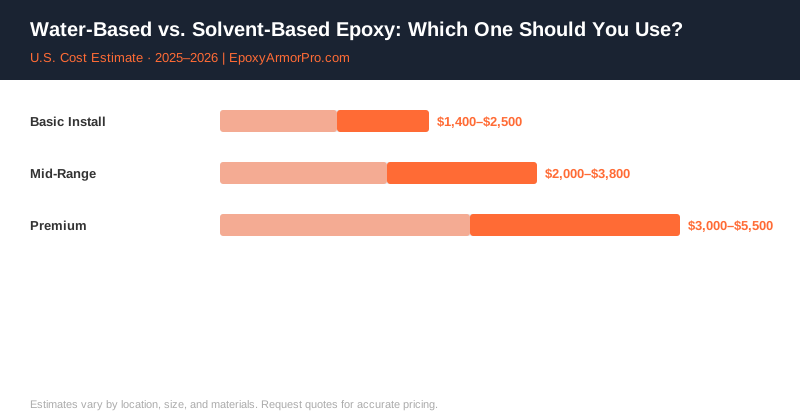
Pull up any DIY epoxy forum and you’ll find the same argument playing out: water-based epoxy vs. solvent-based. Proponents on both sides. Confusion about what actually matters. Let’s settle this with specifics — because the right answer genuinely depends on who’s applying it and what surface they’re coating.
The Chemistry in Plain Terms
Both types are two-part systems: a resin and a hardener that you mix before application. The difference is in the carrier — the liquid medium that keeps the epoxy workable until it cures.
Water-based epoxy uses water as the carrier. As it cures, the water evaporates off. This means a significant portion of what you apply doesn’t stay on the floor — it’s just there to make the product spreadable. Water-based products typically contain 40–55% solids content.
Solvent-based epoxy uses organic solvents as the carrier. Like water-based, the solvent evaporates during cure — but solvent-based products generally contain 60–70% solids and maintain chemical bonding properties that water-based formulas don’t fully replicate.
100% solids epoxy is a category of its own — it contains no carrier at all. Nothing evaporates: every drop that goes on stays on. This is what professional installers use. It’s not solvent-based, and it’s not water-based — it’s a different product class.
Fumes: The Issue That Drives Most People to Water-Based
Solvent-based epoxy fumes are no joke. The volatile organic compounds (VOCs) released during application require a respirator with organic vapor cartridges, ventilation, and keeping people and pets out of the space for 24–48 hours during cure. In enclosed spaces like garages and basements, solvent fumes accumulate fast.
Water-based epoxy is significantly lower in VOCs. Most products are low-odor enough to apply without a respirator in a ventilated space, and the smell dissipates within hours rather than days.
This makes water-based formulas genuinely more practical for DIY residential applications — especially in attached garages or basements connected to living spaces.
| Factor | Water-Based Epoxy | Solvent-Based Epoxy | 100% Solids Epoxy |
|---|---|---|---|
| Solids content | 40–55% | 60–70% | 100% |
| VOC level | Low | High | Very low to low |
| Dry film thickness (per coat) | 2–5 mils | 4–8 mils | 8–20 mils |
| Cure time (walk-on) | 8–16 hours | 12–24 hours | 12–24 hours |
| Chemical resistance | Moderate | Good | Excellent |
| Best for | DIY light-duty | Commercial interiors | Professional installs |
| Material cost (per sq ft) | $0.30–$0.80 | $0.60–$1.20 | $0.75–$2.00 |
Solids Content: Why It Actually Matters
Here’s the math that changes how you see this comparison. If you apply water-based epoxy at 40% solids content to a 10-mil wet film thickness, you end up with 4 mils of dry film. If you apply solvent-based epoxy at 65% solids content to the same 10-mil wet film, you end up with 6.5 mils of dry film.
A professional installer using 100% solids epoxy applies one coat and gets 10–15 mils of dry film.
More dry film thickness means:
- More impact resistance (things dropped on the floor don’t chip through to the concrete)
- More abrasion resistance (surface lasts longer under foot and vehicle traffic)
- Better chemical resistance (thicker barrier between the concrete and the chemical)
- Longer overall coating life before recoating is needed
According to the Concrete Coating Association, coatings with 8+ mils dry film thickness demonstrate significantly longer service lives than thinner applications — a finding consistent with ASTM testing standards for flooring systems.
Application: What Each System Demands
Water-based epoxy is genuinely forgiving to apply. The longer open time (30–60 minutes before it becomes tacky) gives you time to roll a large area without rushing. Cleanup is soap and water. Mistakes — bubbles, lap lines — are more forgiving in a lower-viscosity formula. It’s the right choice for a first-time DIYer willing to live with a lighter-duty result.
Solvent-based epoxy demands more technique. The open time is shorter, the fumes require respiratory protection, and cleanup requires solvent (acetone or xylene). It builds more film per coat, but the application process isn’t forgiving for beginners. Lap lines in solvent-based epoxy are obvious and permanent.
100% solids epoxy is the most demanding to apply. It’s extremely viscous — think peanut butter — requires a spiked roller for bubble release, and has a very short pot life (30–60 minutes total working time for the mixed batch). This is not a product for first-time applicators. The professional results come from professional technique.
Cure Time and Temperature Sensitivity
Water-based epoxy is more temperature-sensitive. Application below 55°F causes poor film formation. Above 90°F, the cure accelerates and workability drops. The sweet spot is 60–80°F.
Solvent-based systems are slightly more tolerant of temperature extremes. 100% solids systems are the most temperature-sensitive — many require surface temperatures above 60°F and air temperatures below 95°F for proper cure chemistry.
All epoxy systems need the surface moisture content to be below 4–5% for reliable adhesion. If you’re working with a slab that’s been rained on or has moisture issues, wait. Application over a damp slab causes adhesion failure regardless of which epoxy type you use.
The DIY vs. Professional Decision
For DIY applications, water-based epoxy is the practical choice: safer to apply, easier to work with, forgiving of imperfect technique. Accept that you’re getting a light-duty coating and prep your surface properly — acid etch at minimum, diamond grind if you can rent the equipment.
For professional installations, 100% solids epoxy is the standard. It’s what separates a floor that lasts 15 years from one that needs refreshing in five. Read about what professional prep looks like before comparing quotes — the prep is often the entire story.
Solvent-based epoxy occupies a middle ground that’s somewhat less relevant today. As 100% solids products have become more accessible and water-based formulas have improved, solvent-based has lost its position as the professional standard.
Contractor Referral Disclaimer: EpoxyArmorPro is a contractor referral and cost information service, not a licensed flooring contractor. We connect consumers with independent, licensed, and insured contractors. We do not perform any flooring work directly. Cost estimates are averages based on market data and vary by location, project size, materials, and contractor. Always verify contractor licensing and insurance before hiring. Individual quotes may differ from estimates shown.