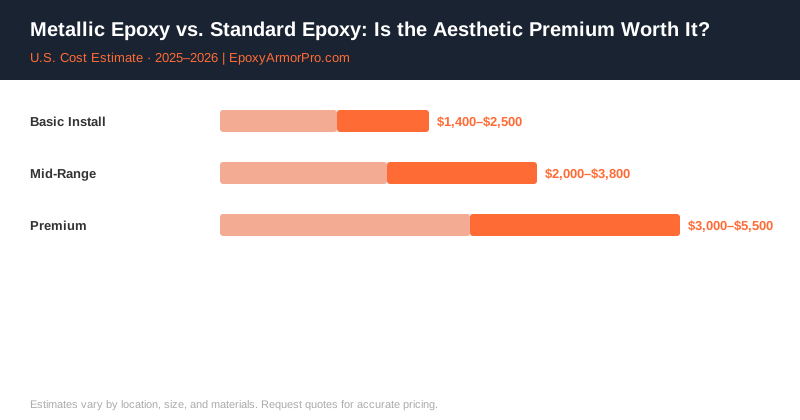
Scroll through any epoxy flooring Instagram or contractor portfolio and the metallic floors stop you cold. Swirling three-dimensional color waves, deep liquid shimmer, the kind of floor that looks like it belongs in a sports car showroom or a luxury commercial space. Then you get the quote and see that it costs $2–$5 more per square foot than the standard solid-color flake system. For a two-car garage, that’s $900–$2,500 more.
Is it worth it? That depends entirely on what you’re trying to accomplish.
What Makes Metallic Epoxy Different
Standard epoxy — whether solid color, full decorative flake, or quartz broadcast — is an opaque system. You lay down a color coat, broadcast your aggregates or leave it solid, and topcoat. The result looks great. The surface color is uniform and consistent.
Metallic epoxy works differently. The system uses ultra-fine metallic pigment powders (typically mica-based) suspended in a clear or lightly pigmented epoxy base. When applied with specific techniques — back-rolling, blowing with compressed air, dragging with tools — the metallic particles move and orient in three-dimensional patterns that create depth and movement. The final floor looks genuinely different from every angle.
The visual effect can’t be replicated with paint or simpler coatings. That’s not marketing — it’s chemistry and technique. But it’s also not DIY territory.
Cost Comparison
Metallic epoxy commands a premium at both the material and labor levels. The pigment powders cost more than broadcast flake aggregates. And the installation demands far more technique — errors in metallic application are obvious, permanent, and expensive to correct.
According to Angi’s 2024 national average data, professional epoxy installation ranges from $3 to $12 per square foot depending on system complexity.
| System | Cost (per sq ft) | 500 sq ft Garage | Typical Lifespan |
|---|---|---|---|
| Solid-color epoxy (one coat) | $3–$5 | $1,500–$2,500 | 8–12 years |
| Decorative flake system | $5–$7 | $2,500–$3,500 | 10–15 years |
| Quartz broadcast system | $5–$8 | $2,500–$4,000 | 12–18 years |
| Metallic epoxy (single-layer) | $7–$10 | $3,500–$5,000 | 10–15 years |
| Metallic epoxy (multi-layer) | $10–$14 | $5,000–$7,000 | 12–18 years |
Where Metallic Epoxy Makes Sense
Metallic epoxy isn’t a better floor — it’s a more dramatic floor. The base epoxy performance (chemical resistance, hardness, adhesion) is essentially the same between metallic and standard systems. You’re paying the premium entirely for aesthetics.
That’s a reasonable trade if your use case calls for it:
Showrooms and commercial spaces: Car dealerships, retail stores, fitness studios, restaurant interiors — spaces where the floor is part of the brand impression. Metallic floors read as high-end commercial design and hold up to customer scrutiny in a way that solid-color epoxy doesn’t.
High-end home garages: If you’re building a car collection garage or a finished space that’s meant to be impressive — think polished vehicles, wall displays, climate control — metallic epoxy matches the investment level of everything else in the space.
Entertainment spaces and man caves: Finished garages or basements that double as entertainment areas benefit from flooring that looks like a design choice rather than a utilitarian coating.
Showpiece basements: Open-concept basement renovations where the floor is visually prominent and the space is used for hosting.
Where Metallic Doesn’t Make Sense
Metallic epoxy is a statement floor. In spaces where the floor is purely functional, the visual premium is wasted money.
Standard working garages: If your garage is where you change oil, park three cars, and store bikes and tools — a decorative flake system does everything you need at $2–$4 per square foot less. The floor will get scratched by floor jacks, tire marks, and daily use anyway. Spend the premium where it shows.
Utility basements and storage spaces: Spending $5,000 on a metallic floor in a space used for HVAC equipment and seasonal storage doesn’t make financial sense.
Spaces with very heavy abrasion: Metallic epoxy can scratch when the topcoat wears. In a high-abrasion commercial setting with heavy foot traffic (grocery stores, industrial facilities), a quartz or full-flake broadcast system is more appropriate — the aggregate provides sustained slip resistance and hides surface wear that metallic doesn’t.
The Installation Skill Gap
This is the most important practical difference between metallic and standard epoxy. Standard decorative flake installation is learnable and somewhat forgiving — an experienced installer can train a crew member to broadcast flake reasonably well.
Metallic epoxy application is not forgiving. The metallic pigments move based on how much product is on the floor, the ambient temperature, how fast you roll, how much air pressure you use to manipulate patterns. Every batch of metallic floor looks unique — that’s the appeal — but an inexperienced installer produces chaos, not art.
Specific problems from inexperienced metallic installs:
- Fisheyeing: Silicone contamination causes the metallic pigment to crater. The floor looks like it has pock marks.
- Pooling: Over-application in one area creates a thick pool of metallic that looks radically different from the rest of the floor.
- Muddy color mixing: Too much manipulation of wet layers blends the colors into brown.
- Roller marks: Improper rolling technique leaves linear roller marks that catch the light.
Maintenance Differences
Once installed, metallic and standard epoxy maintain similarly. Sweep and mop with a neutral cleaner. The polyaspartic topcoat on both systems handles chemical spills the same way. The main difference: scratches on a metallic floor are more visually noticeable because the floor’s visual interest depends on its pristine surface.
Avoid dragging metal objects across metallic floors. Use mats or pads under equipment with metal feet. When the topcoat eventually dulls after 8–12 years, a recoat restores the surface for roughly $1–$3 per square foot.
The Decision
Standard decorative flake epoxy is the better value for most homeowners. It looks great, performs excellently, and costs less. Metallic epoxy is the right choice when the space warrants a showpiece floor and you’re willing to invest in a contractor with genuine metallic installation experience.
For cost context on the full range of garage epoxy options, the cost factors guide breaks down every variable in the pricing equation.
Contractor Referral Disclaimer: EpoxyArmorPro is a contractor referral and cost information service, not a licensed flooring contractor. We connect consumers with independent, licensed, and insured contractors. We do not perform any flooring work directly. Cost estimates are averages based on market data and vary by location, project size, materials, and contractor. Always verify contractor licensing and insurance before hiring. Individual quotes may differ from estimates shown.