Most man caves start the same way: a bare concrete basement floor, a used couch, and a 65-inch TV on a folding table. The floor is always the last thing that gets addressed — and it shouldn’t be. It’s the biggest visual impact per dollar in the whole room.
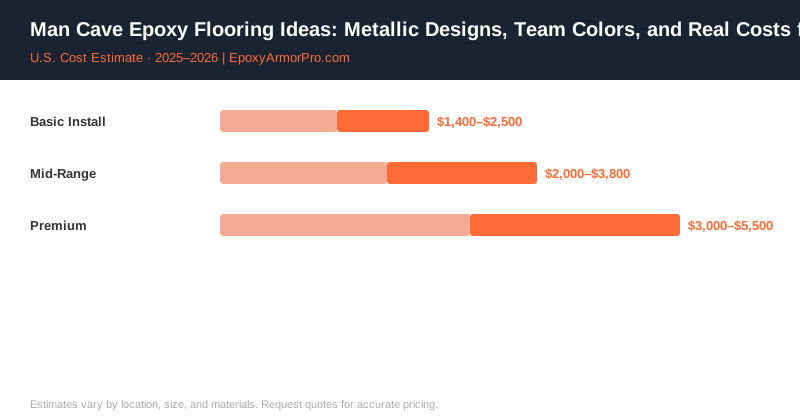
A metallic epoxy floor in a 500 sq ft man cave runs $2,500–$4,500 installed. That same space with a custom team color chip system: $1,800–$3,500. Either option transforms the room from “unfinished basement” to “intentional space.” Here’s how to think about the options, what they cost, and what the bar area requires.
The Visual Options: What’s Actually Available
Metallic Epoxy Systems
Metallic epoxy is what people are sharing on social media. The three-dimensional, flowing cloud-like patterns in gunmetal, bronze, copper, pearl, or custom color combinations. No two floors look identical — the contractor manipulates the metallic pigment in the wet epoxy using squeegees, blowers, and deliberate technique to create organic patterns.
The base chemistry: metallic epoxy uses fine metallic pigment suspended in 100% solids epoxy. The pigments are applied either mixed into the basecoat or broadcast on top of a wet basecoat, then manipulated before the clear polyaspartic or urethane topcoat locks in the design.
Popular metallic combinations for man caves:
- Gunmetal + silver: Industrial aesthetic, pairs with exposed ductwork and dark walls
- Bronze + black: Rich and dramatic, works in whiskey-bar and cigar-lounge aesthetics
- Blue + silver: Popular team color base — works for Navy, Cowboys, Patriots color schemes
- Copper + black: Warm and earthy, works with leather furniture
- Pearl + white: Bright, modern, works in golf simulator or sports bar setups
Color Flake / Chip Systems (Team Colors)
The most popular man cave floor choice isn’t metallic — it’s full-broadcast color flake in team colors. A Dallas Cowboys fan in Dallas, a Packers bar in Wisconsin, a Cubs room in Chicago. Color chips are available in every NFL, NBA, MLB, and NCAA color combination through specialty coating suppliers.
The process: a base coat is applied in a neutral color, then vinyl color chips are broadcast heavily into the wet coat until the surface is fully covered. A clear topcoat locks them in. The result is a textured, multi-color floor that looks intentional and hides scuffs and wear extremely well.
Custom team color chip blends typically add $0.25–$0.50 per square foot over standard chip blends. For a 500 sq ft floor, that’s $125–$250 extra for the custom color — completely reasonable for the effect.
Solid Color with Custom Logo Inlay
The premium man cave move: a solid color epoxy floor with a custom logo, team emblem, or graphic inlay. This requires a stencil cut by a sign shop or vinyl cutter, applied to the cured basecoat, then a contrasting color coat over the stencil area. When the stencil lifts, the design is embedded in the floor under the clear topcoat.
Logo inlays add $200–$800 depending on size and complexity, on top of the standard floor cost. A Cowboys star at 36" diameter runs about $350–$500 as an add-on. A full team helmet at 48" is $500–$800.
Cost Breakdown for Man Cave Spaces
| System | 400 sq ft | 500 sq ft | 600 sq ft |
|---|---|---|---|
| Standard solid color (2-coat) | $1,200–$2,400 | $1,500–$3,000 | $1,800–$3,600 |
| Full-broadcast color flake | $1,600–$3,200 | $2,000–$4,000 | $2,400–$4,800 |
| Metallic epoxy + clear topcoat | $2,000–$4,400 | $2,500–$5,500 | $3,000–$6,600 |
| Logo/graphic inlay (add-on) | +$200–$800 | +$200–$800 | +$200–$800 |
| Moisture vapor barrier (add-on) | +$200–$400 | +$250–$500 | +$300–$600 |
According to the Concrete Network, decorative basement epoxy averages $3–$7 per square foot installed for standard systems and $5–$12 for metallic systems. The basement epoxy cost guide has a full breakdown of everything that affects pricing in below-grade spaces.
The Bar Area: What It Requires Differently
If your man cave has a wet bar — and the best ones do — that zone needs specific attention in the flooring spec.
Moisture exposure: Bar areas have more water contact than the rest of the space. Sink splash, glass washing, ice bin drainage, and condensation from cold bottles all land on this floor section. A moisture vapor barrier primer is especially important under bar areas.
Chemical exposure: Beer, wine, spirits, and cocktail ingredients are all mildly acidic and can stain or etch an under-specified floor over time. Standard 100% solids epoxy handles alcohol and typical bar spills well when topcoated properly. For bars that serve craft beer or sour ales (highly acidic), specify a slightly heavier build coat or polyaspartic topcoat with demonstrated chemical resistance.
Anti-slip is mandatory: Behind the bar is a slip hazard. Wet floors, fast-moving bartenders, and hard shoes. Specify anti-slip aluminum oxide broadcast in the bar area specifically — even if the main room has a smooth gloss finish for aesthetics.
The drain zone: A dedicated floor drain behind the bar requires the same detail work as any commercial application — polyurea-filled joint at the drain collar, careful coating around the flange, and proper slope toward the drain.
Basement-Specific Considerations
Man cave floors are almost always in a finished or semi-finished basement, which means moisture vapor emission is the biggest risk factor. According to the Portland Cement Association, below-grade concrete slabs typically have higher moisture vapor emission than above-grade or on-grade slabs, due to groundwater proximity and limited drying pathways.
Don’t skip the moisture test. A calcium chloride test costs $25–$75 and takes 72 hours. The consequence of skipping it and finding out you had high vapor emission after installation: delaminating metallic epoxy bubbling up from below, with a complete redo on the table.
Moisture vapor barrier primer adds $0.50–$1.00 per square foot. On a 500 sq ft floor, that’s $250–$500. You spent $3,500 on the decorative system — protect it.
Also consider the basement epoxy guide for full details on dealing with below-grade slabs before any decorative coating.
Working With the Space You Have
A few practical design notes for common man cave configurations:
Open floor plan: Full-broadcast metallic or flake with no interruptions looks cleanest. Avoid color zoning in open plans — it rarely reads as intentional without very careful design.
Home theater area: Dark solid color under the seating arrangement, lighter flake or metallic in the bar and standing areas. Helps define zones without physical dividers.
Gaming/billiard area: Billiard tables have leveling feet that require stable surface contact. Epoxy is ideal — solid, non-compressible, easy to clean chalk. Anti-slip texture can be applied more lightly in the billiard area without safety risk.
Multi-zone spaces: For spaces over 600 sq ft with distinct bar, gaming, and entertainment zones, coordinate the floor design with your overall room layout plan before coating. Moving furniture zones after the fact can create visual discord with directional metallic patterns.
Contractor Referral Disclaimer: EpoxyArmorPro is a contractor referral and cost information service, not a licensed flooring contractor. We connect consumers with independent, licensed, and insured contractors. We do not perform any flooring work directly. Cost estimates are averages based on market data and vary by location, project size, materials, and contractor. Always verify contractor licensing and insurance before hiring. Individual quotes may differ from estimates shown.