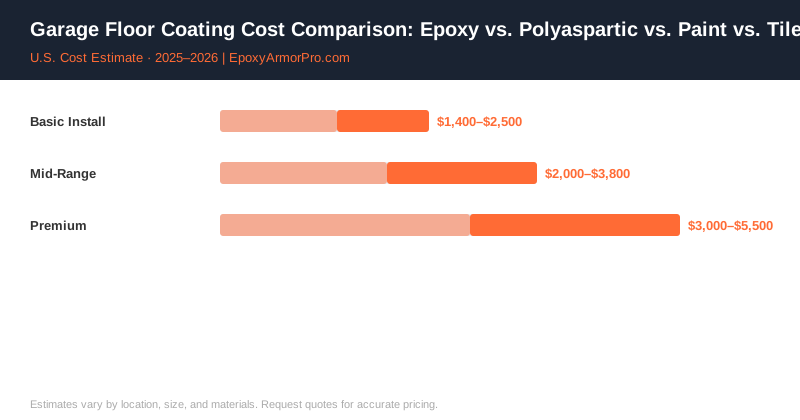
Most homeowners make the garage floor decision backwards. They pick a product they’ve heard of, get one quote, and sign. Then, three years later, they’re watching it peel and wondering where they went wrong. The smarter move is to compare all your real options on the same sheet of paper — cost, durability, maintenance — before anyone shows up with a sample board.
Here’s that comparison, built around a 480-square-foot two-car garage. Every number reflects real contractor and retail pricing as of 2025.
Your Five Main Options
1. Epoxy Coating (Chip/Flake System)
This is what most people picture when they say “garage floor coating.” A professional chip/flake epoxy system includes a primer, a pigmented base coat, broadcast vinyl flakes for texture and appearance, and a clear polyaspartic or urethane topcoat.
480 sq ft professional install: $1,400–$2,400
Per square foot: $2.90–$5.00
Lifespan: 10–20 years with proper prep
It’s the most popular option for a reason. Chip/flake systems hide dirt beautifully, provide excellent slip resistance from the texture, and hold up to vehicle traffic, chemicals, and hot tire pickup better than anything you’ll apply with a roller from a big-box kit.
The catch: prep is everything. Diamond grinding is non-negotiable. A properly prepped and professionally installed chip/flake floor will outlast most of the alternatives. A poorly prepped one starts delaminating within two years. See how to fix garage floor cracks before coating for the prep steps that matter most.
2. Polyaspartic Coating
Polyaspartic is a newer chemistry — faster cure, higher UV stability, and slightly harder finished surface than standard epoxy. Many contractors now offer a polyaspartic-only system or a hybrid (epoxy base + polyaspartic topcoat).
480 sq ft professional install: $2,000–$3,200
Per square foot: $4.15–$6.65
Lifespan: 15–25 years
The main advantage over epoxy: full cure in 24 hours instead of 72. If your garage can’t be out of service for a weekend, polyaspartic wins. It’s also slightly more resistant to UV yellowing, which matters for garages with significant sun exposure.
The main disadvantage: cost. You’re paying a 30–50% premium. And the faster working time means application requires experienced hands — mistakes can’t be corrected the same way. For the full head-to-head, read epoxy vs. polyaspartic.
3. Concrete Sealer
A penetrating sealer or topical acrylic sealer isn’t really a coating in the same sense — it’s moisture protection and dust reduction, not a decorative finish. But it’s worth including because many homeowners consider it as a budget option.
480 sq ft DIY: $80–$200
480 sq ft professional: $400–$800
Per square foot (pro): $0.85–$1.65
Lifespan: 2–5 years before reapplication
Sealers don’t provide the chemical resistance, impact resistance, or visual transformation of epoxy. They’re appropriate for utility floors where you genuinely just want dust control. For a garage where you park vehicles, they’re undersized for the job.
4. Garage Floor Paint (1-Part Epoxy Paint)
Marketed heavily at big-box stores, “epoxy paint” is actually a latex or oil-based paint with a small percentage of epoxy resin mixed in. It’s not the same product that professionals install.
480 sq ft DIY kit: $150–$350
Per square foot: $0.31–$0.73
Lifespan: 1–3 years
The price is appealing. The results, less so. According to Concrete Network, DIY big-box epoxy kits fail most commonly due to inadequate surface prep — specifically, not using acid etching properly or applying over concrete that’s still outgassing moisture. The products themselves also have much lower solids content (40–60%) compared to professional coatings.
If you go this route, the floor will look good for a year or two, then start flaking. You’ll need to strip it before applying anything over it. Factor that into your true cost.
5. Interlocking Garage Floor Tiles
Polypropylene or PVC interlocking tiles are a completely different approach — no prep, no cure time, removable and reusable. They sit on top of the concrete rather than bonding to it.
480 sq ft installed: $1,200–$3,000
Per square foot: $2.50–$6.25
Lifespan: 10–20 years
The real advantage: zero concrete prep required, and you can take them with you when you move. The disadvantages: debris gets under the tiles (especially near drains), they can shift under vehicle traffic, and the look is clearly “tiles” not a seamless floor. If your concrete has serious moisture problems that would cause epoxy to fail, tiles are a legitimate workaround.
Side-by-Side Cost Table
| Option | 480 Sq Ft Cost | Per Sq Ft | DIY Option | Lifespan |
|---|---|---|---|---|
| Chip/flake epoxy (pro) | $1,400–$2,400 | $2.90–$5.00 | Partial | 10–20 yrs |
| Polyaspartic (pro) | $2,000–$3,200 | $4.15–$6.65 | No | 15–25 yrs |
| Concrete sealer (pro) | $400–$800 | $0.85–$1.65 | Yes | 2–5 yrs |
| Big-box epoxy paint (DIY) | $150–$350 | $0.31–$0.73 | Yes | 1–3 yrs |
| Interlocking tiles | $1,200–$3,000 | $2.50–$6.25 | Yes | 10–20 yrs |
10-Year Total Cost of Ownership
Up-front price is only part of the picture. A $200 paint job you’re redoing every 2 years costs $1,000 over 10 years — plus your time. A $2,000 epoxy floor that lasts 15 years costs $133/year.
| Option | Year 1 Cost | Reapplication Cycle | 10-Year Total |
|---|---|---|---|
| Pro chip/flake epoxy | $1,800 | None in 10 yrs | $1,800 |
| Pro polyaspartic | $2,600 | None in 10 yrs | $2,600 |
| Big-box epoxy paint | $250 | Every 2–3 yrs | $750–$1,250 |
| Concrete sealer | $600 | Every 3–4 yrs | $1,200–$1,800 |
| Interlocking tiles | $2,000 | Replace damaged tiles | $2,100–$2,400 |
What the Numbers Don’t Show
Cost tables can’t capture the difference between a floor that looks showroom-perfect for 15 years and one that you’re embarrassed to show visitors. They also can’t capture the frustration of stripping a failed coating before you can recoat.
The question worth asking before you choose is: “How is this contractor prepping my floor?” Diamond grinding — not acid etching, not sweeping — is the prep method that determines whether any coating bonds properly. According to the International Concrete Repair Institute, mechanical surface preparation consistently outperforms chemical etching for coating adhesion. If a contractor doesn’t mention their grinding equipment, ask directly.
Contractor Referral Disclaimer: EpoxyArmorPro is a contractor referral and cost information service, not a licensed flooring contractor. We connect consumers with independent, licensed, and insured contractors. We do not perform any flooring work directly. Cost estimates are averages based on market data and vary by location, project size, materials, and contractor. Always verify contractor licensing and insurance before hiring. Individual quotes may differ from estimates shown.