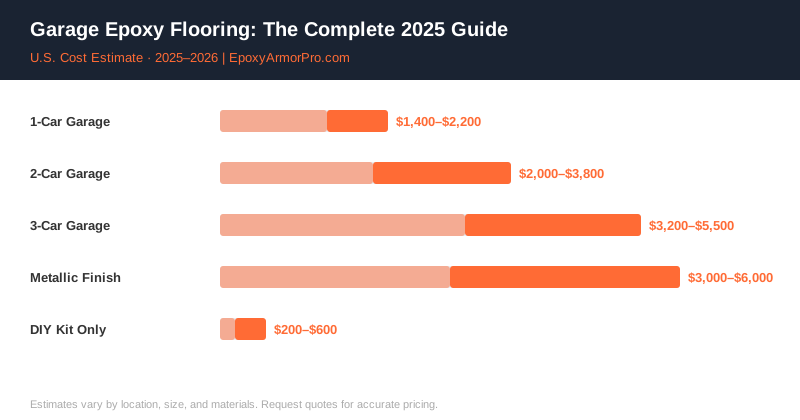
The average 2-car garage epoxy job runs $1,200 to $3,600 installed. That’s a wide range — and every dollar of that gap comes down to choices you make before anyone mixes a single drop of coating. Understanding what drives those costs, and what separates a floor that lasts 20 years from one that peels in 18 months, is exactly what this guide covers.
What Epoxy Actually Does to Your Concrete
Bare concrete is porous. It absorbs oil, salt, moisture, and everything else your car tracks in. Epoxy doesn’t just sit on top — it bonds chemically into those pores, creating a sealed surface that’s dramatically harder to stain, crack, or wear through.
A properly installed epoxy system typically consists of three layers: a penetrating primer, a color coat (with or without decorative flakes), and a clear topcoat. Skip any of those steps and you’re shortchanging the durability of the whole system.
Coating Types: What the Options Actually Mean
100% solid epoxy is the professional standard. It contains no solvents, so virtually all of the material becomes part of the finished coat. It’s thicker, more durable, and more resistant to hot tire pickup than the alternatives. Contractors almost always use this.
Water-based epoxy is what you find in most big-box DIY kits. It’s thinner, easier to apply, and cheaper — but it wears faster and is far more prone to peeling, especially if surface prep wasn’t perfect.
Polyaspartic topcoats are increasingly common as a finishing layer over epoxy primer. They cure faster and hold up better to UV. For a full comparison of epoxy vs. polyaspartic systems, check out our Epoxy vs. Polyaspartic guide.
| Coating Type | Cost per Sq Ft (installed) | Best For |
|---|---|---|
| Water-based epoxy (DIY kit) | $0.50–$2.00 (materials only) | Small sheds, light-use spaces |
| 100% solid epoxy (pro) | $3–$7 | Standard garage floors |
| Epoxy + polyaspartic topcoat | $5–$12 | High-traffic, showroom finish |
| Metallic epoxy system | $8–$15 | Premium aesthetic, custom look |
1-Day vs. Multi-Day Installs: What’s the Difference?
You’ve probably seen contractors advertise “1-day garage floors.” That’s not a gimmick — it’s a real distinction in how modern coating systems work.
Traditional epoxy installs require 24–72 hours between the base coat and topcoat, meaning your car stays out for 3–5 days minimum. For most homeowners, that’s manageable.
Polyaspartic-over-epoxy systems let experienced contractors return-to-service the floor in as little as 24 hours because the polyaspartic topcoat cures in 1–4 hours. That’s why single-day jobs are possible — but only when the contractor is using the right products.
Surface Prep: The Step That Determines Everything
This is where most DIY epoxy projects fail. And it’s the single biggest reason professional installs cost more — because proper prep is labor-intensive.
According to the Concrete Network, inadequate surface preparation is responsible for over 80% of epoxy coating failures. The concrete has to be:
- Ground or shot-blasted — not acid-etched. Diamond grinding opens the surface profile consistently. Acid etching is cheaper but leaves an inconsistent profile that leads to adhesion failures.
- Moisture-tested — a calcium chloride or relative humidity test confirms the slab isn’t too wet. (Moisture is especially critical in basements — see our basement epoxy guide for details.)
- Crack-repaired — hairline cracks get filled with polyurea filler; structural cracks need different treatment. Don’t skip this step or you’ll see them telegraph right through the coating. Our crack repair guide walks through the full process.
- Cleaned of contamination — oil stains, paint overspray, and old coatings all need to go. Professionals use degreasers and, when needed, mechanical removal.
A contractor who shows up with a bucket of acid and a mop is not doing it right.
DIY Kit vs. Hiring a Contractor: An Honest Comparison
DIY kits — typically $100–$400 for a 2-car garage — can look great for 1–3 years if you prep meticulously and get lucky with conditions. But they use thinner coatings, and most homeowners underestimate how much prep work is actually needed.
Professional installs cost more upfront but the material thickness is 3–10x greater and the prep is done correctly. HomeAdvisor’s 2024 national data puts professional epoxy garage floors at an average of $2,600 for a standard 2-car garage — with the range running $1,200 to $6,000 depending on coating choice and condition.
If you’re putting in a floor you want to last a decade and look good doing it, professional installation is the better investment for most homeowners.
What to Ask a Contractor Before Signing
- What prep method do you use — diamond grinding or acid etch?
- Will you test for moisture?
- What’s the solids content of the epoxy you’re using?
- How thick will the finished system be (in mils)?
- What’s the warranty, and does it cover peeling and hot tire pickup?
A contractor who can answer all five clearly is one you can trust. One who gets vague or dismissive on any of them — keep looking.
Contractor Referral Disclaimer: EpoxyArmorPro is a contractor referral and cost information service, not a licensed flooring contractor. We connect consumers with independent, licensed, and insured contractors. We do not perform any flooring work directly. Cost estimates are averages based on market data and vary by location, project size, materials, and contractor. Always verify contractor licensing and insurance before hiring. Individual quotes may differ from estimates shown.