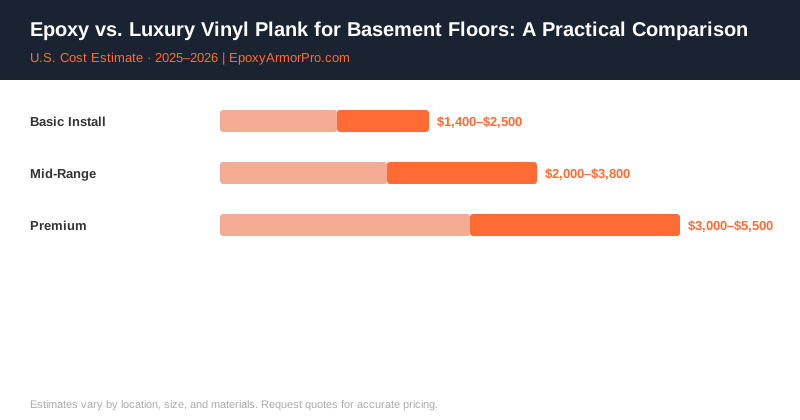
You’re finishing a basement. You’ve narrowed it down to epoxy coating or luxury vinyl plank — two options that both claim to be waterproof, both look great in photos, and both come with contractors who’ll tell you theirs is the right choice. The difference is real, and it comes down to what you’re actually trying to accomplish down there.
The Core Difference
Epoxy seals the concrete slab. It’s a coating that chemically bonds to the surface, creating a hard, non-porous film. Moisture vapor coming up through the slab gets stopped at the surface. There are no seams, no gaps, no place for water to get through.
Luxury vinyl plank (LVP) floats on top of the concrete (or a thin foam underlayment). It doesn’t bond to the slab. LVP is water-resistant, not waterproof — water that gets on top of the floor is fine. Water that gets under the floor is a problem. And in basements, water frequently comes from below.
That distinction matters more in basements than anywhere else in a house.
Cost Comparison
LVP materials have dropped significantly in price over the last few years. A decent 6mm to 8mm LVP plank runs $1.50 to $4.00 per square foot at the material level. Professional installation adds $1 to $3 per square foot on top of that.
Epoxy runs higher on installation because of the surface prep required — diamond grinding, crack filling, moisture testing — but the installed cost is often competitive with mid-to-high-grade LVP.
| Option | Material Cost (per sq ft) | Installed Cost (per sq ft) | 600 sq ft Basement |
|---|---|---|---|
| Budget LVP (4–5mm) | $1.00–$2.00 | $2.50–$4.00 | $1,500–$2,400 |
| Mid-grade LVP (6–8mm) | $2.00–$4.00 | $4.00–$6.50 | $2,400–$3,900 |
| Premium LVP (12mm+) | $4.00–$7.00 | $6.00–$10.00 | $3,600–$6,000 |
| Standard solid-color epoxy | $0.30–$0.75 | $3.00–$6.00 | $1,800–$3,600 |
| Decorative flake epoxy system | $0.50–$1.00 | $5.00–$8.00 | $3,000–$4,800 |
The Moisture Question
This is where basements are different from every other room in the house. Concrete slabs are porous. They transmit moisture vapor continuously — even slabs that feel dry to the touch. The Building Products Digest has noted that moisture vapor transmission (MVT) causes more flooring failures in below-grade spaces than any other single factor.
LVP over a high-MVT slab: The moisture gets under the flooring. It has nowhere to go. The result is mold growth on the concrete surface underneath, LVP planks that cup or buckle over time, and eventually, a floor you have to pull up and replace. Even “waterproof” LVP is referring to the plank itself — not the space beneath it.
Epoxy over a high-MVT slab: If installed correctly (with a moisture-tolerant primer and proper prep), it seals the surface. There’s no “under the floor” — the slab surface and the floor are the same thing. Done wrong — over excessive moisture without proper moisture-mitigation primer — epoxy delaminates, which is its own failure mode.
The honest answer: both systems require a moisture test before installation. Calcium chloride tests or in-situ relative humidity probes tell you what you’re working with. If your basement has significant moisture drive, a professional epoxy installer should be using a moisture-tolerant epoxy primer specifically rated for that condition.
Comfort Underfoot
LVP wins on comfort, especially in a basement you’re using as living space. It has give. It’s warmer underfoot than polished concrete or epoxy. The 12mm premium LVP products with attached underlayment feel genuinely similar to hardwood — and that matters if the basement is a family room, bedroom, or home office.
Epoxy is hard. It’s concrete with a coating. It’s cold in winter without radiant heat or area rugs. Standing on epoxy for extended periods is tiring on your feet and joints — it’s why commercial kitchens with epoxy floors often mandate anti-fatigue mats at standing stations.
For a basement gym, workshop, utility room, or storage space, epoxy’s hardness is a non-issue. For a basement den where kids play on the floor or adults sit watching TV — LVP’s comfort advantage is real.
Aesthetics
LVP looks like wood. High-quality planks are convincing from a normal viewing distance, and they come in an enormous range of colors, widths, and textures. If your basement renovation is aimed at adding livable square footage that feels like part of the house, LVP matches that vision.
Epoxy looks like a garage floor — unless you go decorative. Metallic epoxy and full decorative flake systems are striking in a workshop or utility space. But they don’t read as “living room.” If the goal is a basement bedroom, playroom, or home office that feels finished, LVP is the more obvious choice aesthetically.
Installation: What You’re Really Getting Into
LVP installation is genuinely DIY-friendly. The click-lock floating floor system takes a weekend and basic tools. The main risk is not accounting for acclimation time (LVP needs to sit in the space for 48 hours before installation so it adjusts to the ambient temperature and humidity) and not checking the slab for flatness.
Epoxy requires real prep work. The slab needs to be diamond ground, cracks filled, surface profiled to accept the coating. This is why most DIY epoxy jobs fail within a couple of years — they skip the prep. See the full comparison of DIY vs. professional epoxy before deciding to tackle it yourself.
Which One Should You Choose?
If your basement is a utility space, workshop, or you’re parking storage and equipment down there — epoxy. More durable, more chemical resistant, easier to clean, and designed for that kind of use.
If your basement is becoming living space — a bedroom, home office, playroom, or den — LVP is likely the better fit. It’s warmer, more comfortable, looks more like a finished living space, and is genuinely easier to install.
The tipping point is moisture. If your slab has significant moisture vapor transmission, a well-installed epoxy system with proper primer is more defensible long-term than LVP, which will eventually show moisture problems even when the planks themselves are “waterproof.”
Contractor Referral Disclaimer: EpoxyArmorPro is a contractor referral and cost information service, not a licensed flooring contractor. We connect consumers with independent, licensed, and insured contractors. We do not perform any flooring work directly. Cost estimates are averages based on market data and vary by location, project size, materials, and contractor. Always verify contractor licensing and insurance before hiring. Individual quotes may differ from estimates shown.