Here’s a question that comes up constantly: “Should I just throw down rubber flooring instead of coating the concrete?” It’s a fair question. Rubber is cheaper upfront, you can do it yourself in an afternoon, and it looks fine. So why does anyone bother with epoxy?
Because they’re not solving the same problem. Understanding that distinction saves you from making the wrong choice twice.
What Each System Actually Is
Rubber flooring — whether you’re talking about interlocking foam/rubber tiles, rubber roll flooring, or thick stall mats — sits on top of your concrete. It doesn’t bond, doesn’t seal, and doesn’t protect the slab underneath. It absorbs impact, provides cushion, and creates a non-slip surface. That’s its job.
Epoxy coating bonds chemically to the concrete and becomes the surface itself. It seals the slab against moisture, chemicals, and staining. It doesn’t provide cushion, and it doesn’t absorb shock. What it does provide is a hard, cleanable, durable surface that’s part of the floor.
These two systems solve different problems. That matters a lot when you’re picking one for a specific space.
Cost Comparison
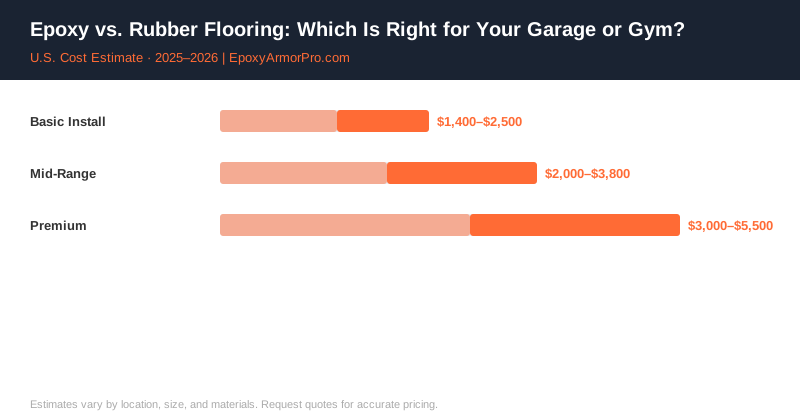
Rubber flooring wins on upfront material cost, especially for DIY installation. Epoxy costs more — but you’re getting something different.
According to Angi’s 2024 national averages, professional epoxy installation runs between $3 and $8 per square foot for a garage or basement project.
| Option | Material Cost (per sq ft) | Installed Cost (per sq ft) | 400 sq ft Space |
|---|---|---|---|
| Rubber roll flooring (3/8") | $0.75–$1.50 | $0.75–$2.00 (DIY) | $300–$800 |
| Interlocking rubber tiles | $1.00–$3.00 | $1.00–$3.50 (DIY) | $400–$1,400 |
| Horse stall mats (3/4") | $1.00–$1.50 | $1.00–$1.50 (DIY) | $400–$600 |
| Standard solid-color epoxy | $0.30–$0.75 | $3–$6 | $1,200–$2,400 |
| Flake epoxy with topcoat | $0.50–$1.00 | $5–$8 | $2,000–$3,200 |
Where Rubber Flooring Wins
Rubber flooring belongs in home gyms. Full stop. It protects the concrete from dropped weights, reduces impact on joints during workouts, absorbs sound, and prevents equipment from sliding. A 400 sq ft home gym floored with 3/4" thick horse stall mats costs around $600 and takes a few hours to install. That’s genuinely good value for what it does.
ASTM International standards classify rubber flooring in gymnasium applications as a safety surface specifically because of its shock-absorption characteristics — something epoxy can’t provide. If you’re dropping barbells or doing plyometrics, epoxy coating is the wrong tool.
Where Epoxy Wins
For garages, epoxy is the superior long-term choice. Here’s why rubber fails in a vehicle environment:
Oil and fluid management: When you change your oil over rubber flooring, the oil soaks in. Rubber is porous. There’s no good way to clean a deep oil spill from a rubber stall mat — you’re absorbing it or living with the smell. Epoxy wipes clean.
Road salt and chemical resistance: Vehicles track in road salt, antifreeze, gasoline, and brake fluid. These degrade rubber over time, causing it to crack, harden, and crumble — especially in climates with cold winters. Epoxy is chemically resistant to all of them.
Moisture trapping: Rubber sits on top of concrete. Any moisture vapor coming up through the slab — and most slabs have some — gets trapped between the rubber and the concrete. This creates mold conditions you don’t see until you lift a section and find black staining on the concrete underneath. Epoxy seals the surface and prevents this.
Aesthetics and permanence: Rubber flooring looks like rubber flooring. If your garage is a workspace you care about, a proper flake epoxy system looks significantly sharper and holds up better over 10–15 years than rubber that shifts, bunches at the edges, and degrades under UV.
The Combination Approach
Some homeowners use both. Epoxy the main garage floor for vehicle parking, chemical resistance, and appearance. Add rubber mat sections in the corner where you keep workout equipment or do mechanical work standing. This is actually a practical setup — you get the sealed slab benefits of epoxy across the whole garage while adding cushion exactly where you need it.
Maintenance Over Time
Rubber flooring maintenance sounds easy until you think it through. Rubber is porous, which means spills absorb into it. Gym chalk, sweat, and dust work into the texture. It needs more frequent deep cleaning than epoxy. Rubber rolls and mats also have a distinct smell — especially in warm weather — that takes months to off-gas.
Epoxy maintenance is simple: sweep and mop with a neutral cleaner. Oil and chemical spills wipe off the surface without absorbing. If the topcoat gets scratched after years of use, a recoat adds another decade for $1–$3 per square foot.
Which One Should You Choose?
The answer is almost always determined by use case:
- Home gym, weight room, fitness space: Rubber flooring. The shock absorption is required. Epoxy can’t provide it.
- Garage with vehicle parking: Epoxy. The chemical and moisture resistance is required. Rubber can’t provide it.
- Workshop or utility garage: Epoxy. Easier to clean, chemical-resistant, permanent.
- Mixed-use garage with a workout corner: Epoxy overall, rubber mats in the workout zone.
If you’re still weighing the full cost picture for your garage, the epoxy cost factors guide breaks down exactly what drives the price range on professional installations.
Contractor Referral Disclaimer: EpoxyArmorPro is a contractor referral and cost information service, not a licensed flooring contractor. We connect consumers with independent, licensed, and insured contractors. We do not perform any flooring work directly. Cost estimates are averages based on market data and vary by location, project size, materials, and contractor. Always verify contractor licensing and insurance before hiring. Individual quotes may differ from estimates shown.