A contractor quoted you $4 per square foot for epoxy. Another came in at $7 for polished concrete. Both looked sharp in the photos. Both promised “durable, low-maintenance floors.” So what’s the actual difference — and which one is worth your money?
They’re not the same. Not even close, technically. Here’s what separates them.
What Each Process Actually Is
Epoxy is a coating. You’re bonding a chemical layer on top of the concrete — typically 10 to 30 mils thick for a professional two-coat system. The concrete itself doesn’t change; you’re capping it with a hard, dense film that protects against stains, abrasion, and moisture.
Polished concrete is the opposite approach. Nothing gets added. Contractors use diamond-tipped tooling to progressively grind and buff the concrete itself to a specified sheen level — from matte (800 grit) to mirror-like (3,000 grit). The floor you’re walking on is the original slab, just refined.
That fundamental difference drives every tradeoff that follows.
Cost Side by Side
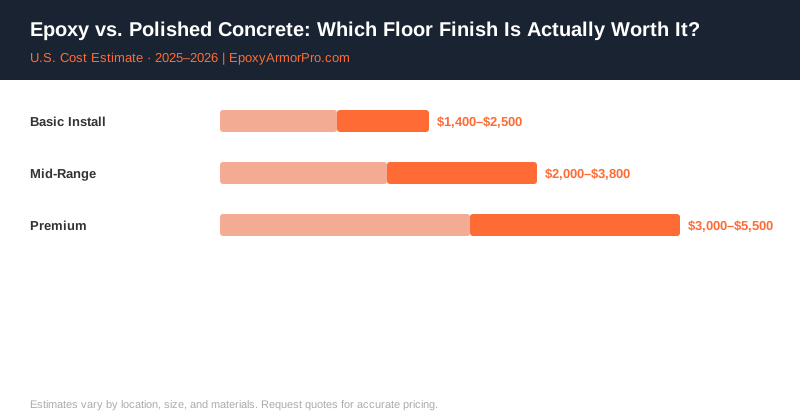
Polished concrete runs higher on most projects because the equipment is specialized and the labor is skilled. The Concrete Network’s national pricing data puts polished concrete at $3–$12 per square foot depending on existing slab condition, gloss level, and dye/stain application. Basic cream polish (just the surface paste) sits at the low end. A high-gloss, salt-and-pepper aggregate exposure finish with dye runs $8–$12.
Epoxy typically runs $3–$8 per square foot professionally installed. Simple single-color systems start around $3–$4. Decorative metallic or full flake systems with polyaspartic topcoat push toward $7–$8.
| Finish Type | Cost Range (per sq ft) | Typical 500 sq ft Project |
|---|---|---|
| Basic polished concrete (cream finish) | $3–$5 | $1,500–$2,500 |
| Mid-grade polished (salt-and-pepper) | $5–$8 | $2,500–$4,000 |
| High-gloss polished with dye | $8–$12 | $4,000–$6,000 |
| Standard solid-color epoxy | $3–$5 | $1,500–$2,500 |
| Decorative flake epoxy system | $5–$7 | $2,500–$3,500 |
| Metallic epoxy with topcoat | $6–$8 | $3,000–$4,000 |
Durability and What Actually Wears Out
Polished concrete, done correctly, is essentially permanent. You’re not maintaining a coating — you’re maintaining the slab itself. It doesn’t peel, chip, or delaminate. The sheen does dull with foot traffic over years, and re-burnishing (a maintenance polish) every two to five years restores it. High-traffic commercial spaces get re-burnished more frequently.
Epoxy coatings are durable but finite. A professionally installed 100% solids epoxy system lasts 10–20 years under normal residential use, according to data from the Concrete Coating Association. Hot tire pickup, heavy impact, and ground-level UV exposure are the three things most likely to shorten that lifespan. When epoxy fails, it fails visibly — it peels, chips, or yellows.
Moisture Tolerance
This is where epoxy has a meaningful advantage in residential basements. Concrete is porous. If your slab has any moisture vapor transmission — and most do, especially in humid climates or below-grade spaces — epoxy seals the surface and contains that vapor. Polished concrete doesn’t seal the slab in the same way; it refines it. In a damp basement, polished concrete can look great initially, then develop efflorescence (those white salt deposits) as moisture moves through.
That said, a badly installed epoxy coating over a wet slab is worse than polished concrete. Epoxy applied over moisture-laden concrete delaminates within months. The moisture test matters for both systems.
Aesthetics: What Each Looks Like Long-Term
Polished concrete is natural and unique. Every slab is different, so no two polished floors look alike. The aggregate exposure, the joint pattern, the subtle variation — it reads high-end in a way that’s genuinely difficult to replicate with coatings. It’s the look architects specify for modern commercial interiors.
Epoxy is more uniform and controllable. You choose the exact color, you add decorative flake or metallic shimmer if you want it, and you get a consistent result. For garages, workshops, and basements, that uniformity is usually a feature, not a limitation.
Both fade and show wear — polished concrete loses its sheen, epoxy develops micro-scratches. The maintenance paths differ: you re-burnish polished concrete and re-topcoat epoxy.
Maintenance Reality
Polished concrete: sweep regularly, damp-mop with a neutral cleaner, re-apply densifier or guard sealer every year or two, re-burnish when sheen dulls. No stripping, no recoating.
Epoxy: sweep, mop with non-abrasive cleaner, avoid dragging sharp metal. When the topcoat dulls (usually after 5–10 years), a recoat adds another decade for roughly $1–$3 per square foot.
Where Each Wins
Choose epoxy when:
- You have a below-grade basement with any moisture risk
- Your slab has significant patching or inconsistency
- You want full control over color and decorative finish
- It’s a garage with vehicle traffic and chemical exposure
- Budget is a primary constraint
Choose polished concrete when:
- You want a permanent surface that never peels
- It’s a high-traffic commercial or retail space
- Your slab is in excellent, consistent condition
- The natural, architectural aesthetic is your priority
- You’re renovating a space with existing polished concrete nearby and need to match
For most residential garages and basements, epoxy wins on cost and practical performance. For main-level living spaces — open-plan kitchens, studio floors, modern entryways — polished concrete delivers an aesthetic that epoxy can’t truly replicate.
Contractor Referral Disclaimer: EpoxyArmorPro is a contractor referral and cost information service, not a licensed flooring contractor. We connect consumers with independent, licensed, and insured contractors. We do not perform any flooring work directly. Cost estimates are averages based on market data and vary by location, project size, materials, and contractor. Always verify contractor licensing and insurance before hiring. Individual quotes may differ from estimates shown.