Most homeowners think “sealing concrete” and “epoxy coating” describe the same category of product. They don’t. The confusion costs people money — either by over-spending on epoxy for a situation that needed a simple sealer, or under-spending on a sealer when the project actually needed a real protective coating.
Here’s the actual distinction, in plain terms.
What Concrete Sealer Is
Concrete sealer is not a coating — it’s a treatment. It doesn’t build a film on the surface. Instead, it penetrates the concrete’s pore structure and either fills those pores (acrylic/silicone topical sealers) or reacts with the calcium silicate in the concrete to densify the surface from within (penetrating/reactive sealers).
There are three main categories:
Penetrating reactive sealers (silane, siloxane, silicate): These soak in and react chemically with the concrete matrix. They repel water and chloride but don’t change the surface appearance at all. You’d use these on driveways, exterior concrete, and anywhere you want moisture protection without changing how the concrete looks.
Topical film-forming sealers (acrylic, polyurethane, epoxy-modified): These do build a thin film, typically 1–3 mils thick. They add a mild sheen and improve stain resistance. They’re what most people are buying when they go to a home improvement store and pick up a concrete sealer.
Densifiers: Liquid silicates that react with concrete to harden the surface from within. Common in commercial polished concrete as a prep step — they make the surface harder before polishing.
What Epoxy Coating Is
Epoxy coating is a different category entirely. It’s a thick, film-forming system — typically 8 to 30 mils dry film thickness for a professionally installed 100% solids system. It chemically bonds to the concrete surface through mechanical adhesion (created by diamond grinding) and creates a hard, continuous film that’s much more than just moisture protection.
A proper two-coat epoxy system with polyaspartic topcoat delivers impact resistance, chemical resistance, abrasion resistance, and an aesthetic transformation that no sealer comes close to matching. It’s a functional floor surface, not a treatment.
| Product Type | Thickness | Cost (per sq ft) | Lifespan | Best Use |
|---|---|---|---|---|
| Penetrating reactive sealer | None (soaks in) | $0.10–$0.30 DIY | 5–10 years | Driveways, exterior slabs |
| Topical acrylic sealer | 1–3 mils | $0.15–$0.50 DIY | 1–3 years | Light-duty interior slabs |
| Polyurethane sealer | 2–5 mils | $0.50–$1.50 DIY | 3–5 years | Interior concrete, light traffic |
| Water-based epoxy coating | 2–6 mils | $1.50–$3.50 installed | 3–7 years | Light residential use |
| 100% solids epoxy coating | 10–30 mils | $3–$8 installed | 10–20 years | Garages, commercial, heavy use |
The “Penetrating Sealer” Confusion
“Penetrating sealer” is the phrase that causes the most confusion. It sounds technical and protective — like it’s doing more than a surface sealer. In some ways it is: a silane-siloxane sealer genuinely protects against water intrusion and chloride damage, which is important for driveways and exterior applications.
But penetrating sealers do essentially nothing for:
- Oil stains (oil molecules are larger than water and don’t get repelled the same way)
- Abrasion resistance (the concrete surface texture doesn’t change)
- Aesthetics (the floor looks exactly the same)
- Chemical resistance (gasoline, antifreeze, solvents)
If a contractor or product description says “penetrating sealer” and you were expecting a garage floor transformation, you’re about to be disappointed.
When You Need a Sealer vs. When You Need Epoxy
This isn’t a close call in most residential scenarios. The right choice is usually obvious once you identify your goal.
Use a concrete sealer when:
- You want to protect an exterior driveway or sidewalk from water, freeze-thaw damage, and salt
- You have decorative stamped or stained concrete that needs protection without changing the look
- You’re treating bare concrete in a utility space and budget is the primary concern
- You have polished concrete that needs a densifier or maintenance guard
Use epoxy coating when:
- Your garage floor needs to handle vehicle traffic, chemicals, and look great for 15+ years
- You want a transformative aesthetic upgrade — solid color, decorative flake, metallic
- Your basement slab needs to be sealed against moisture while becoming a finished floor surface
- You have a commercial space, workshop, or industrial area with heavy use demands
The short version: sealers protect. Epoxy transforms and protects. They’re not interchangeable for the same job.
The Marketing Problem
Walk into any big-box hardware store and you’ll find products labeled things like “epoxy shield,” “garage floor seal,” or “concrete protector” in the sealer/paint aisle. Many of these products contain epoxy as a modifier in a water-based formula — but they’re not the same as a true 100% solids epoxy system. They typically have 40–50% solids content, build only 2–4 mils of film, and degrade significantly faster under UV, vehicle traffic, and chemical exposure.
This is the source of most homeowner disappointment with “epoxy floors.” They applied a water-based hardware store product, expected professional results, and got peeling within two years. That’s not epoxy failing — that’s the wrong product being used in the wrong application.
Cost Reality Check
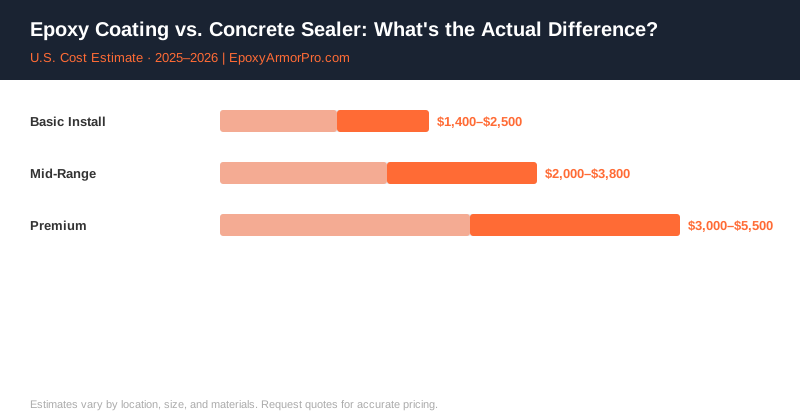
A professional penetrating sealer application on a 400 sq ft driveway might cost $200–$500. A professional epoxy system on the same area costs $1,200–$3,200. That price difference reflects a genuinely different product and outcome — not contractor markup.
If you’re trying to keep moisture out of a driveway and prevent freeze-thaw damage to the concrete: sealer is the right answer and the right spend.
If you’re transforming a garage floor into a finished, durable surface that you’ll be proud of for the next 15 years: the epoxy investment makes sense.
For a detailed breakdown of what drives epoxy installation costs, the garage epoxy cost factors guide walks through every variable.
Contractor Referral Disclaimer: EpoxyArmorPro is a contractor referral and cost information service, not a licensed flooring contractor. We connect consumers with independent, licensed, and insured contractors. We do not perform any flooring work directly. Cost estimates are averages based on market data and vary by location, project size, materials, and contractor. Always verify contractor licensing and insurance before hiring. Individual quotes may differ from estimates shown.