A guy in his garage watched three river table videos and figured he’d save a few thousand dollars building his own dining table. Two months, four cracked resin pours, and $600 in wasted material later, he called a professional builder — who quoted $2,800 for exactly the table he’d been trying to build himself.
Custom epoxy tables sit in a strange price zone. They’re not mass-market furniture, but they’re also not always as expensive as people assume once they understand what actually drives the cost.
What You’re Actually Paying For
| Table Type | Cost Range | Notes |
|---|---|---|
| Small side/end table | $400–$900 | Single wood piece, small resin pour |
| Standard coffee table | $800–$1,800 | Moderate resin volume, single-color pour |
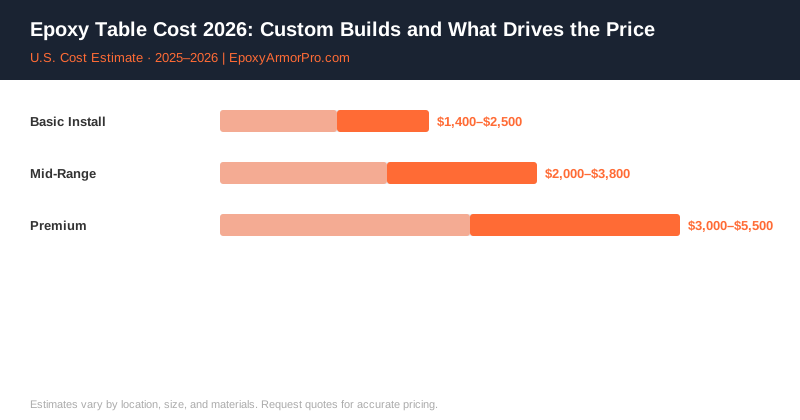
| Dining table (6-person) | $2,000–$4,500 | Larger resin volume, more finishing labor |
| Dining table (8-10 person, complex pour) | $3,500–$7,000+ | Multi-color, embedded elements, large slab |
| Conference/office table | $2,500–$6,000 | Larger scale, often multi-piece assembly |
Three factors drive most of the cost variation: the wood itself (a live-edge slab from a rare species costs vastly more than standard reclaimed lumber), the resin volume (deep pours for river tables use significantly more material than a thin surface coat), and finishing labor (sanding, buffing, and polishing a large resin surface to a glass-like finish takes many hours of skilled work).
Wood Selection Changes the Budget Dramatically
A live-edge black walnut or spalted maple slab, sourced from a specialty sawmill, can cost several hundred to over a thousand dollars for the wood alone before any resin work begins. More common woods — oak, ash, standard reclaimed lumber — cost a fraction of that. Some builders offer a “customer-supplied wood” discount if you source and provide your own slab, which can meaningfully reduce the total project cost if you already have access to reclaimed material.
Finishing Labor Is Underestimated by Almost Everyone
The resin pour itself — mixing, coloring, pouring — is often the fastest part of building an epoxy table. What takes real time is the finishing: multiple stages of progressively finer sanding to remove pour imperfections, buffing to a clear, glass-like shine, and sealing the wood portions to match. A builder doing this properly often spends more hours on finishing than on the pour itself, which is a big reason quality custom tables aren’t cheap even when the raw materials are modest.
Turnaround Time Matters for Planning
A custom epoxy table isn’t a same-week purchase. Between sourcing wood, planning the layout, pouring (often in multiple stages for deep pours, since each layer needs to cure before the next), and finishing, a dining table build typically takes 3-6 weeks from order to delivery. Builders with a backlog can push that to several months during peak demand seasons, so it’s worth ordering well ahead of any specific occasion or deadline.
What to Ask a Table Builder
- What resin system do you use for deep pours versus surface coats?
- Can I supply my own wood slab, and does that reduce cost?
- What’s included in the finishing process — how many sanding/buffing stages?
- What’s your realistic turnaround time given your current backlog?
- What warranty do you offer against yellowing, cracking, or clouding?
Contractor Referral Disclaimer: EpoxyArmorPro is a contractor referral and cost information service, not a licensed flooring contractor. We connect consumers with independent, licensed, and insured contractors. We do not perform any flooring work directly. Cost estimates are averages based on market data and vary by location, project size, materials, and contractor. Always verify contractor licensing and insurance before hiring. Individual quotes may differ from estimates shown.