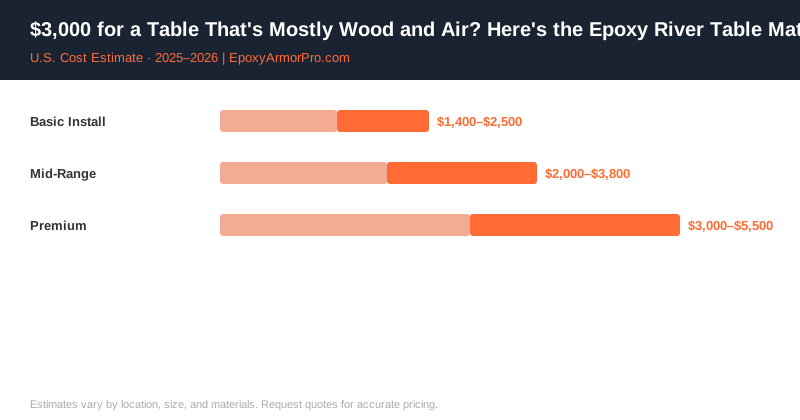
$3,000 for a table that’s mostly wood and a strip of blue resin down the middle? It sounds like a lot until you understand what that “strip of resin” actually requires — and why it’s the hardest part of the entire build, not the easiest.
A river table pairs two live-edge wood slabs with a poured resin “river” running between them, typically dyed a translucent blue, teal, or black to suggest flowing water. It’s become one of the most requested custom furniture pieces in the last decade, and the price reflects genuine complexity, not just trend-driven markup.
Where the Money Actually Goes
| Component | Cost Range | Notes |
|---|---|---|
| Live-edge wood slabs (pair) | $300–$1,500 | Species and size dependent |
| Deep-pour epoxy resin | $150–$600 | Volume dependent, specialty formulation |
| Sanding, buffing, finishing labor | $400–$1,500 | Most time-intensive stage |
| Base/legs (steel or wood) | $150–$600 | Custom or off-the-shelf |
| Small river table (coffee table size) | $1,500–$2,800 | Total, all-in |
| Large river table (dining size) | $3,000–$6,000+ | Total, all-in |
Why the Resin Pour Is the Highest-Risk Part of the Build
Deep-pour epoxy resin generates heat as it cures — a chemical reaction called exotherm. Pour too much resin at once, and the center of a thick pour can overheat, causing cracking, clouding, or a permanently soft, tacky finish that never fully hardens. This is why quality river tables use specialty deep-pour resin, formulated to cure slower and cooler than standard epoxy, and why pours are typically done in stages — an inch or two at a time, each layer curing for 24-48 hours before the next goes in — rather than filling the whole river gap in one shot.
Why Small Details Multiply Cost Fast
Embedded elements — LED lighting under the resin, metal inlays, or a second color layered into the pour — each add meaningful labor and material cost, because they require additional planning and pour stages rather than a simple one-shot pour. A basic single-color river table is the budget-friendly option; every additional decorative element stacks on top of that base cost.
Turnaround Time Is Longer Than Most Buyers Expect
Because deep pours require staged curing over multiple days between layers, plus final sanding and finishing, a custom river table realistically takes 4-8 weeks from order to delivery — longer for larger dining tables or complex multi-element designs. Rush orders are possible with some builders but typically carry a premium, since compressing cure time on a resin product isn’t something a builder can safely force.
What to Ask a River Table Builder
- What specific deep-pour resin product do you use, and how do you manage exotherm on thick pours?
- How do you account for long-term wood movement at the wood-resin bond line?
- Can I see photos of tables you’ve built that are at least a year old, not just fresh off the workbench?
- What’s your realistic turnaround time for my table size?
- What warranty applies to cracking, yellowing, or clouding in the resin?
Contractor Referral Disclaimer: EpoxyArmorPro is a contractor referral and cost information service, not a licensed flooring contractor. We connect consumers with independent, licensed, and insured contractors. We do not perform any flooring work directly. Cost estimates are averages based on market data and vary by location, project size, materials, and contractor. Always verify contractor licensing and insurance before hiring. Individual quotes may differ from estimates shown.