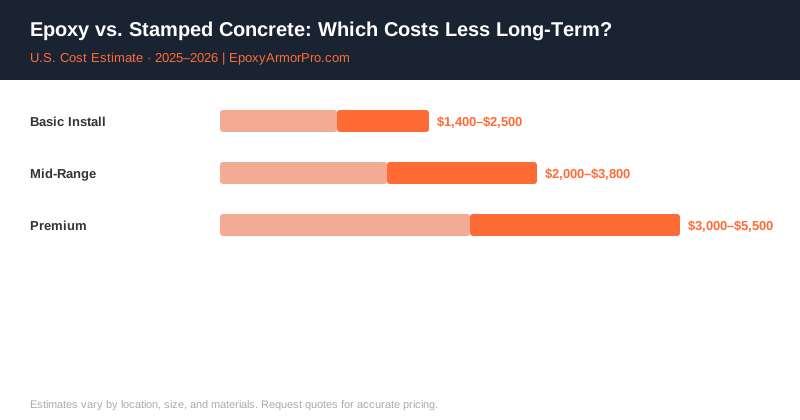
Most homeowners assume epoxy is the pricier decorative option and stamped concrete is the budget play. It’s often the opposite. Stamped concrete — poured and textured to mimic stone, brick, or slate — typically costs more upfront than a standard epoxy coating, precisely because it’s installed during the original pour rather than applied to existing concrete.
Upfront Cost Comparison
| Option | Cost per Sq Ft | Installation Context |
|---|---|---|
| Standard epoxy coating (existing slab) | $4–$7 | Applied over existing concrete |
| Epoxy with decorative flake | $6–$10 | Applied over existing concrete |
| Stamped concrete (new pour) | $8–$18 | Requires new concrete pour |
| Stamped concrete overlay (existing slab) | $6–$12 | Thinner topping over existing slab |
For a 400-square-foot patio, epoxy runs $1,600–$4,000, while a full new stamped concrete pour runs $3,200–$7,200. If you already have a sound existing slab, a stamped overlay ($2,400–$4,800 for the same footprint) narrows that gap considerably.
Long-Term Maintenance Differences
Stamped concrete needs periodic resealing — typically every 2–3 years — to maintain both its color and its water resistance, since the texture and color come largely from an integral or applied stain combined with a sealer, not a thick protective film. Epoxy’s protective film layer generally holds up longer between maintenance cycles, particularly in interior applications away from UV exposure.
Repair Visibility Is a Real Difference
If a section of stamped concrete cracks or chips, matching the texture and color in a repair patch is notoriously difficult — stamped patterns rarely blend seamlessly at a repair seam, especially as the surrounding area weathers and fades over time. Epoxy coatings, especially solid-color systems, are generally easier to patch or fully recoat without visible seams, since a full recoat simply refreshes the entire surface uniformly.
Which Makes Sense for Your Project
Choose stamped concrete when you’re already pouring new concrete anyway (new patio, new driveway) and want a premium, textured, stone-like appearance, and you’re comfortable with the resealing maintenance cycle. Choose epoxy when you have an existing slab in decent structural shape and want a durable, protective, lower-maintenance finish without the cost and disruption of a full pour.
Questions to Ask Contractors
- Is this quote for a new pour, an overlay, or a coating over my existing slab?
- What’s the resealing interval, and what does that maintenance cost over 10 years?
- How visible would a future repair patch be with each option?
- Which option better suits my climate’s freeze-thaw exposure?
- Which finish better matches my home’s existing hardscape material?
For a comparison against another common alternative, see our epoxy vs. stained concrete guide.
Contractor Referral Disclaimer: EpoxyArmorPro is a contractor referral and cost information service, not a licensed flooring contractor. We connect consumers with independent, licensed, and insured contractors. We do not perform any flooring work directly. Cost estimates are averages based on market data and vary by location, project size, materials, and contractor. Always verify contractor licensing and insurance before hiring. Individual quotes may differ from estimates shown.