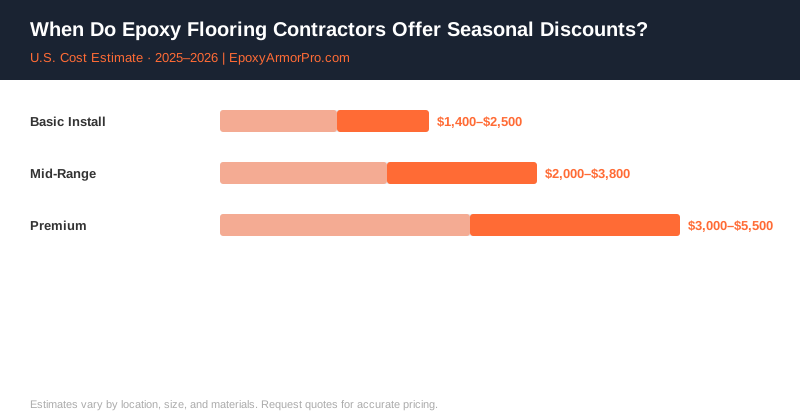
Most homeowners assume epoxy flooring pricing is basically fixed — you get a quote, you either accept it or you don’t. That’s not how it actually works in most markets. Demand for epoxy installation swings noticeably by season, and contractors with open calendar slots have real incentive to discount rather than sit idle. Wrong assumption, real money left on the table.
Why Epoxy Demand Is Seasonal
Garage and driveway epoxy jobs generally spike in spring and early summer, when homeowners tackle outdoor and garage projects alongside other seasonal home improvement work, and again in early fall before winter. Late fall through mid-winter is typically the slowest stretch for residential epoxy work in most climates, since fewer homeowners want their garage tied up during cold weather even though interior epoxy curing isn’t necessarily affected by outdoor temperature.
| Season | Demand Level | Typical Discount Potential |
|---|---|---|
| Spring (Mar–May) | High | Minimal — peak season pricing |
| Summer (Jun–Aug) | High | Minimal to none |
| Early Fall (Sep–Oct) | Moderate | 5–10% possible |
| Late Fall–Winter (Nov–Feb) | Low | 10–20% common in most markets |
How to Actually Negotiate a Seasonal Discount
Ask contractors directly about their calendar availability and whether they offer reduced pricing for flexible scheduling. Many contractors won’t advertise a seasonal discount outright but will negotiate on price or add extras (like an upgraded topcoat or expanded scope) for a customer willing to book during a slow stretch on their calendar, since it’s a low-cost way for them to keep crews working.
Booking Lead Time Also Affects Price
Beyond season, how far in advance you book matters. Contractors juggling a tight schedule during peak season have less room to negotiate, while those with open weeks — common in the off-season — have more flexibility on both price and project add-ons. Booking 6-8 weeks ahead during a slower season often gets better terms than trying to book last-minute during peak spring demand.
Regional Climate Changes the Calculus
In warmer climates (much of the Southeast and Southwest), the seasonal demand swing is less pronounced since outdoor temperatures rarely block installation timing. In colder northern and midwestern climates, the winter slowdown is more dramatic, which generally means bigger discount potential — assuming indoor heating during cure is feasible for your specific space.
Questions to Ask About Off-Season Booking
- What temperature range do you need for proper cure, and can my space meet it in winter?
- Do you offer reduced pricing or added scope for off-season, flexible-date bookings?
- How far in advance are you currently booked during this season?
- Are there any cure-time or performance tradeoffs with cold-weather installation?
- Would bundling multiple projects together improve pricing?
For a deeper look at how off-season pricing specifically compares across a full calendar year, see our off-season pricing guide.
Contractor Referral Disclaimer: EpoxyArmorPro is a contractor referral and cost information service, not a licensed flooring contractor. We connect consumers with independent, licensed, and insured contractors. We do not perform any flooring work directly. Cost estimates are averages based on market data and vary by location, project size, materials, and contractor. Always verify contractor licensing and insurance before hiring. Individual quotes may differ from estimates shown.