Most landlords paint walls, replace carpet, and patch drywall between tenants. Almost none of them think about the garage floor — until they’re scrubbing out someone’s oil spill at 11pm the day before a new tenant moves in. There’s a better approach, and it pays for itself faster than you’d expect.
Why Rental Properties Are Actually the Best Use Case for Epoxy
Tenant turnover is brutal on floors. Bare concrete absorbs every spill — motor oil, fertilizer, paint, pet urine — and those stains are nearly impossible to fully remove. After two or three tenants, you’re looking at a floor that looks neglected no matter how thoroughly you clean it.
Epoxy changes the math. A sealed floor wipes clean with a mop. Tenant damage stays on the surface, not in the slab. Turnover cleaning that used to take half a day now takes 45 minutes.
According to the National Apartment Association, the average cost of preparing a unit for a new tenant is $1,200–$2,500 — and floor remediation is one of the largest line items. A one-time epoxy investment can cut that number substantially for any garage or basement space.
The 5-Year and 10-Year ROI Numbers
Let’s look at what the math actually looks like across a typical rental cycle.
Scenario: Single-family rental with an attached 2-car garage. Tenant turnover every 2 years. Without epoxy, you spend $400–$600 per turnover on garage cleaning and touch-ups. With epoxy, that drops to under $100 — just a mop and maybe a fresh polyurethane topcoat at year 6 or 7.
| Scenario | Year 1 Cost | Annual Savings | 5-Year Net | 10-Year Net |
|---|---|---|---|---|
| No epoxy (bare concrete) | $0 upfront | — | -$2,000 in cleaning/repairs | -$5,000+ |
| Professional epoxy install | $2,000 upfront | $400–$600/yr | +$0 to +$1,000 | +$3,000–$5,000 |
| Epoxy + full maintenance topcoat at yr 7 | $2,400 total | $400–$600/yr | +$0 to +$800 | +$3,500–$5,500 |
The break-even point on a $2,000 epoxy install at $500/year in savings is 4 years. Every year after that is pure savings. At a 10-year horizon, the floor has paid for itself twice over.
What Coating Holds Up to Tenant Abuse
Not all epoxy is equal when it comes to durability under unpredictable use. Here’s what to spec for a rental property:
100% solid epoxy base coat + polyurea or polyaspartic topcoat. This combination handles the widest range of abuse — tire scuffing, dropped tools, chemical spills, and cleaning with harsh products. It’s also the easiest system to recoat when the topcoat eventually wears. The base coat stays intact; you just refinish the surface layer.
Stay away from water-based “epoxy paint.” These products are thin, have poor adhesion to porous concrete, and will peel under tenant use within 2–3 years. It’s the worst possible scenario — you spend money and still end up with a damaged floor.
Chip/flake broadcast systems are excellent for rentals. The textured finish hides wear and minor scratches far better than solid-color coats. The grout lines between the chips catch less debris than a perfectly smooth surface. And they look maintained even after heavy use.
Matte vs. gloss topcoats: For rentals, matte or satin finishes are more forgiving. High-gloss shows every tire mark, scuff, and scratch. A satin finish looks clean after a quick sweep.
Handling Tenant Damage to Epoxy Floors
Even good epoxy will get scratched, dented, or gouged by tenants. Here’s how to handle it:
Small scratches and scuffs: These buff out with a rotary polisher and a mild abrasive pad. It takes 30 minutes and looks new again. No professional needed.
Deep gouges from dropped equipment: A two-part epoxy filler, sanded smooth and topcoated, is nearly invisible. Budget $50–$100 in materials and a few hours of your time.
Full delamination or peeling: This only happens if the original install was poor — inadequate prep, excessive moisture, or wrong product for the conditions. Get a warranty from your contractor that covers adhesion failure for at least 3 years.
Charging it to the security deposit: Document the floor condition with photos before and after every tenancy. Epoxy damage beyond normal wear and tear is chargeable. Keep the documentation.
Tenant Restrictions Worth Putting in Your Lease
A few lease clauses that protect your investment:
- No parking of motorcycles with kickstands (pointloads that can dent the floor)
- No use of acid-based tire cleaners on the floor surface
- No storage of containers with known corrosives (pool chemicals, drain cleaners) directly on the floor
- Tenant responsible for damage caused by tools, vehicles, or chemicals beyond normal wear
These clauses won’t prevent every scenario, but they give you clear documentation if you need to pursue deposit deductions.
Multi-Unit Properties: Think About Scale
If you own a 4-plex or a small apartment complex with individual garages, the economics get even better. A contractor doing 4 garages back-to-back will typically discount 10–20% off the per-unit price. You’re looking at $1,600–$2,200 per garage instead of $2,000–$2,800. At that price point, the ROI math tightens dramatically — you’re breaking even in under 3 years per unit.
For basement spaces in multi-family properties, epoxy also serves as moisture management. Many basement slab issues involve vapor transmission that gradually damages whatever’s stored down there. A properly applied epoxy system with a vapor barrier primer significantly reduces that risk — which protects both the floor and whatever tenants store in the space.
See our basement epoxy cost guide for what to expect on basement installations specifically.
The Comparison No Landlord Should Skip
Before spending on epoxy, weigh it against the alternatives:
Rubber utility mats: $200–$400 per car space. They shift, trap moisture underneath (causing slab damage), and tenants remove them. Not a real solution.
Interlocking garage tiles: $500–$1,500 per car space. Better than mats, but they shift under tire load, need to be relaid after each tenancy, and look cheap. They also trap debris in the seams.
Paint-and-seal systems: $300–$600 installed. Peels within 2–3 years of tenant use. You’ll spend more on maintenance than on an upfront epoxy install.
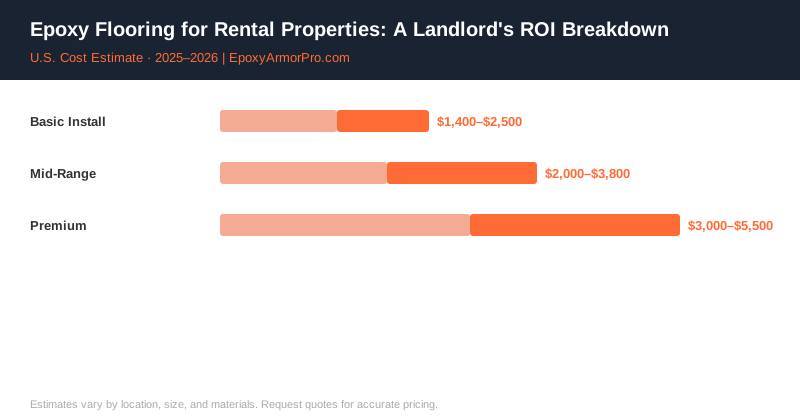
Professional epoxy: $1,500–$3,000 once. Lasts 10–20 years with light topcoat maintenance every 6–8 years. Wipes clean. Survives normal tenant use without damage.
The answer is obvious for anyone doing the math over a 5-year horizon. For more on whether the investment makes sense for your property type, see our general is epoxy flooring worth it analysis.
Contractor Referral Disclaimer: EpoxyArmorPro is a contractor referral and cost information service, not a licensed flooring contractor. We connect consumers with independent, licensed, and insured contractors. We do not perform any flooring work directly. Cost estimates are averages based on market data and vary by location, project size, materials, and contractor. Always verify contractor licensing and insurance before hiring. Individual quotes may differ from estimates shown.