Most epoxy contractors will tell you they’ve installed over radiant heat systems without any problems. Some of them are right. Some of them just haven’t seen the callbacks yet — because the failure mode for epoxy over improperly managed radiant heat isn’t immediate. It shows up as micro-cracking and delamination 12 to 18 months after install, when the first full heating cycle has run its course.
Here’s what the right approach actually looks like, what temperature limits matter, and what to ask before a contractor puts anything on your heated slab.
Why Radiant Heat Creates a Problem for Epoxy
Epoxy is a rigid coating. Concrete moves — it expands when warm, contracts when cool. Normally, the movement is small enough that it doesn’t matter. Add in-floor heat cycling through 50°F+ temperature ranges over a year, and you’re introducing meaningful thermal expansion and contraction that can stress the epoxy-concrete bond.
The second issue is cure temperature control. Epoxy must cure within a specific temperature range — most products require 50°F to 85°F during application and the initial 24-hour cure window. Heated slabs that are too warm during application can cause blushing, outgassing bubbles, or uneven cure. Too cold and the epoxy doesn’t cure properly either.
A 2019 study from the Flooring Manufacturers Association found that thermal cycling — repeated expansion and contraction from in-floor heating — accounts for approximately 23% of all epoxy coating failures in residential installations. That puts it behind moisture (which is still the leading cause) but ahead of poor surface prep in the list of failure drivers.
Temperature Limits That Actually Matter
Maximum slab surface temperature during application: 75°F for standard 100% solid epoxy. Above this, the coating can bubble from outgassing, cure too fast, and develop adhesion problems at the surface.
Maximum operating temperature (long-term): 100°F–120°F for standard epoxy. Most residential hydronic radiant systems operate at 85°F–95°F at the slab surface, which is within range. Electric radiant systems can run hotter — check your actual surface temperature, not the thermostat setpoint.
Minimum application temperature: 50°F. Below this, epoxy won’t cure properly regardless of radiant heat system status.
The critical rule: turn off the radiant heat system at least 48 hours before application and keep it off for at least 72 hours after application. The slab needs to be at ambient temperature for application, and the initial cure needs to happen at stable ambient conditions, not on a heating cycle.
Which Coatings Handle Radiant Heat Best
Not all epoxy formulations handle thermal cycling equally. Here’s the hierarchy:
Polyurea coatings: The best choice for radiant heat applications. Polyurea has significantly more flexibility than standard epoxy (elongation at break of 100–300% vs. 2–5% for rigid epoxy), which means it accommodates thermal expansion and contraction without cracking or delaminating. It also handles higher operating temperatures — most polyurea systems are rated to 200°F+, well above any residential radiant application.
Polyaspartic coatings: Similar flexibility advantages to polyurea. Polyaspartic over an epoxy base coat is a common specification for radiant heat applications because you get the build thickness of epoxy with the flexibility and UV resistance of polyaspartic at the surface.
Standard 100% solid epoxy (rigid): Works within temperature limits but is more vulnerable to thermal cycling over a long period. If you’re using rigid epoxy over radiant heat, use a flexible additive — most manufacturers offer a plasticizer that reduces the brittleness of the cured system.
Water-based epoxy (DIY kits): Not suitable for radiant heat applications. Thin film, poor adhesion characteristics, and no flexibility to speak of.
| Coating System | Temp Limit | Thermal Cycling Resistance | Installed Cost (per sq ft) |
|---|---|---|---|
| Water-based epoxy | 90°F | Poor | $1.50–$3.00 (DIY) |
| 100% solid epoxy (rigid) | 120°F | Moderate | $3.00–$6.00 |
| 100% solid epoxy + flexible additive | 130°F | Good | $3.50–$7.00 |
| Epoxy base + polyaspartic topcoat | 140°F | Very good | $4.00–$8.00 |
| Polyurea (full system) | 200°F+ | Excellent | $5.00–$10.00 |
The Installation Sequence for Radiant Heat Slabs
Getting epoxy over radiant heat right requires a different installation sequence than a standard garage floor. Here’s what your contractor should be doing:
- System shutdown: Turn off radiant heat 48 hours before scheduled installation date.
- Slab temperature verification: Test surface temperature at multiple points with an infrared thermometer. Target 55°F–70°F.
- Moisture testing: Radiant slabs can have different moisture profiles than non-heated slabs due to prior thermal cycling drying them more completely. Still test — don’t assume.
- Mechanical surface prep: Diamond grinding or shot blasting to open the concrete pores. Same as any install.
- Application: Primer coat, color coat, topcoat — all applied while slab is at stable ambient temperature.
- Initial cure: 72 hours at ambient temperature before heating system is restarted.
- First heat cycle: Bring system back up gradually. Don’t jump from cold to full operating temperature — ramp over 48–72 hours to let the cured coating adapt to its first thermal cycle.
Contractor Requirements for This Job
Radiant heat epoxy is not a job for a first-year epoxy contractor or a general handyman. The temperature management, coating selection, and sequencing require experience. When interviewing contractors:
- Ask specifically whether they’ve done epoxy over hydronic or electric radiant systems before.
- Ask what coating system they recommend for your specific situation and why.
- Ask whether they’ll test slab temperature before application — and what they’ll do if it’s not in spec.
- Get a warranty that explicitly covers installations over in-floor heating systems.
A contractor who says “we do these all the time, no problem” without discussing any of the above specifics is a risk. The right contractor will walk through the temperature protocol unprompted because they know it’s the critical factor.
What This Costs
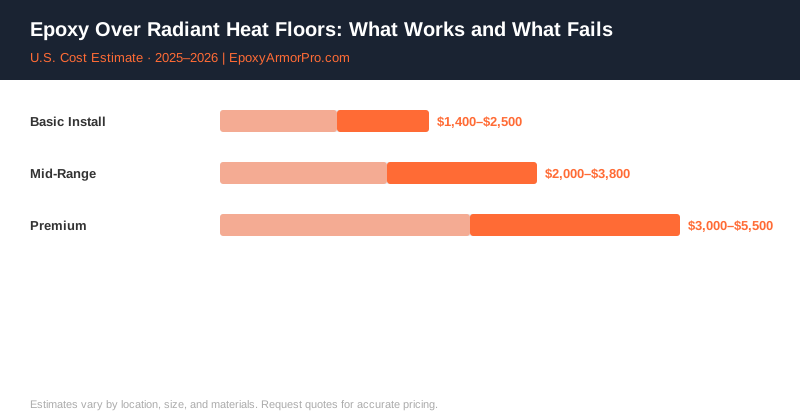
For a 400-square-foot garage or workshop floor with in-floor radiant heat, expect to pay a premium over standard epoxy installs:
| Job Component | Standard Garage | Radiant Heat Premium |
|---|---|---|
| Base install (materials + labor) | $1,600–$2,800 | +$300–$700 |
| Coating upgrade (polyaspartic or polyurea topcoat) | Included above | +$400–$1,200 |
| Temperature testing + monitoring | Not typically needed | +$50–$150 |
| Total for radiant heat install | — | $2,400–$4,800 |
The premium is mostly coating cost. Polyurea and polyaspartic topcoats are more expensive than standard polyurethane finishes, and they’re the right spec for this application. It’s not a negotiable upgrade.
Contractor Referral Disclaimer: EpoxyArmorPro is a contractor referral and cost information service, not a licensed flooring contractor. We connect consumers with independent, licensed, and insured contractors. We do not perform any flooring work directly. Cost estimates are averages based on market data and vary by location, project size, materials, and contractor. Always verify contractor licensing and insurance before hiring. Individual quotes may differ from estimates shown.