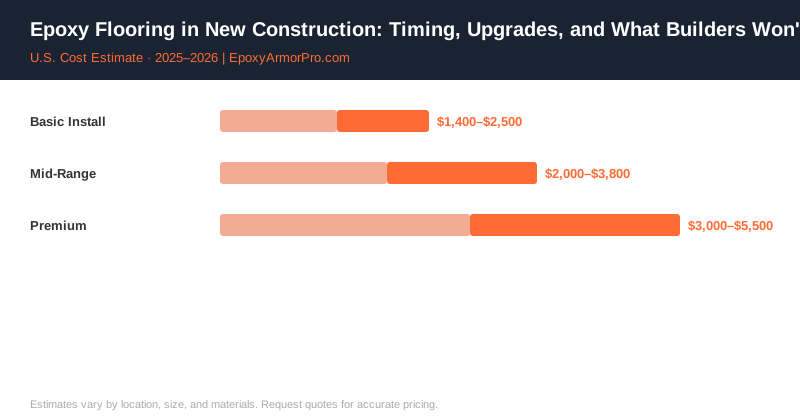
The builder gave you two options: “upgrade to epoxy garage floor” for $1,800, or skip it and do it yourself later. Here’s the problem with both answers. The builder’s package is almost certainly underspecified for what you’re paying. And “do it yourself later” runs into the 28-day rule that most new homeowners have never heard of.
New construction epoxy is one of the most common flooring decisions homeowners get wrong — usually because nobody explains the timing constraints or what a good spec actually looks like. Here’s what you need to know before your slab is even poured.
The 28-Day Rule: Non-Negotiable
Concrete starts as a liquid mix of cement, water, and aggregate. The curing process — where that mix hardens into a structural material — takes time. Lots of it.
At 7 days, concrete reaches about 70% of its design strength. At 28 days, it reaches approximately 99%. More importantly for epoxy: the internal relative humidity of fresh concrete is extremely high, often 95%+ in the first two weeks, and it needs time to equalize downward before coating will bond properly.
Most epoxy manufacturers explicitly state that concrete must be at minimum 28 days old before their products are applied. Some specify 60 days for optimal results. Apply before 28 days and you’re coating concrete that’s still actively losing moisture — which causes blistering, delamination, and failure.
According to the Portland Cement Association, the construction industry’s standard moisture stabilization guidance requires a minimum 28-day wait for concrete flatwork before applying moisture-sensitive coatings. That’s been the industry standard for decades.
What this means for your build schedule: If your slab is poured in mid-April, the earliest you should have epoxy applied is mid-May. If your builder is proposing to coat the garage floor during the construction timeline — before the house is even drywalled — check the slab pour date. A builder who coats at day 14 because it’s convenient for their schedule is setting you up for a floor that fails in year two.
What Builder Upgrade Packages Usually Include (and Don’t)
Most production builders offer a “garage floor epoxy upgrade” as a line item. Here’s what you typically get for that $1,500–$2,500 charge:
What’s usually included:
- One coat water-based epoxy (50–70% solids — not the professional 100% solid standard)
- Broadcast vinyl chip (light density, not full broadcast)
- No additional topcoat
- 1-year workmanship warranty
What’s usually NOT included:
- 100% solid epoxy formulation
- Full-broadcast chip system
- Polyurethane or polyaspartic topcoat
- Moisture testing
- Any warranty beyond year 1
Builder packages are optimized for margin and speed, not durability. The water-based epoxy systems typically used in builder packages are thinner and less durable than 100% solid products — and without a topcoat, they wear faster, scuff more easily, and are susceptible to hot tire pickup from day one.
| Package Type | What You Get | Typical Cost | Expected Lifespan |
|---|---|---|---|
| Builder upgrade (basic) | Water-based epoxy + light chip | $1,500–$2,500 | 3–7 years |
| Professional 1-coat system | 100% solid epoxy + partial chip | $2,000–$3,200 | 7–12 years |
| Professional 3-coat system | Primer + 100% solid + polyaspartic topcoat | $2,800–$4,500 | 12–20 years |
| Premium metallic/custom | Full system + custom design | $4,500–$8,000+ | 15–25 years |
The Better Strategy: Decline the Builder Package and Do It Right After Closing
For most homeowners, the smartest move is to skip the builder’s epoxy upgrade and schedule a professional installation 30–60 days after closing.
Why this works better:
- Your concrete is properly cured — not coated at day 20 because it fit the builder’s construction schedule.
- You choose the contractor, not the builder’s preferred subcontractor.
- You get to spec the system you actually want — full chip, proper topcoat, the works.
- You can include moisture testing, which most builder installs skip entirely.
- The warranty runs from your installation date, not the builder’s build date.
The cost difference is usually modest. A builder upgrade might be $2,000. A proper professional install 60 days post-closing might be $2,500–$3,500. The extra $500–$1,500 buys you significantly better materials, proper timing, and a contractor who’s accountable to you directly.
Coordinating with Other Trades During New Construction
If you’re doing a post-closing professional epoxy install during the first 60 days, timing with other trades matters. Epoxy goes down after:
- All drywall work in the garage is complete (dust and compound contamination ruins coating prep)
- Overhead garage door installation is done
- HVAC, electrical, and plumbing rough-in in the garage is finished
- Any exterior concrete work (driveway apron, walkways) is complete
It can go down before:
- Cabinets and storage systems (they get installed after the floor — much easier)
- Garage door opener installation (contractor or homeowner can do it once floor is cured)
- Wall paint touch-up (do the floor, then touch up walls if needed)
A good sequencing rule: epoxy floor is the last structural installation in the garage, before any storage, shelving, or equipment goes in.
What About Basements in New Construction?
New construction basement epoxy follows the same 28-day rule, with one additional consideration: basement slabs are often thicker and slower to equalize moisture because of soil contact on multiple sides. For basement installs, many contractors recommend waiting 60 days in new construction, not just 28.
The basement epoxy flooring cost guide covers pricing details, but for new construction specifically, budget an additional $200–$400 for moisture testing on a basement application — it’s more important here than anywhere else.
Timeline Summary
| Milestone | Timing |
|---|---|
| Concrete slab poured | Day 0 |
| Earliest moisture testing | Day 21–28 |
| Earliest epoxy application (if tests pass) | Day 28–35 |
| Recommended application window (post-closing) | Day 45–90 |
| Walk-on ready after install | 24 hours |
| Vehicle traffic | 72 hours |
| Full cure (move in furnishings/equipment) | 7 days |
Contractor Referral Disclaimer: EpoxyArmorPro is a contractor referral and cost information service, not a licensed flooring contractor. We connect consumers with independent, licensed, and insured contractors. We do not perform any flooring work directly. Cost estimates are averages based on market data and vary by location, project size, materials, and contractor. Always verify contractor licensing and insurance before hiring. Individual quotes may differ from estimates shown.