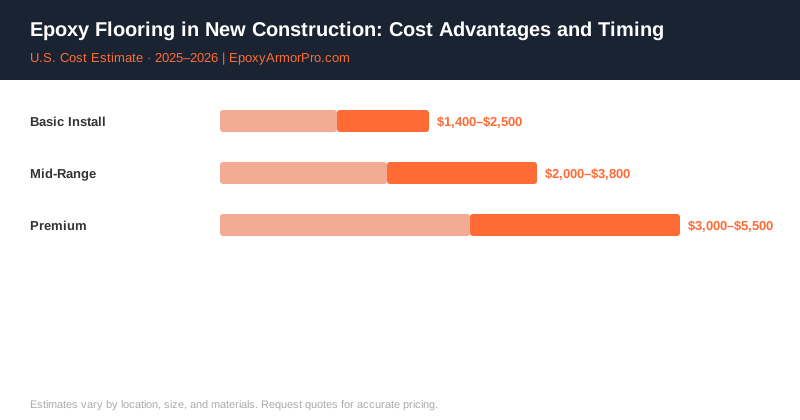
In 2010, adding epoxy to a new garage during construction cost roughly $800–$1,200. Today, that same scope runs $1,400–$2,500 — but here’s what’s changed in your favor: the concrete going into new homes is better, the curing process is cleaner, and builders are more open to coordinating specialty trades during construction than they used to be. If you’re building new, you have a real cost and logistics advantage that most homeowners don’t realize they’re sitting on.
Why New Construction Changes the Math
When epoxy is applied to existing concrete, a significant portion of the cost is stripping whatever’s already there — old sealers, curing compounds, contamination, and surface irregularities accumulated over years. None of that exists on a new slab.
New construction epoxy advantages:
No existing coatings to remove. Existing homes often have curing compounds sprayed during the original construction that must be completely ground off before epoxy bonds. On a new pour, you control whether that compound is applied — and many flooring contractors will ask the GC to skip it.
Cleaner concrete. No oil stains, no rubber tire marks, no calcium chloride residue. Surface prep still requires diamond grinding (that’s non-negotiable), but the grinding work is significantly faster on uncontaminated concrete.
Coordinated access. Scheduling a flooring contractor before drywall and trim goes in means no masking baseboards, no moving built-ins, no working around garage door hardware. That access advantage cuts labor time by 15–25% compared to a finished space retrofit.
Lower total system cost. Because prep is less intensive, the labor component drops. According to Concrete Network, new construction epoxy installations typically run 10–20% less than identical-scope retrofit projects.
Cost Comparison: New Construction vs. Retrofit
| Scenario | Typical Cost (480 sq ft) | Per Sq Ft | Why It Differs |
|---|---|---|---|
| New construction, garage only | $1,100–$2,000 | $2.30–$4.15 | No existing coatings, clean concrete |
| New construction, garage + basement | $2,800–$5,000 | $2.50–$4.55 | Bundled, clean slab throughout |
| Retrofit existing garage | $1,400–$2,500 | $2.90–$5.20 | Prep adds time and cost |
| Retrofit existing basement | $1,800–$4,500 | $2.50–$5.00 | Moisture testing, potential barriers |
The Concrete Curing Window
Here’s the timing issue that catches many new construction projects: fresh concrete must cure for at least 28 days before epoxy can be applied. Concrete reaches approximately 70% of its design strength in 7 days, but continues curing for months. Applying epoxy too early over “green” concrete causes adhesion failures because the concrete is still releasing moisture vapor at high rates.
A 28-day wait is the practical minimum. Many flooring contractors prefer 60–90 days for thick slabs in wet climates. In dry climates like Arizona or Nevada, 30–45 days may be adequate with proper moisture testing.
Tell your general contractor when you plan to have the epoxy installed. Ask them to:
- Skip the curing compound on garage and basement slabs — or use a compound that’s compatible with floor coatings
- Protect the slab from construction traffic with cardboard or temporary protection
- Schedule your flooring contractor after mechanical, electrical, and plumbing rough-in but before drywall in the garage
That sequence keeps the concrete clean while allowing the flooring work to happen before trim, doors, and fixtures complicate access.
Builder Package vs. Independent Contractor
When building new, you have two sourcing options for epoxy flooring:
Builder-Supplied Package
Some production builders offer epoxy garage flooring as a standard or optional upgrade, priced into the contract. These packages are convenient but typically involve:
- Lower-grade products — builders optimize for margins; their “epoxy” upgrade often uses consumer-grade or low-solids material
- Basic systems — usually a solid-color single-coat system, not a chip/flake multi-layer install
- Limited warranty — the builder’s flooring subcontractor warranty may be 1 year vs. the 10-year warranty a quality independent contractor provides
Builder upgrade pricing typically runs $1,200–$2,000 for a standard two-car garage — competitive with independent contractors, but often for an inferior system.
Independent Flooring Contractor
Bringing in your own specialty contractor outside the builder’s package gets you:
- Choice of system and material grade
- Contractor warranties up to 10 years
- Ability to match finishes across multiple spaces (garage, basement, laundry) in one project
The timing coordination is slightly more complex — you’ll need to notify your GC, schedule access, and ensure the slab has adequate cure time — but the quality and warranty difference is usually worth it.
Negotiating Epoxy Into a Builder Contract
If you’re buying from a production builder, getting epoxy coating included in the base contract or as a credit against upgrades is possible in some markets. A few tactics:
Ask for a flooring credit. If the builder’s standard package includes stamped concrete or painted garage floors, request a credit equal to that package’s value and apply it toward your own contractor.
Add it as a pre-close condition. In slower markets, builders will negotiate pre-close upgrades. Epoxy flooring is a low-cost high-visibility upgrade builders sometimes agree to because it photographs well and differentiates the listing.
Coordinate with the framing timeline. The GC knows exactly when the slab is poured. Ask for that date in writing so you can count forward to your 28-day application window.
New Construction Checklist
| Timing | Action | Why |
|---|---|---|
| During contract | Negotiate flooring credit or upgrade | Cheapest time to add it |
| At slab pour | Note the date; request no curing compound | Sets your application window |
| Day 28+ | Schedule moisture test | Verify slab is ready |
| Before drywall | Epoxy installation window | Best access, no masking needed |
| After cure (72 hrs) | Pedestrian traffic only | Let it cure before vehicle traffic |
| Day 7+ | Vehicle traffic | Full cure for driving over |
Getting the Most Out of New Construction Timing
New construction is genuinely the best time to do this — clean slab, maximum access, lower cost. The mistakes to avoid are rushing the concrete cure and letting builder convenience drive you toward an inferior product.
For context on what good systems look like, the epoxy flooring cost per square foot guide breaks down exactly what you’re getting at each price point. And if you’re deciding whether the investment makes sense at all, does epoxy flooring increase home value has the resale data.
Contractor Referral Disclaimer: EpoxyArmorPro is a contractor referral and cost information service, not a licensed flooring contractor. We connect consumers with independent, licensed, and insured contractors. We do not perform any flooring work directly. Cost estimates are averages based on market data and vary by location, project size, materials, and contractor. Always verify contractor licensing and insurance before hiring. Individual quotes may differ from estimates shown.