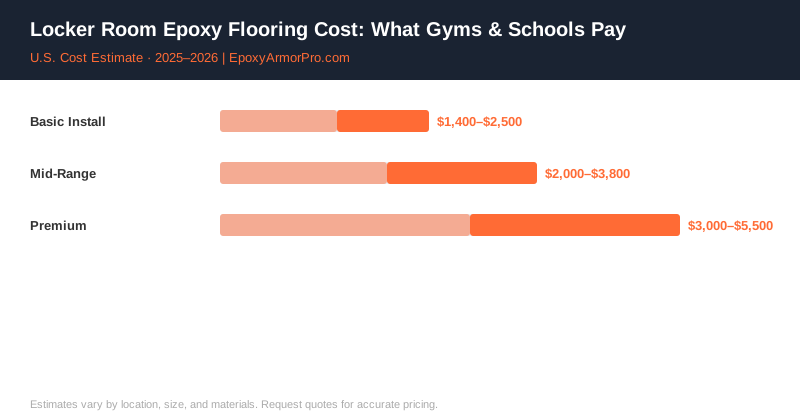
An athletic director at a mid-size high school budgeted $3 a square foot for a locker room epoxy refresh, based on a garage-flooring quote he’d seen online. The actual bid came in at $7 a square foot. The gap wasn’t padding — it was slip-resistant texture, integral cove base at every shower stall, and drain integration that a garage floor never needs to account for.
Why Locker Rooms Are Their Own Category
Locker rooms combine constant moisture, bare feet, cleaning chemicals, and heavy foot traffic in a relatively small footprint — a combination that demands a specific set of coating properties standard commercial epoxy doesn’t automatically deliver.
| Component | Cost per Sq Ft | Notes |
|---|---|---|
| Standard commercial epoxy (dry areas) | $4–$6 | Hallways, benches area |
| Slip-resistant broadcast system (wet areas) | $6–$9 | Showers, adjacent floor |
| Antimicrobial additive | +$1–$2 | Reduces bacterial/fungal growth |
| Integral cove base (per linear ft) | $12–$25 | Shower stalls, sanitary corners |
| Drain re-slope correction | $2–$5 per sq ft | If existing slope inadequate |
For a 2,500-square-foot locker room including shower areas, expect $15,000–$28,000 total — with the shower zone alone often accounting for 40% of the budget despite being a fraction of the square footage.
Antimicrobial Additives Aren’t Optional Here
Locker rooms are a documented breeding ground for bacteria and fungi, including athlete’s foot (tinea pedis) and MRSA transmission risks that athletic trainers and school nurses deal with regularly. Many epoxy manufacturers now offer built-in antimicrobial additives — typically silver-ion or similar technology — that inhibit microbial growth on the coating surface between cleanings. It’s a relatively small add-on cost for a facility with constant bare-foot traffic.
Cove Base at Shower Stalls Is Where Failures Start
The single most common failure point in locker room flooring isn’t the open floor — it’s the transition where the floor meets shower stall walls. Without an integral, sealed cove base, water migrates behind the coating at that joint, leading to delamination, mold growth behind walls, and eventually a full remediation project. It costs more upfront to do this joint correctly, but it’s dramatically cheaper than fixing hidden water damage later.
Downtime and Scheduling
Locker rooms are hard to take fully offline during a school year or gym’s operating season. Most contractors recommend summer break or off-season windows for full recoats, since cure times for slip-resistant broadcast systems typically run 3–5 days before the space can return to full service, including shower use.
Questions Before You Sign
- What wet coefficient of friction rating does the shower-area system carry?
- Is an antimicrobial additive included, or is it an upsell?
- Is cove base integral and sealed at every shower stall?
- Has the floor slope to drains been verified?
- What’s the realistic cure time before showers can be used again?
Gymnasiums adjacent to locker rooms have their own separate spec — see our school gymnasium flooring cost guide for that comparison.
Contractor Referral Disclaimer: EpoxyArmorPro is a contractor referral and cost information service, not a licensed flooring contractor. We connect consumers with independent, licensed, and insured contractors. We do not perform any flooring work directly. Cost estimates are averages based on market data and vary by location, project size, materials, and contractor. Always verify contractor licensing and insurance before hiring. Individual quotes may differ from estimates shown.