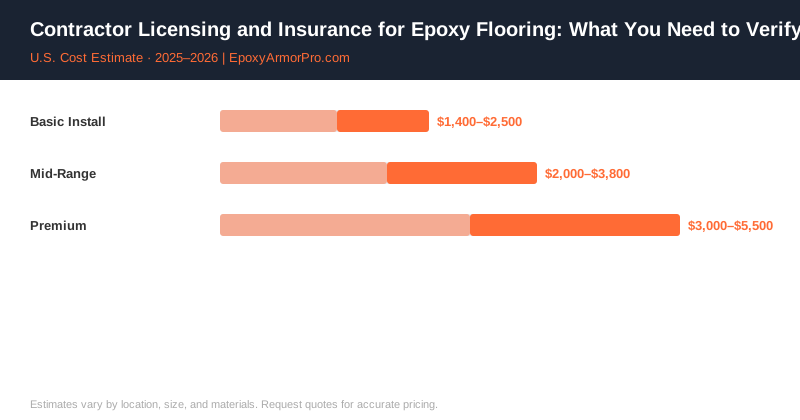
$4,800 job. Contractor slips during installation and files a claim against your homeowner’s insurance. His workers’ comp policy had lapsed three months earlier. Your insurer pays, then drops your policy for running a “commercial operation” without disclosure.
This scenario plays out hundreds of times a year. The fix is simple and costs you nothing: verify insurance before work starts. Yet most homeowners skip it because it feels awkward, or they don’t know what to ask for.
Here’s exactly what to look for.
What Licenses Are (and Aren’t) Required
Licensing requirements for epoxy flooring contractors vary by state — and “epoxy flooring” isn’t a specific license category anywhere in the US. Instead, contractors typically fall under one of several broader licensing categories depending on your state:
General contractor license: Required in most states for work above a certain dollar threshold (often $500–$1,000). Most states require a general contractor license for any residential work above that threshold, regardless of specialty.
Specialty contractor license: Some states (California, Florida, Texas, and others) have specialty categories for flooring or concrete work. Florida’s Division of Business and Professional Regulation, for example, licenses concrete contractors under Division I — Specialty Structures.
No state license, local license only: Several states (including Colorado, Louisiana, and a handful of others) have minimal or no statewide contractor licensing requirements, leaving regulation to municipalities. In those markets, the local city or county may have its own requirements.
The bottom line: licensing rules are a patchwork. What’s more universal and more practically important is insurance.
The Two Coverages Every Epoxy Contractor Must Carry
1. General Liability Insurance
This covers property damage and third-party bodily injury. If your contractor’s grinding equipment damages your car, your drywall, or your neighbor’s property — or if a visitor trips over their equipment — general liability pays.
Minimum recommended limits: $1 million per occurrence / $2 million aggregate. Any established contractor carries at least this. Larger commercial contractors often carry $2 million per occurrence.
What to ask for: A certificate of insurance (COI) naming your project address as the location of the insured work. The COI shows the policy number, carrier, limits, and effective dates. It takes contractors about five minutes to request from their insurer — any hesitation about providing one is a red flag.
2. Workers’ Compensation Insurance
Workers’ comp covers the contractor’s employees if they’re injured on your property. Without it, an injured worker can potentially pursue a claim against you as the property owner.
Who needs it: In most states, any employer with one or more employees is required to carry workers’ comp. Some states have specific thresholds (Florida requires it for businesses with 4+ employees in the construction trades; other states start at 1).
The single-owner exception: If the contractor is a sole proprietor with no employees and claims to be exempt from workers’ comp, that’s sometimes legitimate — but it means if they’re injured on your property, you have less protection. Consider asking for a written statement of their employee count and confirm their exemption status with your state’s workers’ comp board.
| Coverage Type | Why You Need It | Minimum Adequate Coverage |
|---|---|---|
| General liability | Damage to your property, third-party injury on-site | $1M per occurrence / $2M aggregate |
| Workers’ compensation | Covers contractor’s employees injured on-site | State-mandated; usually required with any employees |
| Contractor’s equipment/tools | Covers their equipment on your property | Optional; their problem, not yours |
| Commercial auto | Covers accidents from their work vehicles | Their responsibility, but worth confirming |
How to Verify Coverage (Don’t Just Take Their Word)
Asking for the COI isn’t enough — it’s easy to show a certificate for a policy that lapsed last month. Here’s the verification step most homeowners skip:
Call the insurance carrier directly. The COI lists the insurer. Call the carrier’s main line, give them the policy number, and ask to confirm active coverage as of today. Takes three minutes. Most carriers confirm this over the phone.
Check the effective dates on the COI. A certificate showing general liability that expires next week on a job starting in two months is a problem. Make sure coverage is active for the duration of your project.
Ask about subcontractors. If the contractor uses subcontractors for any portion of the work, do those subs carry their own insurance — or are they covered under the main contractor’s policy? Ask explicitly. An uninsured sub working on your floor creates the same liability exposure as an uninsured primary contractor.
State Licensing Verification
For the states that do have contractor licensing, verification is usually straightforward:
- California: Check the Contractors State License Board (CSLB) at cslb.ca.gov
- Florida: Florida Department of Business and Professional Regulation (myfloridalicense.com)
- Texas: Texas Department of Licensing and Regulation (tdlr.texas.gov)
- New York: New York State Division of Licensing Services
- Illinois: Illinois Department of Financial and Professional Regulation
Most state licensing boards have an online lookup by contractor name or license number. Run the search. Verify the license is active and in good standing. Check for any disciplinary actions or complaints.
Even in states with minimal licensing requirements, check the Secretary of State’s website to verify the contractor is a registered business entity — not just a person with a website.
What Happens If You Skip the Verification
Uninsured contractors are cheaper for one simple reason: they’re not paying insurance premiums. If something goes wrong:
- Damaged property comes out of your pocket (or your homeowner’s policy)
- An injured worker can sue you directly as the property owner
- You have no insured party to file against if the work is defective
- Small claims court is your only recourse — and collecting on a judgment against a fly-by-night contractor is often impossible
A 2022 analysis by the Insurance Information Institute estimated that homeowners who hire uninsured contractors face an average additional exposure of $8,000–$15,000 in the event of a worker injury, depending on the state.
The 30-second call to verify a COI eliminates that exposure entirely.
Permits: When They Apply to Epoxy Flooring
For most residential epoxy flooring jobs — garage floors, basement floors — a permit isn’t required. You’re applying a coating to an existing concrete surface. No structural changes, no electrical, no plumbing.
Permit requirements may apply when:
- The project involves concrete removal and replacement (not just coating)
- You’re coating a commercial property (different rules than residential)
- Local codes specifically require permits for concrete coating work (rare, but check with your local building department if you’re unsure)
When in doubt, ask your contractor. If they say “you don’t need a permit” without having checked — or if they actively discourage you from pulling a permit to keep the job off-record — that’s worth a five-minute call to your local building department to verify.
For more on evaluating contractors before you commit, see our full contractor-finding guide and our contractor red flags checklist.
Contractor Referral Disclaimer: EpoxyArmorPro is a contractor referral and cost information service, not a licensed flooring contractor. We connect consumers with independent, licensed, and insured contractors. We do not perform any flooring work directly. Cost estimates are averages based on market data and vary by location, project size, materials, and contractor. Always verify contractor licensing and insurance before hiring. Individual quotes may differ from estimates shown.