Phoenix garage floors hit 140°F on summer afternoons. Not the air — the concrete itself. You can verify this with any infrared thermometer in July, and the number will probably surprise you. That temperature matters enormously for epoxy, both at installation and over the life of the coating.
Hot-climate epoxy isn’t impossible — millions of successful installs exist across Arizona, Texas, Florida, and Southern California. But the product selection, timing, and installation technique are genuinely different from a Minneapolis or Boston job. Here’s what the Sun Belt demands.
The Three Heat-Related Threats to Epoxy
1. Hot Tire Pickup
This is the most common complaint from warm-climate epoxy owners: the tires of a hot car — straight off a summer highway — stick to the epoxy surface and pull up chunks of coating when you drive off. The coating essentially softens slightly under the concentrated heat of a tire, bonds to the rubber, then tears when the car moves.
Standard water-based epoxy (the big-box DIY kit variety) is particularly vulnerable. 100% solids epoxy is better. But the real solution is a polyaspartic or urethane topcoat over the epoxy base — these topcoats have significantly higher heat deflection temperatures than the base coat alone.
2. UV-Induced Yellowing and Degradation
Standard aromatic epoxy — which is most epoxy — yellows and degrades under UV exposure. In a climate like Southern California or Florida, where garage doors may be open for hours daily and sunlight angles in directly, you can see visible yellowing within a single season.
The solution is an aliphatic topcoat (polyaspartic or polyurethane) formulated to resist UV. We cover this in detail in our UV-resistant epoxy guide.
3. Application Temperature Limits
Here’s the less-obvious problem: epoxy also has a maximum application temperature, typically around 85–90°F for the substrate surface. Above that threshold, the epoxy sets too fast — the “pot life” (working time after mixing) drops from 20–30 minutes to under 10 minutes. Contractors end up with lap marks, bubbles, and uneven coverage. The ASTM D7234 pull-off adhesion test shows meaningfully reduced bond strength on substrates above 90°F.
In Phoenix in July, an unshaded garage floor reaches these temperatures by 9 a.m.
| Climate Challenge | At-Risk Regions | Best Solution |
|---|---|---|
| Hot tire pickup | All hot climates | Polyaspartic topcoat |
| UV yellowing | FL, CA, AZ, TX | Aliphatic/polyaspartic topcoat |
| Surface too hot to coat | AZ, NV, TX in summer | Early morning install or fall/spring timing |
| Concrete expansion/contraction | Desert climates (high day/night delta) | Flexible epoxy formulations |
Best Time of Year to Install in Hot Climates
Arizona and Nevada (Desert Southwest)
Summer is genuinely difficult — substrate temps are too high during daylight hours. Contractors who do summer installs typically start at 5 or 6 a.m. to catch the brief window before concrete surfaces overheat. That’s a real constraint on crew size and job scope.
The clear preferred windows are October through April. Fall and winter in Phoenix, Tucson, and Las Vegas offer the ideal 60–85°F substrate temps that epoxy needs, without the extreme UV and humidity complications. Many contractors are booked months out for October installs specifically.
Texas
Texas has more climate variation than people assume. Houston has humidity problems (more on that in our high-humidity epoxy guide). Dallas and San Antonio have heat problems without the Gulf moisture. El Paso behaves like the desert Southwest.
For North and Central Texas, March–May and October–November are the prime installation windows. Summer installs in Houston are particularly problematic — high heat AND high humidity is the worst-case scenario for epoxy adhesion.
Florida
Florida’s threat is less about raw heat and more about humidity — a daily summer relative humidity that rarely drops below 70%, combined with concrete that’s often sitting above the water table. However, Florida winters (December–February) are genuinely excellent for epoxy installation: substrate temps in the 65–75°F range, low humidity, no monsoon.
California
Northern California (Bay Area, Sacramento) has a generous spring and fall window. Southern California (LA, San Diego) is relatively forgiving year-round due to mild temps and low humidity — but afternoon garage temperatures can still spike in summer, so morning installations are preferred June–September.
- Arizona/Nevada: October–April preferred. Summer requires 5–6 a.m. start times.
- Texas (inland): March–May and October–November optimal.
- Florida: December–February for best results. Avoid June–September if possible.
- Southern California: Year-round viable, but schedule for morning in summer months.
- All regions: Confirm concrete surface temp with infrared thermometer before coating starts. Must be below 85°F.
Choosing the Right Products for Hot Climates
Not all epoxy is the same, and hot climates expose the differences fast.
100% solids epoxy as the base coat: This is the professional standard everywhere, but it’s especially important in hot climates where a thin water-based product simply won’t survive the thermal stress.
Aliphatic polyaspartic topcoat: This is the upgrade that matters most in Sun Belt climates. It resists UV yellowing, raises the heat deflection temperature enough to significantly reduce hot tire pickup risk, and is available in fast-cure formulations that allow same-day use. The cost premium is typically $0.50–$1.50 per square foot over standard epoxy alone.
Light colors and metallic flakes: Dark-colored floors absorb significantly more solar heat than light colors. A light gray or beige base with metallic flakes can meaningfully reduce surface temperature compared to a dark solid color. This is an aesthetic choice with a practical benefit in desert climates.
What to Expect to Pay
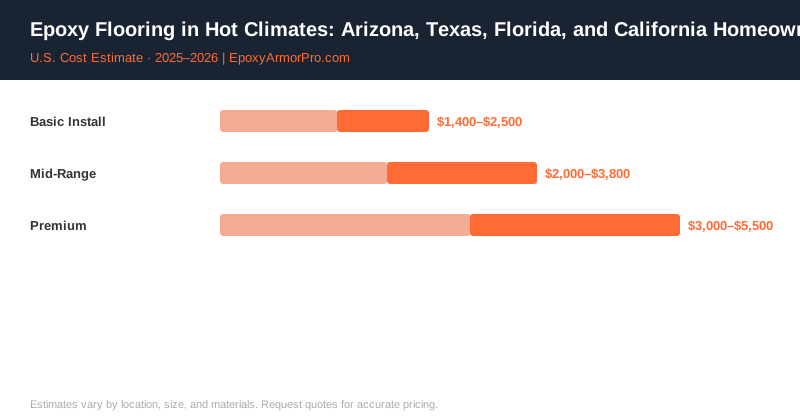
Hot-climate pricing is generally in line with national averages — the premium comes from product selection (polyaspartic topcoat) rather than labor.
| Service | Cost Range |
|---|---|
| Standard 2-car garage epoxy | $1,200–$2,400 |
| Polyaspartic topcoat upgrade | +$200–$600 for average garage |
| UV-resistant aliphatic clear coat | +$150–$400 |
| Early-morning summer scheduling premium | +0–15% (contractor-dependent) |
For a detailed breakdown of all cost factors, see our garage epoxy flooring guide.
Maintenance in Hot Climates
Epoxy in hot climates actually requires less maintenance than in cold climates — you don’t have salt and freeze-thaw cycles working against you. The main concerns are:
- UV exposure: If you didn’t get a UV-stable topcoat, expect to see yellowing in 2–5 years. Recoating with a UV-stable polyaspartic clear coat extends the life significantly.
- Heat cracking at concrete joints: The concrete itself may move seasonally. Monitor control joints and reseal if they gap open — these are water intrusion points.
- Tire marks: Hot tires on dark-colored coatings can leave rubber marks even on quality polyaspartic floors. These clean up easily with a degreaser and soft mop.
For seasonal care tips, our epoxy flooring maintenance guide has a full protocol.
Contractor Referral Disclaimer: EpoxyArmorPro is a contractor referral and cost information service, not a licensed flooring contractor. We connect consumers with independent, licensed, and insured contractors. We do not perform any flooring work directly. Cost estimates are averages based on market data and vary by location, project size, materials, and contractor. Always verify contractor licensing and insurance before hiring. Individual quotes may differ from estimates shown.