Dave runs maintenance for a mid-size stamping plant in Ohio. He got three quotes for coating the floor under a new press line: $4 a square foot, $11 a square foot, and $19 a square foot. He almost took the cheap one — until the low bidder admitted, when asked directly, that the system wasn’t rated for static point loads above 500 psi. His press feet alone exceed that. That single question saved him from a floor that would have cracked under the machine within months.
Why Machinery Loads Are Different From Foot Traffic
A person walking across a floor exerts maybe 5–10 psi at any given moment. A CNC machine, stamping press, or injection molder sitting on isolated feet or leveling pads can concentrate its entire weight onto a few square inches of contact — sometimes exceeding 1,000 psi at those points. That’s a completely different engineering problem than coating a showroom floor.
Cost by System Type
| System | Cost per Sq Ft | Best For |
|---|---|---|
| Standard epoxy (2–3 coats) | $4–$7 | Light assembly, foot traffic only |
| Epoxy mortar (broadcast/trowel) | $9–$14 | Medium machinery, moderate loads |
| Urethane cement | $12–$18 | Heavy machinery, thermal shock zones |
| Vibration-dampening epoxy underlayment | +$2–$4 | Add-on for equipment with high vibration |
| Anchor bolt/pad grouting (per fixture) | $150–$400 | Machine-specific mounting points |
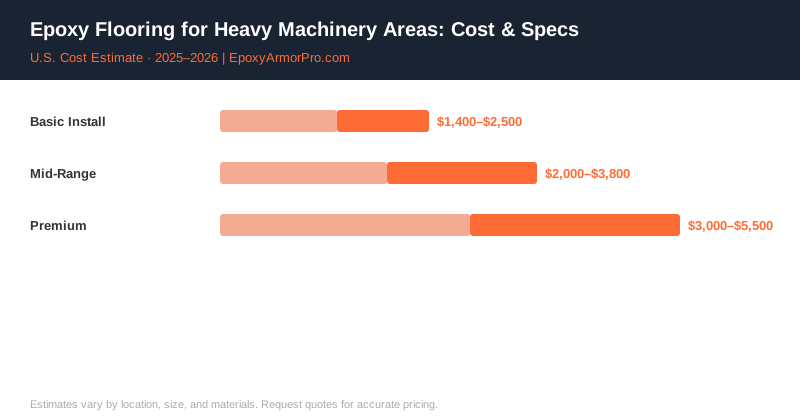
For a 5,000-square-foot machine shop floor, total costs typically land between $45,000 and $90,000 for a properly specified mortar or urethane system, including surface prep and machine-mount detailing.
The Thermal Shock Factor
Machinery that runs hot — die casting, forging, welding cells — creates another failure mode standard epoxy can’t survive: thermal shock. Rapid temperature swings cause the coating to expand and contract at a different rate than the substrate, leading to cracking. Urethane cement systems handle thermal cycling from roughly 14°F to 250°F, which is why they dominate in foundries and forging areas, while epoxy is generally limited to sustained temperatures under 140°F.
Chemical Exposure Compounds the Problem
Cutting fluids, hydraulic oil, and degreasers are a daily reality around heavy machinery. The Decorative Concrete Institute has noted that chemical resistance testing (ASTM D1308-based methods) is one of the most frequently skipped steps in industrial coating specs — installers assume “epoxy” automatically means chemical-resistant, but formulations vary widely in how they hold up to specific solvents. Get your fluid list in front of the manufacturer before they finalize the resin blend.
Realistic Timeline
Machinery floors rarely get coated in an empty room — production has to keep moving. Expect contractors to work in zones, moving equipment section by section, which extends the calendar timeline even though actual coating time per zone is short. Budget 2–4 weeks for a full plant floor done in phases, versus 3–5 days for an empty space.
Before You Sign
- What’s the point-load and compressive strength rating, in psi?
- Does the system handle your specific chemical exposure list?
- Can the work be phased around active production?
- What’s the thermal range the system is rated for?
- Who grouts and levels the machine mounting pads — is that included?
For adjacent industrial spaces with different load profiles, see our forklift traffic flooring guide and our food processing plant flooring guide.
Contractor Referral Disclaimer: EpoxyArmorPro is a contractor referral and cost information service, not a licensed flooring contractor. We connect consumers with independent, licensed, and insured contractors. We do not perform any flooring work directly. Cost estimates are averages based on market data and vary by location, project size, materials, and contractor. Always verify contractor licensing and insurance before hiring. Individual quotes may differ from estimates shown.