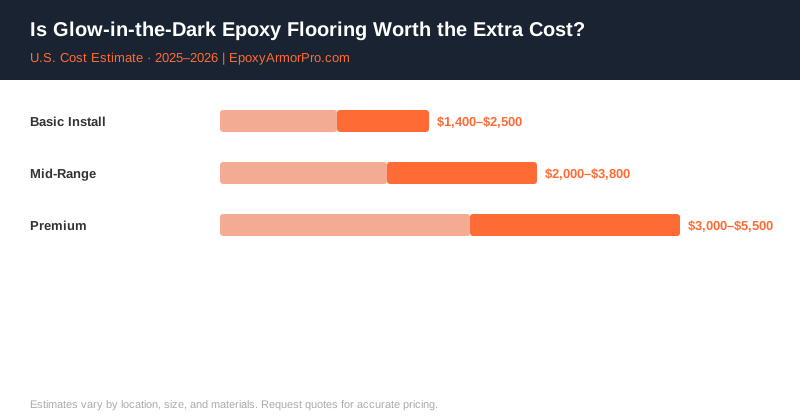
Is glow-in-the-dark epoxy flooring actually worth the extra $2-$5 per square foot, or is it just a novelty that looks cool in Instagram videos and disappoints in real life? The honest answer depends entirely on what you’re expecting from it — and most disappointment comes from a mismatch between marketing videos and physics.
Glow-in-the-dark epoxy uses photoluminescent aggregate — small particles or a full broadcast layer of strontium aluminate-based pigment — embedded into the coating. These particles absorb and store light energy (from sunlight, UV light, or even standard room lighting), then slowly release it as visible glow once the light source is removed. It’s genuine, well-understood photoluminescent chemistry, the same basic principle behind glow-in-the-dark stars and exit signage — not a gimmick.
What It Actually Costs
| System | Cost per Sq Ft | Notes |
|---|---|---|
| Standard epoxy (baseline) | $3–$6 | No glow additive |
| Light glow accent (partial broadcast) | $5–$8 | Subtle accent glow, lower material cost |
| Full glow broadcast | $7–$11 | Strongest, most even glow effect |
| Full 500 sq ft space, full broadcast | — | $3,500–$5,500 |
The Glow Duration Depends on Charge Time and Aggregate Density
A common misconception, fueled by dramatic marketing videos, is that glow-in-the-dark epoxy floors glow brilliantly all night at the intensity shown in those videos. In reality, the glow is brightest immediately after the light source is removed and gradually fades over several hours — noticeably dimmer after an hour or two, though still visible for much longer in a genuinely dark room. The brightness and duration depend directly on how much photoluminescent aggregate is used (a light accent broadcast glows less intensely and for less time than a full, dense broadcast) and how much light charged it beforehand (direct sun or strong UV charges it far more effectively than typical indoor lighting).
Where It Actually Makes Sense (and Where It Doesn’t)
Glow-in-the-dark epoxy works best in spaces with limited but real light exposure — a basement with some daylight from window wells, a garage with bright shop lighting, or any space near a window that gets direct sun for at least part of the day. It works considerably less well in fully interior windowless rooms with only occasional artificial lighting, since the aggregate needs a real charge cycle to glow meaningfully, and dim indoor lighting alone charges it weakly compared to daylight or UV.
Longevity of the Glow Effect
Quality photoluminescent aggregate embedded in epoxy doesn’t meaningfully degrade over normal use — it’s a mineral-based pigment, not a dye that fades with UV exposure the way some colors do. The glow performance you get on installation day is generally representative of what you’ll get years later, assuming the topcoat itself isn’t worn through in high-traffic areas exposing the aggregate to abrasion it wasn’t designed for.
What to Ask Your Contractor
- What density of photoluminescent aggregate are you using — light accent or full broadcast?
- Can you show me a charged sample under the actual type of light my space gets?
- What’s the realistic glow duration and brightness curve I should expect?
- Does my space get enough natural or UV light exposure to charge the aggregate well?
- Does the topcoat protect the aggregate adequately in high-traffic areas?
Contractor Referral Disclaimer: EpoxyArmorPro is a contractor referral and cost information service, not a licensed flooring contractor. We connect consumers with independent, licensed, and insured contractors. We do not perform any flooring work directly. Cost estimates are averages based on market data and vary by location, project size, materials, and contractor. Always verify contractor licensing and insurance before hiring. Individual quotes may differ from estimates shown.