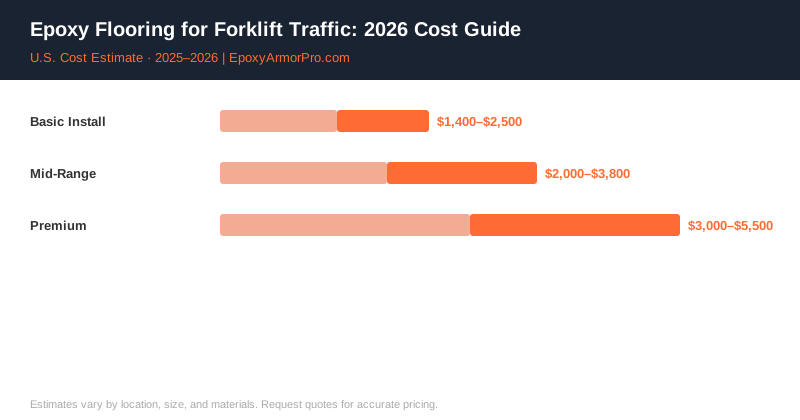
A standard two-coat epoxy system lasts maybe 18 months under daily forklift traffic before it starts chipping at the wheel paths. That’s the number warehouse managers don’t hear until they’ve already paid for the wrong floor once. Forklifts don’t just add weight — they add point-load stress, tight-radius turning, and constant abrasion that a garage-grade coating was never engineered to handle.
Why Forklift Traffic Breaks Standard Epoxy
A loaded forklift can put several thousand pounds of pressure through a small contact patch on solid rubber or polyurethane wheels. Add hard turns and repeated stop-starts, and you get shear forces that peel thin coatings right off the slab. The International Concrete Repair Institute’s Guideline 310.2 is the industry standard for matching surface profile to the coating system, and for forklift environments it consistently calls for a more aggressive concrete surface profile (CSP 3 or higher) than a typical residential job.
What Forklift-Rated Flooring Actually Costs
| System Type | Cost per Sq Ft | Typical Lifespan |
|---|---|---|
| Standard 2-coat epoxy (not recommended) | $3–$6 | 1–2 years under forklifts |
| High-build epoxy mortar system | $8–$14 | 8–12 years |
| Urethane cement (heavy-duty) | $12–$18 | 12–20 years |
| MMA (methyl methacrylate) rapid-cure system | $14–$22 | 15–20 years |
| Slab crack repair (per linear ft, if needed) | $8–$20 | N/A |
For a 10,000-square-foot warehouse bay, expect $80,000–$180,000 for a proper mortar or urethane system — a big number, but one that reflects a floor engineered to take the load rather than a coating that will need to be re-done in three years.
Compressive Strength Matters More Than Color
Standard concrete runs roughly 3,000–4,000 psi compressive strength. High-solids epoxy mortar systems can push past 10,000 psi, which is why they’re the go-to for forklift aisles, staging areas, and dock approaches. ASTM C579 is the test method contractors use to verify compressive strength claims — ask for the data sheet, not just a sales pitch.
Slip Resistance Under Load
Forklift aisles need texture, not just hardness. A smooth, glossy topcoat becomes dangerously slick when hydraulic fluid or condensation hits it. Most industrial specs call for an aggregate broadcast (aluminum oxide is common) to hit an appropriate coefficient of friction — OSHA’s general industry walking-working surfaces rule doesn’t set one hard number, but most safety consultants target 0.5 or higher wet COF for equipment traffic zones.
Downtime Is the Hidden Cost
A 10,000-square-foot bay can’t just sit idle for a week without cost. Cure times for urethane cement and MMA systems are dramatically different — MMA systems can be back in service in as little as 1–2 hours per coat, versus 3–7 days for a full epoxy cure. If your facility runs continuously, that faster cure time can offset the higher material cost of MMA within a single shutdown window.
Questions to Ask Before You Sign a Contract
- What CSP (concrete surface profile) are you grinding to, per ICRI 310.2?
- What’s the compressive strength of the system, and can you show ASTM C579 test data?
- Is the system rated for point loads at your forklift’s specific wheel type (solid rubber, polyurethane, or steel)?
- What’s the warranty against delamination in high-traffic zones specifically?
- How much downtime will the install actually require?
If you’re weighing an industrial floor against something smaller-scale, our heavy machinery flooring cost guide covers point-load considerations for equipment even heavier than a forklift.
Contractor Referral Disclaimer: EpoxyArmorPro is a contractor referral and cost information service, not a licensed flooring contractor. We connect consumers with independent, licensed, and insured contractors. We do not perform any flooring work directly. Cost estimates are averages based on market data and vary by location, project size, materials, and contractor. Always verify contractor licensing and insurance before hiring. Individual quotes may differ from estimates shown.