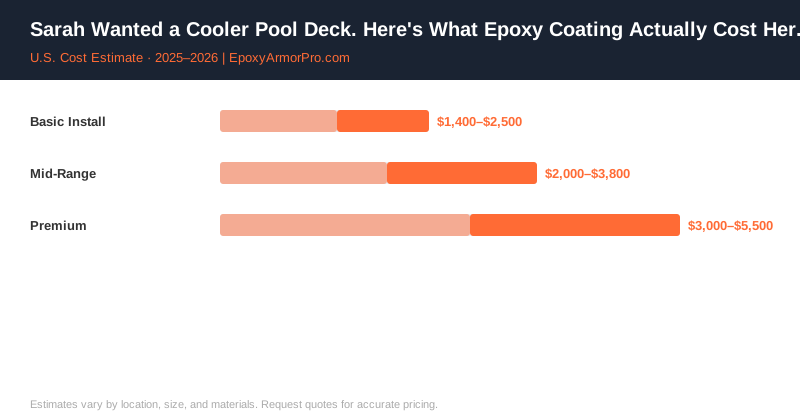
Sarah, 42, in Phoenix, was tired of a concrete pool deck so hot her kids couldn’t cross it barefoot in July without hopping and yelping the whole way. She got three quotes for a textured epoxy coating: $4,800, $6,200, and $9,500 for the same 800-square-foot deck. The spread wasn’t about brand names — it was about what each contractor was actually specifying underneath the sales pitch.
Pool decks aren’t like garage floors. They’re outdoors, permanently exposed to sun and chlorinated water, walked on barefoot by people who are frequently wet, and often surrounded by landscaping that tracks in dirt and organic debris. Every one of those factors changes what the right coating spec looks like.
What Drives the Price Range
| System | Cost per Sq Ft | Notes |
|---|---|---|
| Textured acrylic (not true epoxy) | $3–$5 | Cheaper, shorter lifespan, common on budget decks |
| Textured epoxy with quartz/aggregate broadcast | $6–$9 | Standard for most residential pool decks |
| Premium epoxy with cooling additive | $8–$12 | Reduces surface temperature significantly |
| Full 800 sq ft deck (standard textured epoxy) | — | $4,800–$7,200 |
| Full 800 sq ft deck (premium cooling system) | — | $6,400–$9,600 |
The cheapest quote in Sarah’s case was a textured acrylic coating, not true epoxy — a real product, but one with a shorter lifespan and less durability under constant sun and chlorine exposure. The most expensive quote included a specialized cooling additive engineered to reflect more solar heat, directly addressing her actual complaint about barefoot comfort. The middle quote was standard textured epoxy without the cooling technology — a reasonable, durable choice, just not solving the specific problem she cared about most.
Slip Resistance Is Not Negotiable Around Water
A pool deck is one of the highest-risk slip environments in residential construction — bare, wet feet on a hard surface, often with kids running. ASTM’s wet slip resistance testing standards are the reference point most quality contractors use when selecting a texture and broadcast aggregate for pool deck coatings. A smooth or lightly textured epoxy that looks great dry can become dangerously slick the moment it’s wet, which is essentially always, on a pool deck.
Chlorine and UV: The Two-Front Attack
Pool decks face constant low-level chlorine exposure from splash-out and swimmers’ wet feet, plus continuous UV exposure from direct sun. Standard interior-grade epoxy isn’t formulated to handle either well over time — it can yellow, chalk, or degrade at the chemical level faster than a UV-stable, chlorine-resistant exterior system. This is why pool deck coatings are a genuinely different product category from garage epoxy, not just a color and texture variation.
Drainage and Slope Around the Pool
Pool decks need to slope away from the pool edge, typically 1/4 inch per foot, to prevent water pooling near the coping and tracking into the pool or house. If the existing concrete doesn’t have adequate slope, a contractor may need to add a self-leveling layer in low spots before coating — an additional cost that’s easy to miss if you’re only comparing per-square-foot coating prices between quotes.
What to Ask Before You Sign
- Is this a true epoxy system or an acrylic coating being sold as epoxy?
- What wet slip resistance rating does the texture and broadcast provide?
- Is the topcoat UV-stable and chlorine-resistant specifically, not just standard epoxy?
- Do you offer a cooling additive, and how much surface temperature reduction can I expect?
- Does the existing deck have adequate slope, or will leveling work be needed?
Contractor Referral Disclaimer: EpoxyArmorPro is a contractor referral and cost information service, not a licensed flooring contractor. We connect consumers with independent, licensed, and insured contractors. We do not perform any flooring work directly. Cost estimates are averages based on market data and vary by location, project size, materials, and contractor. Always verify contractor licensing and insurance before hiring. Individual quotes may differ from estimates shown.