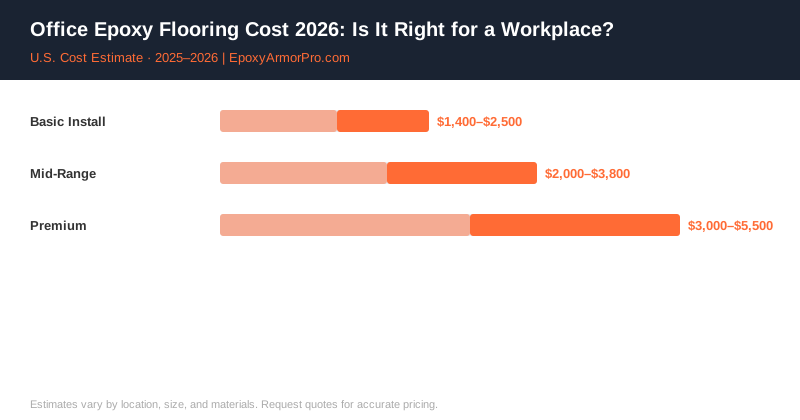
In 2010, a mid-size office replacing carpet every five to seven years accepted that as the cost of doing business. Today, a growing number of offices are ripping out that carpet cycle entirely and putting down decorative epoxy instead — a floor that’s supposed to last 15-20 years without a single replacement.
The economics are appealing on paper. But office flooring has requirements that a garage or warehouse floor never has to consider: acoustics, comfort underfoot for people standing at desks for eight hours, and an aesthetic that needs to read as “professional workplace” rather than “industrial facility.”
The Real Cost Comparison: Epoxy vs. Commercial Carpet
| Flooring Type | Install Cost per Sq Ft | Typical Lifespan | 20-Year Cost (2,000 sq ft) |
|---|---|---|---|
| Decorative epoxy | $4–$8 | 15–20 years | $8,000–$16,000 |
| Commercial carpet tile | $3–$6 (per replacement) | 5–7 years | $18,000–$36,000 (3 replacements) |
| LVT (luxury vinyl tile) | $5–$9 | 10–15 years | $10,000–$18,000 |
| Polished concrete | $3–$7 | 15+ years | $6,000–$14,000 |
| Metallic epoxy (feature areas) | $8–$14 | 15–20 years | $16,000–$28,000 |
Over a 20-year horizon, epoxy frequently comes out cheaper than repeatedly replacing carpet, even though the sticker price on day one is comparable or slightly higher. The trade-off is what you give up: carpet dampens sound and feels warmer underfoot; epoxy is a hard, reflective surface that changes the acoustic character of a room.
Acoustics: The Trade-Off Nobody Mentions in the Sales Pitch
An open office floor plan with hard epoxy flooring, exposed ceilings, and glass partitions can get loud — sound bounces off hard surfaces instead of being absorbed. Office acoustics consultants generally recommend pairing hard flooring like epoxy with acoustic ceiling treatment, sound-absorbing furniture, or area rugs in conversation zones to offset the reverberation. Skipping this consideration is the number one regret among offices that switch to epoxy without planning for sound.
Comfort Underfoot for Standing Desks
Employees who stand at adjustable desks for extended periods notice the difference between a cushioned floor and bare epoxy over concrete fairly quickly — hard flooring transmits more impact to feet, ankles, and lower back over an 8-hour day. Anti-fatigue mats at individual standing desks solve this cheaply without compromising the floor’s overall look, and most offices making the switch to epoxy budget for a handful of mats rather than avoiding epoxy altogether.
Downtime and Business Disruption
Office epoxy installation requires the space to be empty during application and cure — typically 2-4 days depending on system and square footage. Most offices schedule this over a long weekend or during a slower business period rather than shutting down mid-week. Furniture needs to be moved out and back in, which adds logistics cost that’s easy to underestimate when comparing raw per-square-foot quotes.
What to Ask Your Contractor
- Do you recommend zoning epoxy versus carpet by area, or a full office conversion?
- What finish and color options work best for a professional workplace aesthetic?
- How will you sequence the work to minimize business disruption?
- What’s the realistic timeline including cure before furniture and staff return?
- Have you addressed acoustic considerations in other office installations?
Contractor Referral Disclaimer: EpoxyArmorPro is a contractor referral and cost information service, not a licensed flooring contractor. We connect consumers with independent, licensed, and insured contractors. We do not perform any flooring work directly. Cost estimates are averages based on market data and vary by location, project size, materials, and contractor. Always verify contractor licensing and insurance before hiring. Individual quotes may differ from estimates shown.