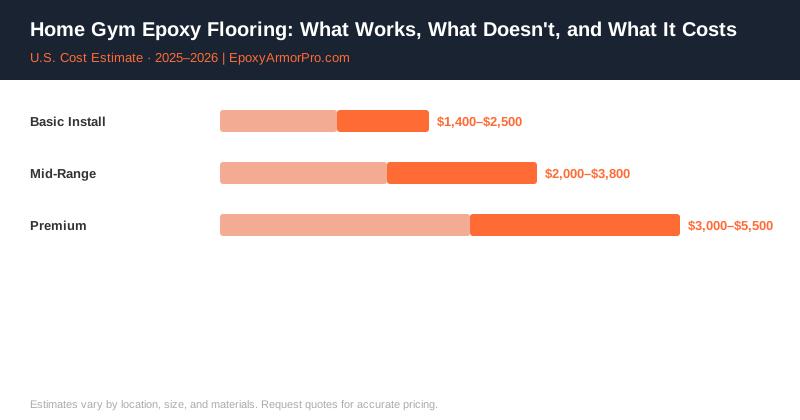
Most people building a home gym buy rubber mats first, then regret the seams. Forty-eight square feet of interlocking tiles, edges that curl, gaps that collect chalk, and the whole thing slides when you deadlift. Three years later, they’re grinding the concrete and coating the floor properly.
The good news: home gym epoxy is one of the more forgiving applications. You’ve got one use case, controlled conditions, and a manageable square footage. Here’s how to get it right the first time.
Rubber Mats vs. Epoxy vs. Hybrid: The Actual Comparison
This isn’t a clean win for any single option. Each has a real use case depending on how you train.
Rubber flooring (rolled rubber or interlocking tiles) is the most common home gym floor because it’s cheap to install yourself, absorbs impact from dropped weights, and provides cushioning for long standing sessions. The problems: seams collect chalk and sweat, tiles shift under lateral movement, and the smell can linger for months with cheap rubber. According to a 2023 Angi survey, the average homeowner spends $1,500–$3,000 on rubber gym flooring for a 300 sq ft basement gym — comparable to a professional epoxy install.
Epoxy flooring is seamless, easy to clean, and looks dramatically better than rubber tiles. It handles lateral movement well. What it doesn’t do is cushion weight drops — a 300-lb deadlift dropped from lockout will dent, crack, or chip a standard epoxy coating over time. It’s also harder underfoot for long training sessions.
Hybrid systems are the smart solution for serious home gym builds: epoxy on the main floor area for aesthetics and easy cleaning, with purpose-built rubber platform areas in the weight-drop zones (under the barbell, under the rig). You get the best of both and the rubber protects the epoxy in the spots that matter.
| Floor Type | Cost (200–400 sq ft) | Weight Drop Tolerance | Cushion | Seams |
|---|---|---|---|---|
| Interlocking rubber tiles (3/8") | $400–$900 (DIY) | Good | Moderate | Yes |
| Rolled rubber (3/8"–1/2") | $700–$1,500 (pro) | Good | Moderate | No |
| 100% solids epoxy | $800–$2,400 (pro) | Poor (no drops) | None | None |
| Epoxy + rubber drop zones (hybrid) | $1,200–$3,200 (pro) | Excellent | Good where needed | Minimal |
| Polyaspartic system | $1,200–$2,800 (pro) | Poor (no drops) | None | None |
Weight Drop Tolerance: What “Epoxy Fails” Actually Means
Let’s be specific. Standard epoxy doesn’t fail from light dumbbells rolled across the floor or even moderate impact. It fails from direct high-force impact — a loaded barbell dropped from lockout, kettlebells dropped repeatedly from shoulder height, or heavy dumbbells slipping and hitting bare floor.
The failure mode is surface cracking and chip-out at the impact point. A 45-lb plate dropped from 6 feet creates roughly 2,700 lbs of impact force on a very small contact area. Standard epoxy at 6,000 PSI compressive strength can absorb distributed loads well, but point-impact stress concentrations are a different problem.
If you Olympic lift, do CrossFit-style workouts, or drop weights regularly, protect those zones with 3/4" horse stall mats or purpose-built platform rubber. Epoxy everywhere else. This hybrid approach is exactly what commercial gym designers use in functional fitness facilities.
Anti-Fatigue Options for Home Gyms
Standing on hard epoxy for a 90-minute workout isn’t comfortable. Here are the options that add anti-fatigue properties without sacrificing the seamless floor look:
Broadcast anti-fatigue aggregate: Some specialty coatings incorporate a rubberized aggregate broadcast into the basecoat. It’s not as cushioned as rubber mats, but it reduces the hard-surface feel significantly. This is popular in commercial gym spaces. Cost: roughly $0.50–$1.00 additional per square foot.
Flexible polyurea coatings: Polyurea is more flexible than standard epoxy and provides slightly more “give” underfoot. It’s also more impact-resistant. It costs more than standard epoxy but is a legitimate upgrade for gym applications. See how polyaspartic and polyurea compare for a full breakdown.
Floor mats in standing zones: The practical answer for most home gyms is to put 3/4" anti-fatigue mats in the zones where you stand for extended periods (bike, rower, stretching area) and leave the main floor as epoxy. Mats can be moved, cleaned underneath, and replaced independently.
What Drives Cost in a Home Gym Space
Home gyms are typically 200–400 sq ft in a basement or attached garage. According to HomeAdvisor, professional epoxy installation for a space in that size range averages $3–$7 per square foot for a two-coat 100% solids system.
Here’s what moves that number:
Existing rubber mat removal: If you’re replacing interlocking tiles or rolled rubber, account for removal labor and the adhesive residue. Rubber tile adhesive on concrete requires grinding to remove properly. Budget an additional $0.50–$1.50 per square foot.
Moisture conditions: Basement gym concrete is almost always the highest-risk substrate for moisture vapor emission. A calcium chloride test (ASTM F1869) is worth the $50–$75 cost before coating. High vapor emission means a moisture vapor barrier primer, which adds $0.75–$1.25 per square foot.
Decorative options: Flake systems (color chips broadcast into the basecoat) are popular in home gyms — they look great and add texture that reduces slip during sweaty workouts. Flake systems add $0.50–$1.50 per square foot over a solid-color base. See the basement epoxy guide for a full cost breakdown on basement spaces.
| Space Size | Standard Epoxy (2-coat) | Flake System | Polyaspartic System |
|---|---|---|---|
| 200 sq ft | $600–$1,400 | $800–$1,800 | $1,000–$2,000 |
| 300 sq ft | $900–$2,100 | $1,200–$2,700 | $1,500–$3,000 |
| 400 sq ft | $1,200–$2,800 | $1,600–$3,600 | $2,000–$4,000 |
Ventilation and VOCs During Installation
Home gyms are often in enclosed basements or garages with limited ventilation. This matters for installation safety. Standard 100% solids epoxy has low VOC content once catalyzed, but the mixing and application phase generates fumes.
A professional installer will require adequate ventilation during application and initial cure — typically 6–12 hours with forced air circulation. If your basement gym has only a small egress window, discuss ventilation planning with your contractor before scheduling. Some installers bring temporary exhaust fans specifically for basement applications.
Water-based epoxy products have significantly lower VOC output but also lower performance. For a home gym where the floor will take real use, 100% solids is the right call — just plan the ventilation properly.
Design Ideas That Work in Home Gyms
Home gym epoxy doesn’t have to look like an industrial floor. The most popular options:
- Solid charcoal or black with matte topcoat: Clean, looks intentional, hides chalk dust
- Full-broadcast color flake in grey/black/white blend: Masks scuffs well, popular in converted garages
- Metallic epoxy in gunmetal or bronze: Premium aesthetic for finished basement gyms, adds $3–$5 per square foot
- Custom color zones: Separate colors for cardio area, lifting area, stretching zone — helps with training programming and looks great
Contractor Referral Disclaimer: EpoxyArmorPro is a contractor referral and cost information service, not a licensed flooring contractor. We connect consumers with independent, licensed, and insured contractors. We do not perform any flooring work directly. Cost estimates are averages based on market data and vary by location, project size, materials, and contractor. Always verify contractor licensing and insurance before hiring. Individual quotes may differ from estimates shown.