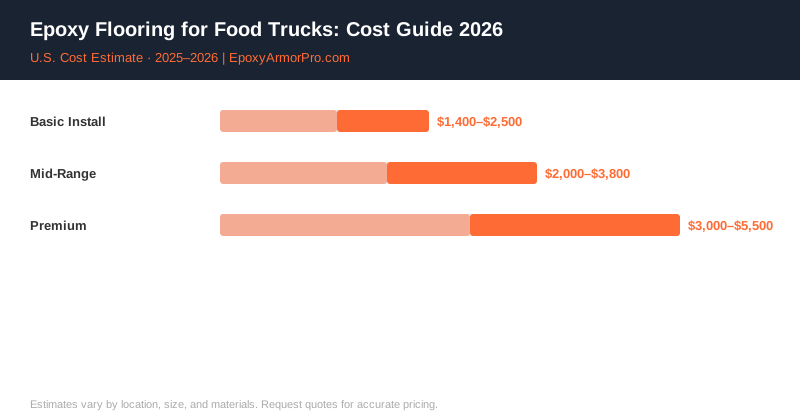
Maria runs a taco truck in Austin and got quoted $2,400 to redo her 120-square-foot kitchen floor. She thought the contractor was joking. He wasn’t — and once she understood why, she didn’t argue.
Food truck flooring is a strange niche. It’s a fraction of the square footage of a restaurant kitchen, but it costs more per square foot than almost any other epoxy application in this guide. You’re not paying for materials by the gallon. You’re paying for a crew to climb into an 8-by-20-foot metal box, work around a flat-top grill bolted to the floor, and apply a coating system that has to survive constant vibration from driving, temperature swings from 20°F to 400°F near the cooking line, and daily health inspections.
Why Food Truck Floors Cost More Per Square Foot
A commercial kitchen in a fixed building has room to work and a stable slab. A food truck has neither. The metal subfloor flexes slightly every time the truck drives over a pothole, which means standard rigid epoxy can crack over time unless the contractor uses a flexible urethane cement or a modified epoxy system designed for metal substrates. The FDA Food Code — the baseline most local health departments enforce for mobile food units — requires floors that are smooth, non-absorbent, and easily sanitized, exactly as it does for stationary restaurants.
| Truck Size / Scope | Cost Range | Notes |
|---|---|---|
| Small truck (80–120 sq ft) | $1,200–$2,800 | Full removal + recoat |
| Mid-size truck (150–200 sq ft) | $2,200–$4,500 | Includes cove base at walls |
| Trailer/commissary combo | $3,500–$7,000 | Larger footprint, more equipment cutouts |
| Cost per sq ft (flexible urethane system) | $10–$18 | Higher due to metal substrate prep |
| Cost per sq ft (standard epoxy, wood subfloor) | $8–$14 | Lower-traffic units only |
| Emergency same-day mobile repair | $400–$900 | Small crack/chip patch, no full recoat |
The Metal Subfloor Problem
Most food trucks are built on plywood decking over a steel frame, sometimes with a diamond-plate metal surface already in place. Epoxy doesn’t bond to bare metal the way it bonds to concrete — the surface has to be mechanically abraded and primed with a metal-specific epoxy primer, or the coating will peel within months. A contractor who treats a food truck floor exactly like a garage floor is setting you up for failure.
Health Inspector Expectations
Mobile food unit inspections vary by county, but nearly all of them check for the same three things: seamless floor-to-wall transitions (cove base), no absorbent materials, and no standing water risk near the grill and prep stations. Skipping the cove base to save money is the single most common mistake truck owners make — inspectors will flag it every time, and retrofitting it later means redoing the whole floor.
Timeline and Downtime
Most food truck floor jobs take 2 to 3 days: one day to grind and prime, one day to apply the base coat and broadcast anti-slip aggregate, and a final day for topcoat and cure. Because the truck is off the road the entire time, many owners schedule the work for a slow week or right after a festival season ends. A polyaspartic topcoat can compress the timeline to 2 days if your schedule is tight, though it typically adds $1–$2 per square foot.
What to Ask Before You Book the Job
- Have you coated food trucks or trailers before, or mostly stationary kitchens?
- What primer system are you using on the metal subfloor?
- Is the coating NSF-rated or at least food-safe certified?
- How do you handle the cove base transition in a tight space?
- What’s your warranty against cracking from vehicle vibration?
Contractor Referral Disclaimer: EpoxyArmorPro is a contractor referral and cost information service, not a licensed flooring contractor. We connect consumers with independent, licensed, and insured contractors. We do not perform any flooring work directly. Cost estimates are averages based on market data and vary by location, project size, materials, and contractor. Always verify contractor licensing and insurance before hiring. Individual quotes may differ from estimates shown.