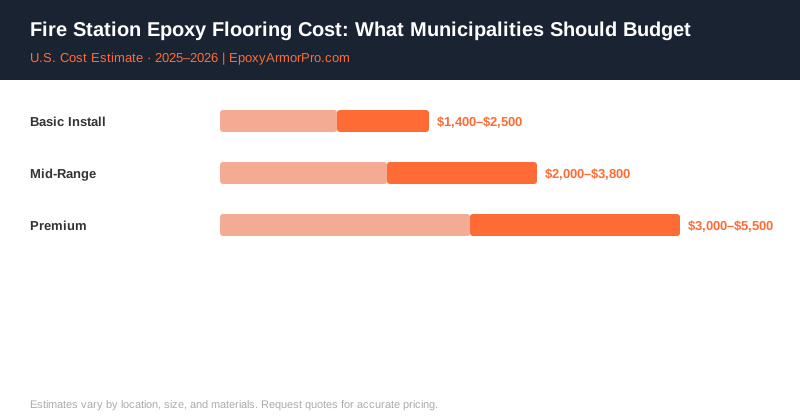
Should a fire station apparatus bay use the same epoxy system as a standard commercial garage? No — and the reason comes down to what’s dripping off the trucks and how fast crews need to move across the floor at 3 a.m.
Fire apparatus bays deal with diesel exhaust residue, hydraulic fluid from extraction equipment, foam concentrate, and water tracked in from every call — often while firefighters are moving quickly in full gear, sometimes in the dark, sometimes half-asleep from a middle-of-the-night alarm. Slip resistance isn’t a nice-to-have here; it’s a life-safety consideration the National Fire Protection Association addresses in its facility siting and design guidance.
Apparatus Bay vs. Living Quarters: Two Different Specs
| Area | System | Cost per Sq Ft | Notes |
|---|---|---|---|
| Apparatus bay | Chemical-resistant epoxy, anti-slip | $8–$12 | Diesel, foam, hydraulic fluid exposure |
| Turnout gear/decon room | Antimicrobial epoxy | $7–$11 | Contamination control priority |
| Living quarters/dayroom | Standard decorative epoxy | $5–$8 | Similar to residential/light commercial |
| Kitchen | Chemical-resistant epoxy | $6–$10 | Health code if applicable |
| Full 8,000 sq ft station | Mixed zone system | $50,000–$85,000 | Blended by area |
Diesel Exhaust Residue: A Slower, Sneakier Threat Than Spills
Diesel particulate residue settles onto apparatus bay floors continuously, not just from occasional fuel spills — engine exhaust and soot accumulate over months of daily engine starts. Standard epoxy can develop a slick, hard-to-clean film from this residue if the coating isn’t formulated for chemical resistance and easy degreasing. This is part of why many newer stations also invest in vehicle exhaust extraction systems alongside a properly specified floor coating — the two work together rather than one substituting for the other.
Slip Resistance for Nighttime, High-Speed Response
Firefighters responding to a call at night move across the apparatus bay floor quickly, sometimes still putting on gear, sometimes with wet boots from a prior call. A properly broadcast anti-slip aggregate in the topcoat is standard for this reason — but the aggregate has to be fine enough not to create a cleaning problem for diesel residue while still providing real traction. ASTM’s slip resistance testing standards (commonly referenced as a benchmark for coefficient of friction) are a useful point of reference to ask contractors about directly.
Municipal Procurement Realities
Fire station flooring projects, being taxpayer-funded, often go through competitive bid processes with specific documentation requirements — material safety data sheets, warranty terms, sometimes prevailing wage requirements for labor. Contractors experienced with municipal work understand this paperwork; general commercial contractors sometimes don’t, which can slow down an otherwise straightforward project. Ask upfront about a contractor’s experience with municipal bid processes if that’s how your department procures the work.
Timeline Around 24/7 Operations
Fire stations can’t close — apparatus needs to be accessible at all times for emergency response. Contractors typically coat half the bay at a time, keeping enough bays open for at least one or two trucks to respond, or schedule work during a period when apparatus can temporarily relocate to a neighboring station. This phasing adds time and cost compared to an empty-building install but is non-negotiable for operational continuity.
Questions to Ask Your Contractor
- What chemical-resistant system are you specifying for the apparatus bay specifically?
- How will you maintain emergency response capability during the project?
- Is there a separate spec for the turnout gear decon area?
- What anti-slip aggregate are you using, and what’s its cleaning profile for diesel residue?
- Do you have experience with municipal bid documentation and prevailing wage requirements?
Contractor Referral Disclaimer: EpoxyArmorPro is a contractor referral and cost information service, not a licensed flooring contractor. We connect consumers with independent, licensed, and insured contractors. We do not perform any flooring work directly. Cost estimates are averages based on market data and vary by location, project size, materials, and contractor. Always verify contractor licensing and insurance before hiring. Individual quotes may differ from estimates shown.