Most daycare owners assume epoxy is epoxy — pick a color, get a quote, done. That assumption is wrong, and it’s the reason some centers end up redoing a floor within two years of opening.
A childcare facility isn’t a garage with smaller furniture. Toddlers spend hours on the floor, crawling, sitting, and occasionally putting things in their mouths that touched it thirty seconds earlier. That changes what “the right epoxy” means. Off-gassing, slip resistance for socked feet, and impact softness for falls all become real design considerations that a standard commercial epoxy job doesn’t account for.
Low-VOC Is Non-Negotiable, Not a Nice-to-Have
Standard epoxy coatings off-gas volatile organic compounds during and after curing — normally not a major concern in a warehouse, but a real issue in a room full of infants and toddlers who breathe faster and closer to the floor than adults do. Low-VOC and zero-VOC epoxy formulations exist specifically for environments like schools, hospitals, and childcare centers, and most state licensing boards either require or strongly recommend them for new installations.
| Room Type | System | Cost per Sq Ft | Notes |
|---|---|---|---|
| Infant room | Low-VOC epoxy + rubber flake | $7–$10 | Softer underfoot, slip-resistant |
| Toddler/preschool classroom | Low-VOC epoxy | $6–$9 | Standard classroom traffic |
| Hallways / common areas | Standard commercial epoxy | $5–$7 | Lower sensitivity zone |
| Kitchen/food prep area | Chemical-resistant epoxy | $6–$10 | Health code compliant |
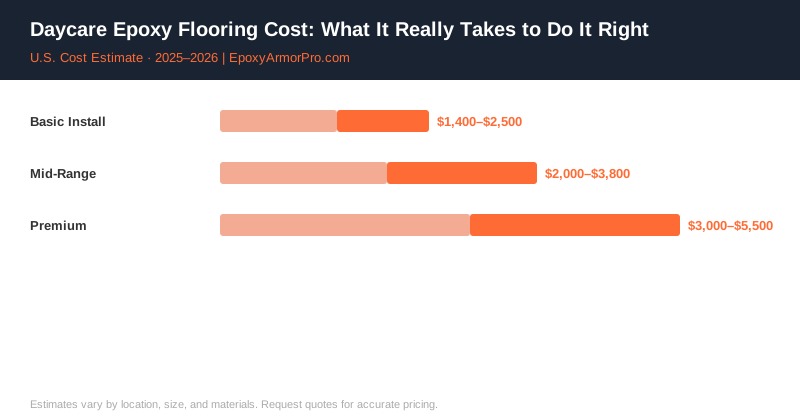
| Full 3,000 sq ft center | Mixed low-VOC systems | $18,000–$28,000 | Blended room pricing |
The Slip Resistance Balancing Act
A glossy epoxy floor looks clean and is easy to sanitize, but a high-gloss finish can be slippery for kids in socks, especially near sinks and water tables. Most daycare specifications call for a matte or low-sheen finish with a fine anti-slip additive broadcast into the topcoat — enough texture to add traction without creating a rough surface that’s hard to clean or uncomfortable for kids sitting on the floor.
Sanitation Requirements Drive Seamlessness
Licensing inspectors in most states require floors in childcare facilities to be washable and free of cracks or gaps where bacteria can collect — diaper changing areas and bathrooms especially. Seamless epoxy meets this standard by design, which is one reason it’s become the default choice over VCT tile or carpet tile in newer childcare construction. Carpet tile, still common in older centers, fails this standard outright in most jurisdictions when used in wet or food-adjacent areas.
Timeline Around Your Operating Schedule
Most daycare flooring projects happen over a weekend or during a scheduled closure — coating a room while children are present isn’t feasible due to fumes during application and cure time. A standard epoxy system needs 24–72 hours before foot traffic and up to a week before furniture returns. Contractors experienced with childcare facilities often stagger the work room by room so the center can stay partially open, coating one classroom per weekend rather than closing the whole facility at once.
What to Ask Your Contractor
- Is the coating system rated low-VOC or zero-VOC, and can you provide documentation?
- What sheen level and anti-slip additive are you specifying for infant/toddler rooms?
- Can you stagger the work room-by-room around our operating schedule?
- How do you handle the diaper-changing and food-prep area seams?
- What’s the full cure time before furniture and equipment can return?
Contractor Referral Disclaimer: EpoxyArmorPro is a contractor referral and cost information service, not a licensed flooring contractor. We connect consumers with independent, licensed, and insured contractors. We do not perform any flooring work directly. Cost estimates are averages based on market data and vary by location, project size, materials, and contractor. Always verify contractor licensing and insurance before hiring. Individual quotes may differ from estimates shown.