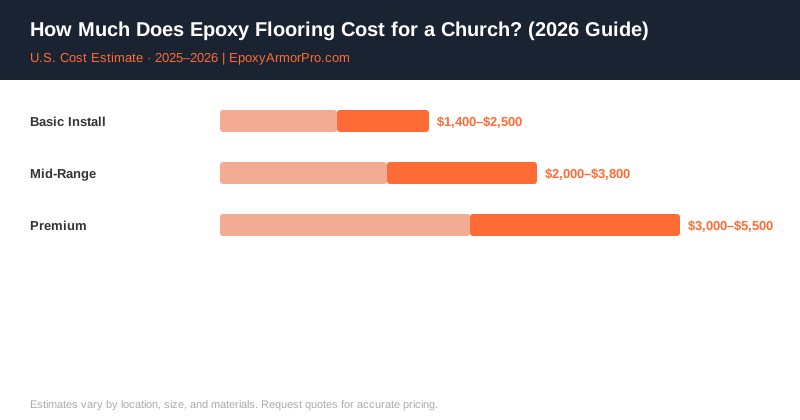
How much does it actually cost to coat the floor of a church fellowship hall? For a typical 2,500-square-foot space, budget $10,000–$22,500 for a standard commercial epoxy system — less if the facilities committee is willing to phase the project, more if the floor needs significant crack repair first.
Church flooring projects have a rhythm most contractors don’t see in other commercial work: they’re almost always funded through a budget cycle or a capital campaign, they often need to work around a packed weekly schedule of services and community events, and the building’s use is genuinely varied — a fellowship hall might host potlucks, basketball, weddings, and a preschool program all in the same month.
Why the Same Room Often Needs a Compromise Coating
A gymnasium-style fellowship hall used for basketball wants a slightly different finish than one used mainly for banquet tables and folding chairs. Sports use benefits from a matte, higher-traction finish; banquet use benefits from an easy-to-clean gloss finish that shows well in photos for weddings and events. Most churches end up specifying a satin or low-sheen finish as the practical middle ground — glossy enough to look good, textured enough to be safe for pickup basketball games after Wednesday night youth group.
| Space | System | Cost per Sq Ft | Notes |
|---|---|---|---|
| Fellowship hall (multi-use) | Standard epoxy, satin finish | $4–$7 | Balances sports and event use |
| Gymnasium (dedicated) | Epoxy with anti-slip aggregate | $5–$8 | Higher traction priority |
| Basement / classroom wing | Standard epoxy | $3–$6 | Lower traffic, lower cost |
| Kitchen / fellowship hall kitchen | Chemical-resistant epoxy | $6–$10 | Health code if serving food regularly |
| Full 2,500 sq ft fellowship hall | Standard system | $10,000–$22,500 | Includes prep and crack repair |
Phasing the Project Around the Budget
Many churches don’t have a lump sum sitting in the building fund — they raise it, or they approve phased spending across fiscal years. A contractor experienced with religious facilities can often break a project into phases: fellowship hall first, then classroom wing, then kitchen, spread across a year or two of budget cycles. This costs slightly more overall than a single combined project (separate mobilization each time), but it’s often the only realistic path for a volunteer-run facilities committee working with a modest annual budget.
Crack Repair Is Common in Older Buildings
Many church buildings are 40, 60, even 100+ years old, with foundations that have settled and slabs with visible cracking. Before any coating goes down, cracks need proper repair — typically a flexible polyurea filler rather than rigid cement patch, since rigid patches tend to re-crack at the same spot. Expect $5–$15 per linear foot for crack repair, which can add a few hundred to a couple thousand dollars depending on the building’s age and condition.
Volunteer Labor: What You Can and Can’t DIY
Some facilities committees try to save money with volunteer labor for parts of the project — moving furniture, basic cleaning, even simple concrete patching. That’s reasonable. Actual epoxy application is not a good volunteer task: improper mixing ratios, poor surface prep, or applying coating outside the recommended temperature and humidity window are the most common reasons DIY and semi-DIY epoxy jobs fail within a year.
Questions for Your Contractor
- Can the project be phased across budget cycles without a big cost penalty?
- What finish do you recommend for a room that hosts both events and sports?
- How will you assess and repair existing cracks in an older slab?
- Can you guarantee a start and completion date around our calendar of events?
- What’s the realistic timeline including cure before the space is fully usable again?
Contractor Referral Disclaimer: EpoxyArmorPro is a contractor referral and cost information service, not a licensed flooring contractor. We connect consumers with independent, licensed, and insured contractors. We do not perform any flooring work directly. Cost estimates are averages based on market data and vary by location, project size, materials, and contractor. Always verify contractor licensing and insurance before hiring. Individual quotes may differ from estimates shown.