A 2023 industry survey by the National Automobile Dealers Association found the average franchised dealership operates roughly 26,000 square feet between showroom and service areas — and flooring is one of the few finishes that has to look showroom-perfect while surviving oil, brake fluid, and a forklift rolling through twice a day. That split personality is exactly why dealership flooring quotes vary so widely.
Showroom floors are sold on looks. Service bay floors are sold on chemical resistance and durability. Treating them as the same project is the most common mistake dealership owners make when they get their first bid.
Two Very Different Budgets Under One Roof
The showroom is where customers spend the most time and where the flooring makes the strongest first impression — high-gloss metallic epoxy or a polished, decorative flake system is standard. The service bay is where the floor takes real abuse: hot tire pickup from vehicles pulled straight off the lift, brake cleaner, motor oil, transmission fluid, and coolant spills nearly every day.
| Area | System | Cost per Sq Ft | Notes |
|---|---|---|---|
| Showroom (decorative) | Metallic or flake epoxy | $6–$9 | High-gloss, customer-facing |
| Showroom (standard) | Solid color epoxy | $4–$6 | Budget-friendly, still glossy |
| Service bay | Chemical-resistant epoxy | $6–$10 | Handles fluids, hot tire pickup |
| Service bay (heavy use) | Urethane cement | $9–$12 | Best for high-volume shops |
| Parts department / storage | Standard epoxy | $3–$5 | Lower traffic, forklift-safe |
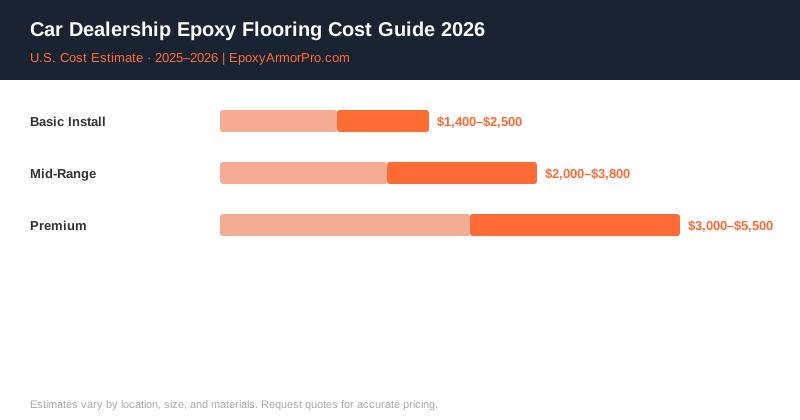
| Full dealership (15,000 sq ft) | Mixed systems | $70,000–$140,000 | Blended showroom + service pricing |
Why Hot Tire Pickup Is the Service Bay’s Biggest Enemy
When a car is driven onto a lift and the tires are still warm, the rubber can chemically bond with certain epoxy formulations, pulling small patches of coating off when the vehicle moves. This is called hot tire pickup, and it’s a well-documented failure mode in automotive flooring — one of the reasons a coating rated for residential garages often fails within months in a dealership service bay handling dozens of vehicles a day. A properly formulated 100% solids epoxy or urethane system resists this; a cheaper acrylic or water-based coating usually doesn’t.
Downtime Is the Real Cost Driver
Dealerships can’t shut down service for a week. Most flooring contractors work bay-by-bay or overnight/weekend shifts to keep the operation running, which adds 15–30% to labor cost compared to a straightforward empty-warehouse install. Fast-cure polyaspartic topcoats are popular in this segment specifically because they let a bay reopen to light traffic in 24 hours instead of 3–5 days.
Showroom Aesthetics and Brand Standards
Many manufacturer franchise agreements specify showroom finish standards — reflectivity, color, even branding elements embedded in the floor design. Some dealerships work a manufacturer logo or brand color into a metallic epoxy pour as a centerpiece feature. This is achievable but adds design and labor time; expect a premium of $1–$3 per square foot over a standard decorative floor for a branded showroom centerpiece.
What to Ask Before Signing
- Are you specifying different systems for showroom versus service bays, or one blanket coating?
- How will you sequence the work to keep the dealership operational?
- What’s your experience with hot tire pickup resistance specifically?
- Does the system meet any manufacturer brand standards for showroom finish?
- What warranty applies to service bay chemical exposure versus showroom wear?
Contractor Referral Disclaimer: EpoxyArmorPro is a contractor referral and cost information service, not a licensed flooring contractor. We connect consumers with independent, licensed, and insured contractors. We do not perform any flooring work directly. Cost estimates are averages based on market data and vary by location, project size, materials, and contractor. Always verify contractor licensing and insurance before hiring. Individual quotes may differ from estimates shown.