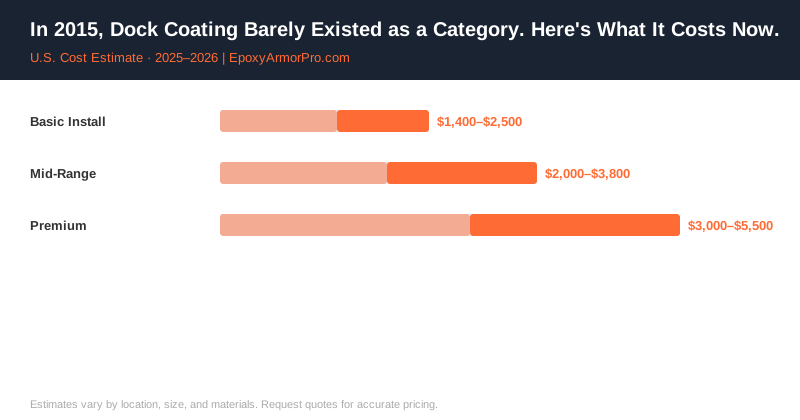
In 2015, coating a residential boat dock was a niche request most flooring contractors turned down — the marine-grade products barely existed at consumer scale, and bare wood or basic marine paint were the default. Today, marine epoxy dock coating is a mainstream category with dedicated product lines, and dock owners can expect to pay $6–$14 per square foot for a properly specified system, depending on whether the dock is fixed or floating.
The jump in adoption tracks with real product improvement. Modern marine epoxy formulations handle constant water exposure, UV degradation, and the flex of a floating structure in ways that general-purpose epoxy never could.
Fixed Dock vs. Floating Dock: Different Engineering Problems
| Dock Type | System | Cost per Sq Ft | Notes |
|---|---|---|---|
| Fixed dock (concrete/wood decking) | Marine-grade epoxy, UV-stable | $6–$10 | Static structure, less flex |
| Floating dock | Flexible marine epoxy | $9–$14 | Must tolerate constant movement |
| Boat lift platform | Marine epoxy with anti-slip | $7–$11 | High wet-traffic area |
| Seawall cap/walkway | Marine epoxy, chemical-resistant | $6–$10 | Salt spray and immersion resistance |
| Full 400 sq ft dock | Marine-grade system | $2,400–$5,600 | Depending on fixed vs. floating |
A fixed dock, typically built on pilings or a concrete foundation, stays relatively still — the coating primarily needs to resist water, UV, and foot traffic. A floating dock moves constantly with wave action and water level changes, which means the coating needs genuine flexibility to avoid cracking at stress points, particularly around hardware attachment points and hinges between dock sections.
Saltwater vs. Freshwater Changes the Spec
Saltwater environments are considerably more aggressive on any coating than freshwater — salt accelerates corrosion of embedded hardware, and the crystallized salt residue from spray and splash can be abrasive over time. Marine epoxy formulated for saltwater exposure typically costs more than freshwater-rated products, but using a freshwater-rated coating on a saltwater dock is a common and expensive mistake — expect premature failure well ahead of the product’s rated lifespan.
UV Exposure Is Constant and Unshaded
Unlike almost any interior application in this guide, a dock has zero UV protection — full sun exposure all day, reflected additionally off the water’s surface, which can intensify UV exposure compared to a similar surface on land. A standard epoxy topcoat without UV-stabilizing additives will chalk and yellow within a single season under these conditions. Marine-grade UV-stable topcoats cost more but are the only realistic option for a coating that needs to last more than one summer looking good.
Slip Resistance for Wet Feet and Bare Feet
Dock users are frequently barefoot or wearing wet shoes, stepping on and off boats where footing matters, sometimes carrying gear. A textured, anti-slip marine epoxy finish is standard for good reason — the alternative is a genuinely dangerous surface right next to open water.
What to Ask Your Contractor
- Is this coating rated for my specific water type — freshwater or saltwater?
- Is my dock fixed or floating, and does the coating account for that flex?
- How will you detail and seal around cleats, hinges, and hardware attachment points?
- Is the topcoat UV-stable specifically for marine/reflected sun exposure?
- What warranty applies given constant water immersion at the waterline?
Contractor Referral Disclaimer: EpoxyArmorPro is a contractor referral and cost information service, not a licensed flooring contractor. We connect consumers with independent, licensed, and insured contractors. We do not perform any flooring work directly. Cost estimates are averages based on market data and vary by location, project size, materials, and contractor. Always verify contractor licensing and insurance before hiring. Individual quotes may differ from estimates shown.