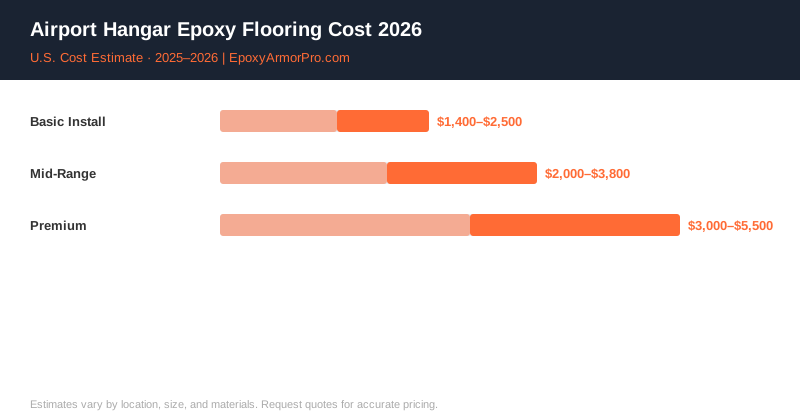
A typical private hangar runs 3,000 to 10,000 square feet — big enough that even a modest per-square-foot price swing translates into tens of thousands of dollars. According to data tracked by the National Frame Building Association on post-frame and metal building construction, hangar-style structures have grown steadily as private aviation and personal aircraft ownership expand outside major metro airports, and flooring is consistently one of the most under-planned line items in the build.
Unlike a garage or warehouse, a hangar floor has to deal with jet fuel, avgas, and hydraulic fluid spills — all of which attack standard epoxy chemistry differently than the motor oil and antifreeze a typical shop floor sees.
Fuel Resistance Is the Defining Spec
| Hangar Type/Size | System | Cost per Sq Ft | Notes |
|---|---|---|---|
| Small private hangar (2,000–3,500 sq ft) | Fuel-resistant epoxy | $6–$9 | Single or twin-engine aircraft |
| Mid-size hangar (4,000–7,000 sq ft) | Fuel-resistant epoxy, heavy solids | $5–$8 | Better per-sq-ft rate at scale |
| Maintenance/MRO hangar | Static-dissipative epoxy | $8–$11 | Avionics-safe, ESD rated |
| Corporate jet hangar | Decorative + fuel-resistant hybrid | $7–$10 | Aesthetics matter for client visits |
| Full 5,000 sq ft hangar | Fuel-resistant system | $25,000–$40,000 | Includes prep and joints |
Standard 100% solids epoxy has moderate fuel resistance, but sustained or repeated jet fuel exposure — from routine fueling operations, minor spills during maintenance, or fuel sampling drips — degrades it faster than avgas or diesel would. A true fuel-resistant epoxy or polyurethane system, formulated specifically to withstand aromatic hydrocarbon exposure, is the correct spec for any hangar doing regular fueling or maintenance work rather than pure aircraft storage.
Static-Dissipative Flooring for Maintenance Hangars
Hangars that do avionics work, fueling, or maintenance near sensitive electronics sometimes need a static-dissipative (ESD) epoxy floor to reduce the risk of static discharge near fuel vapors or delicate equipment — a specialized system also used in electronics manufacturing clean rooms. This is a meaningfully different (and pricier) product than standard epoxy, and not every hangar needs it. Pure aircraft storage hangars without active fueling or maintenance work typically don’t require ESD flooring.
Load Ratings for Aircraft and Ground Equipment
Beyond chemical resistance, hangar floors need to handle concentrated point loads from aircraft landing gear, tugs, and maintenance equipment — loads that can be significantly higher per square inch than a car or even most commercial vehicles. The coating itself doesn’t bear structural load (that’s the slab’s job), but a thin or poorly bonded coating can delaminate under repeated concentrated loading even when the underlying concrete is structurally sound.
Large-Format Application Logistics
Coating 5,000+ square feet in one continuous pour requires larger crews, bigger mixing and pumping equipment, and careful sequencing to maintain a wet edge across a huge area before the epoxy starts to set. Contractors without large-format commercial experience sometimes underbid this logistical complexity, leading to visible lap lines or inconsistent texture across the finished floor.
Questions to Ask Your Contractor
- Is the system rated specifically for jet fuel and avgas resistance, not just general chemical resistance?
- Do we need static-dissipative flooring given our fueling and maintenance activity?
- How will you detail the expansion and control joints across this size of slab?
- What’s your experience with large-format, single-pour commercial applications?
- What warranty applies to fuel-related staining or softening specifically?
Contractor Referral Disclaimer: EpoxyArmorPro is a contractor referral and cost information service, not a licensed flooring contractor. We connect consumers with independent, licensed, and insured contractors. We do not perform any flooring work directly. Cost estimates are averages based on market data and vary by location, project size, materials, and contractor. Always verify contractor licensing and insurance before hiring. Individual quotes may differ from estimates shown.