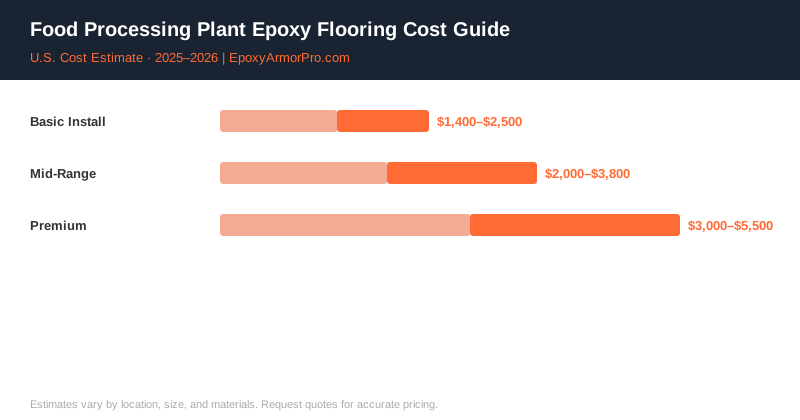
Most plant managers assume any epoxy floor counts as “food-safe” once it’s sealed and smooth. That’s wrong, and it’s the single most common mistake in this category. USDA and FDA facility requirements aren’t about the surface looking clean — they’re about specific material performance under thermal shock, chemical washdown, and sustained moisture that a standard epoxy resin simply isn’t formulated to survive.
Why Standard Epoxy Fails in Food Plants
Food processing floors face daily hot-water washdowns, often at temperatures that exceed what a conventional epoxy coating can handle without thermal cracking. They’re also exposed to organic acids, fats, and sanitizing chemicals on a repeated cycle. The FDA Food Code requires floors in food-handling areas to be smooth, durable, and easily cleanable — but it’s silent on the coating chemistry, which is exactly where contractors cut corners by installing standard epoxy dressed up with a food-safe label.
| Area Type | Recommended System | Cost per Sq Ft |
|---|---|---|
| Dry storage / non-wet areas | Standard epoxy | $5–$8 |
| Processing floor (moderate washdown) | Urethane-modified epoxy | $8–$12 |
| Hot washdown / cook areas | Urethane cement (MPS) | $12–$18 |
| Drain trench integration | Slope + trench drain system | $2,000–$6,000 per drain run |
| Cove base (sanitary corners) | Integral, all areas | $15–$28 per linear ft |
A 15,000-square-foot processing floor with hot washdown zones typically runs $150,000–$250,000, with urethane cement systems accounting for the majority of that cost in the areas that see the hottest water and heaviest chemical load.
The Coefficient of Friction Problem
Wet, greasy processing floors are a documented fall risk. The National Safety Council has repeatedly identified slips, trips, and falls as among the leading causes of nonfatal workplace injuries requiring days away from work, and food processing is one of the higher-risk industries for exactly that reason. A properly specified food-plant floor uses an aggregate broadcast to hold slip resistance even when coated in animal fat or water — a smooth glossy epoxy, however food-safe its chemistry, is a liability in these conditions.
Drainage Design Matters as Much as the Coating
A processing floor needs consistent slope to trench or floor drains — generally a minimum of 1/8 inch per foot — so wash water and product runoff clear the floor completely. Standing water in a food plant isn’t just a slip hazard, it’s a bacterial growth risk that inspectors flag immediately. If your existing slab lacks adequate slope, correcting it often costs more than the coating itself.
Questions Before You Sign
- Is the proposed system rated for our specific washdown temperature?
- What’s the coefficient of friction rating for wet, greasy conditions?
- Is drainage slope being verified and corrected if inadequate?
- Is cove base integral at every sanitary corner?
- What’s the warranty against thermal cracking specifically?
Commercial kitchens share many of these same sanitary requirements at a smaller scale — see our commercial kitchen epoxy floor cost guide for that comparison.
Contractor Referral Disclaimer: EpoxyArmorPro is a contractor referral and cost information service, not a licensed flooring contractor. We connect consumers with independent, licensed, and insured contractors. We do not perform any flooring work directly. Cost estimates are averages based on market data and vary by location, project size, materials, and contractor. Always verify contractor licensing and insurance before hiring. Individual quotes may differ from estimates shown.