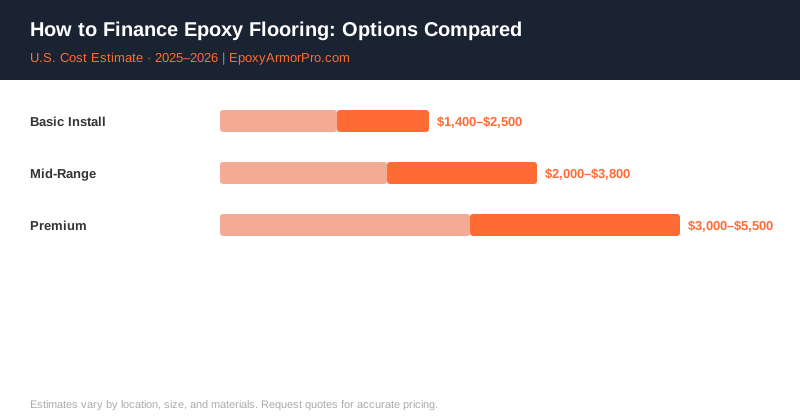
A decade ago, most homeowners paid for epoxy flooring the same way they’d pay for a used appliance: cash or a credit card, upfront, no financing conversation at all. Today, most established flooring contractors either offer in-house financing or partner with a third-party lender, and a growing share of residential jobs are financed rather than paid outright. The options vary a lot in cost, though, and it’s worth understanding the real terms before signing.
Common Financing Options
| Option | Typical APR Range | Best For |
|---|---|---|
| Contractor in-house financing | 0%–29.99% (varies widely) | Promotional 0% periods on larger jobs |
| Home improvement personal loan | 7%–25% | Fixed monthly payment, no home equity needed |
| Home equity line of credit (HELOC) | 8%–12% (variable) | Larger combined projects, lower rate if equity available |
| Credit card (standard or promotional) | 0% promo, then 20%+ | Small jobs, short-term 0% promo periods only |
| Cash/full payment upfront | 0% | Best overall cost if available |
Why Financing Became More Common
Epoxy flooring, especially for larger multi-car garages, industrial spaces, or full-basement projects, can run into the thousands or tens of thousands of dollars — a bigger single expense than many households want to pay in cash at once. As the home improvement financing market has grown broadly (driven by point-of-sale lending partnerships becoming standard across contracting trades), flooring contractors adopted the same model many other trades already use for large jobs.
HELOC vs. Personal Loan: The Real Tradeoff
A HELOC typically offers a lower interest rate since it’s secured against home equity, but it puts your home on the line as collateral and often has variable rates that can rise over the loan term. A personal loan carries a higher rate but is unsecured and typically has a fixed rate and fixed monthly payment, which some homeowners prefer for budgeting predictability even at a higher cost.
Questions to Ask About Contractor Financing Specifically
Contractor in-house financing is usually run through a third-party lending partner, not the contractor’s own capital — meaning the terms and approval process function similarly to any other consumer loan, just presented through the contractor’s sales process. Ask for the actual APR, term length, and whether it’s a true 0% offer or a deferred-interest promotional structure before assuming the marketed rate is the real cost.
When Cash Still Makes the Most Sense
If you have the savings available and aren’t sacrificing an emergency fund to pay upfront, cash remains the lowest-cost option in nearly every case, since even the best financing options carry some interest cost or opportunity cost. Financing makes the most sense when it lets you complete a needed project now rather than waiting to save, or when a genuine 0% promotional period lets you spread payments at no added cost.
Checklist Before Choosing a Financing Option
- Is a “0%” offer a true 0% loan or a deferred-interest promotional structure?
- What’s the APR after any promotional period ends?
- Is the loan secured against my home (HELOC) or unsecured (personal loan)?
- What’s the total interest cost over the full term if I only make minimum payments?
- Is there a prepayment penalty if I pay the loan off early?
Once financing is sorted, our multi-car garage flooring cost guide and professional vs. DIY cost comparison can help you finalize project scope and budget.
Contractor Referral Disclaimer: EpoxyArmorPro is a contractor referral and cost information service, not a licensed flooring contractor. We connect consumers with independent, licensed, and insured contractors. We do not perform any flooring work directly. Cost estimates are averages based on market data and vary by location, project size, materials, and contractor. Always verify contractor licensing and insurance before hiring. Individual quotes may differ from estimates shown.