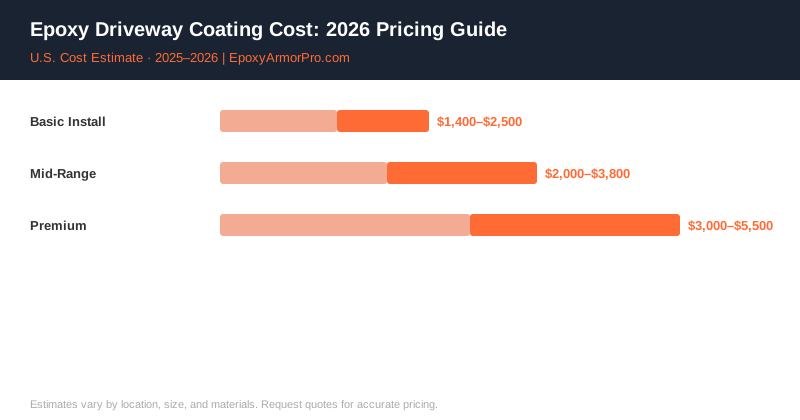
Sarah, a homeowner outside Phoenix, coated her driveway with a standard interior-grade epoxy kit she’d used successfully in her garage two summers earlier. By the following spring, the surface had yellowed, chalked, and started peeling at the edges near the street. Her garage floor, coated with the same product, looked fine. The difference was direct sun exposure — and it’s the single biggest factor driveway coating quotes have to account for that garage quotes don’t.
Driveway Coating Costs by System
| System | Cost per Sq Ft | Notes |
|---|---|---|
| Standard epoxy (not recommended, full sun) | $3–$5 | Will yellow/chalk within 1–2 years |
| Polyaspartic (UV-stable) | $5–$8 | Best choice for full sun exposure |
| Stamped/textured polyaspartic | $7–$9 | Adds slip resistance and decorative pattern |
| Crack repair (per linear ft) | $5–$15 | Common on older driveways |
| Typical 2-car driveway (600 sq ft) | — | $3,000–$5,400 total |
For a standard two-car driveway, expect $2,400–$5,400 depending on system choice and how much crack repair the existing slab needs. That’s meaningfully more than a comparable garage floor, mostly due to UV-stable material costs and the additional prep driveways typically require.
Why Polyaspartic Dominates This Category
Polyaspartic coatings cure faster than epoxy (often within hours rather than days) and hold color and gloss under direct UV exposure in a way standard epoxy resin chemistry cannot. That faster cure is a real practical advantage on a driveway too — homeowners can’t easily avoid using their driveway for three to five days the way they might a garage.
Crack Repair Is Usually the Biggest Variable
Driveways face more structural stress than most residential slabs — vehicle weight, freeze-thaw cycling in cold climates, and tree root intrusion in older neighborhoods. Cracks need to be routed out and filled with a flexible polyurea filler, not rigid cement patch, since a rigid patch will simply re-crack at the same spot under the next freeze-thaw cycle or heavy vehicle load.
Hot Tire Pickup Outdoors
Hot tire pickup — where warm tires soften a coating and lift it slightly as the car pulls away — is a documented failure mode for coatings that haven’t fully cured or that use an under-spec resin system. It’s arguably a bigger risk on driveways than garages, since driveway slabs often sit in direct sun and get hotter than a shaded garage floor, which increases how much tires soften the coating underneath them.
Questions Before You Sign
- Is the proposed system polyaspartic or standard epoxy — and is it warrantied for full sun exposure?
- How is existing cracking being repaired, and with what material?
- What’s the cure time before the driveway can handle vehicle weight again?
- Is a decorative or textured finish available to hide existing slab imperfections?
- What’s the warranty specifically against hot tire pickup?
If you’re also considering the sidewalk or walkway alongside your driveway, our sidewalk epoxy coating guide covers that adjacent project.
Contractor Referral Disclaimer: EpoxyArmorPro is a contractor referral and cost information service, not a licensed flooring contractor. We connect consumers with independent, licensed, and insured contractors. We do not perform any flooring work directly. Cost estimates are averages based on market data and vary by location, project size, materials, and contractor. Always verify contractor licensing and insurance before hiring. Individual quotes may differ from estimates shown.