A huge share of crawl space flooring failures have nothing to do with the epoxy at all. They trace back to moisture the coating was never going to solve on its own. Before you spend money coating a crawl space floor, it’s worth understanding exactly what epoxy can and can’t fix down there.
What Epoxy Actually Does in a Crawl Space
Crawl spaces are almost always below grade or at grade, sitting directly against soil that holds moisture year-round. A dirt or bare concrete crawl space floor releases water vapor continuously, and that vapor has to go somewhere — often into floor joists and insulation above, contributing to wood rot and mold growth. Epoxy on a properly prepped, encapsulated crawl space slab can help control dust and give the space a sealed, cleanable surface. But epoxy alone, without a vapor barrier and often a dehumidifier, will not solve a genuine moisture problem.
| Component | Cost | Notes |
|---|---|---|
| Epoxy coating on existing crawl space slab | $3–$7 per sq ft | Requires low-moisture reading first |
| Vapor barrier (poly sheeting, sealed) | $1.50–$3 per sq ft | Typically required before coating |
| New concrete slab pour (if dirt floor) | $5–$8 per sq ft | Needed if no existing slab |
| Dehumidification system | $1,200–$2,800 | For full encapsulation projects |
| Full crawl space encapsulation package | $5,000–$12,000 | Barrier + coating + dehumidifier, 1,000 sq ft |
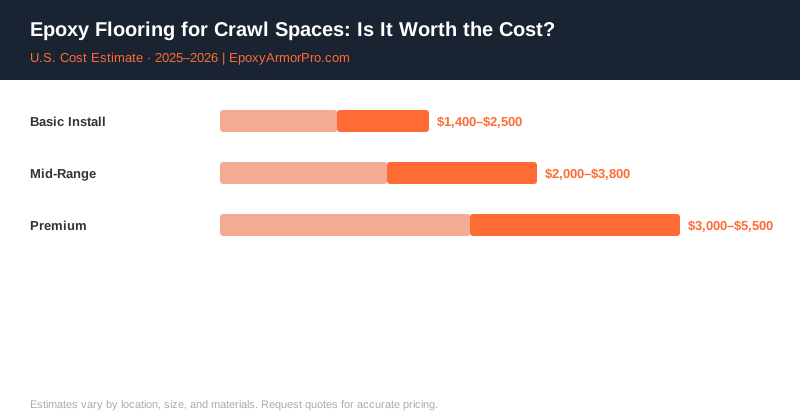
For a typical 1,000-square-foot crawl space with an existing slab and manageable moisture, expect $3,000–$7,000 for coating plus vapor barrier work. Add a dehumidifier and the total climbs toward $5,000–$10,000.
Why Crawl Spaces Are a Different Environment Than Basements
Basements are typically at least partially conditioned interior space. Crawl spaces are frequently unconditioned, poorly ventilated, and directly exposed to soil moisture and outdoor humidity swings through vents. The Environmental Protection Agency and building science researchers have long noted that vented crawl spaces in humid climates often run higher relative humidity than the outdoor air itself during summer months — which is precisely why “encapsulation” (sealing vents, adding a vapor barrier, and often a dehumidifier) has become the standard best practice rather than ventilation alone.
When It’s Not Worth Coating at All
If your crawl space has standing water, active plumbing leaks, or a history of flooding, coating the floor is the wrong first step. Fix the water source — grading, gutters, a sump system — before spending money on any floor treatment. Coating over an active water problem is one of the most common wasted-money mistakes homeowners make in this category.
Questions Before You Sign
- Will you test moisture vapor emission before recommending a coating?
- Is a vapor barrier included, and how is it integrated with the coating?
- Do you address ventilation or dehumidification, or just the floor?
- What’s the warranty if moisture-related failure occurs?
- Is there an existing slab, or does one need to be poured first?
If your basement floor has similar moisture questions, our basement epoxy flooring cost guide covers the same vapor-mitigation decision tree in more depth.
Contractor Referral Disclaimer: EpoxyArmorPro is a contractor referral and cost information service, not a licensed flooring contractor. We connect consumers with independent, licensed, and insured contractors. We do not perform any flooring work directly. Cost estimates are averages based on market data and vary by location, project size, materials, and contractor. Always verify contractor licensing and insurance before hiring. Individual quotes may differ from estimates shown.