Most people assume a carport floor is basically a garage floor with no walls. It isn’t — and treating it that way is the most common mistake in this project. A carport is a fully exposed, outdoor-adjacent slab, and the coating that holds up beautifully in an enclosed garage can chalk, fade, and peel within a couple of summers under direct sun and rain.
Why UV Exposure Changes the Spec
Standard epoxy resin isn’t UV-stable. Left under direct sunlight, it yellows, chalks (develops a powdery surface residue), and gradually loses gloss and durability. This is a well-documented limitation in the coatings industry, which is why manufacturers developed polyaspartic and polyurethane topcoats specifically for UV-exposed applications — they hold color and gloss under sunlight in a way standard epoxy resin cannot.
| System | Cost per Sq Ft | UV Stability |
|---|---|---|
| Standard epoxy (not recommended for full exposure) | $3–$5 | Poor — yellows/chalks within 1–2 years |
| Epoxy base + polyaspartic UV topcoat | $5–$8 | Good — holds color for years |
| Full polyaspartic system | $6–$9 | Excellent — best UV performance |
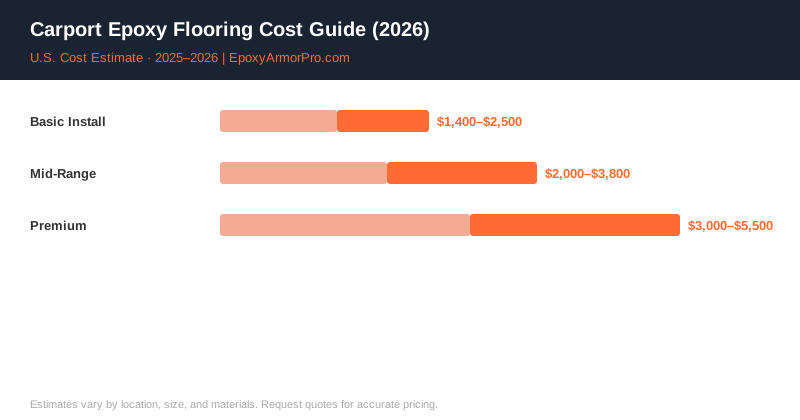
| Typical single carport (400–500 sq ft) | — | $2,000–$4,000 total |
| Typical double carport (600–800 sq ft) | — | $3,000–$6,400 total |
For a standard single-car carport slab, expect $800–$2,200 for a properly UV-stabilized system — noticeably less than a garage of similar size, since carports don’t need the same insulation or wall-related prep work.
Rain and Runoff Exposure
Unlike a garage, a carport slab is frequently exposed to direct rain, especially at the edges. This means drainage slope matters more here than almost anywhere else in residential coating work — water needs somewhere to go, or it will pool and eventually find its way under the coating at any edge or joint. A good contractor checks existing slope before quoting and may recommend minor grading correction if water currently pools on the slab.
Temperature Swing Considerations
Carports experience wider temperature swings than enclosed garages since they’re only partially sheltered. In climates with real freeze-thaw cycles, this matters: water that gets under a coating and freezes can cause more aggressive delamination than in a temperature-stable enclosed space. Freeze-thaw-prone regions should prioritize systems with better flexibility and adhesion ratings, and crack-repair prep becomes especially important before coating.
Questions Before You Sign
- Is the topcoat UV-stable polyaspartic or polyurethane, not just standard epoxy?
- Has drainage slope been checked, and does water currently pool anywhere?
- Is the system rated for your regional freeze-thaw exposure?
- Is a broadcast texture included for wet-weather grip?
- What’s the warranty specifically against UV yellowing and chalking?
If you’re comparing this to a fully enclosed space, our garage epoxy flooring guide breaks down the differences in exposure and cost.
Contractor Referral Disclaimer: EpoxyArmorPro is a contractor referral and cost information service, not a licensed flooring contractor. We connect consumers with independent, licensed, and insured contractors. We do not perform any flooring work directly. Cost estimates are averages based on market data and vary by location, project size, materials, and contractor. Always verify contractor licensing and insurance before hiring. Individual quotes may differ from estimates shown.