“It looked great — until someone slipped on it.”
That sentence shows up in more contractor reviews than you’d think. Epoxy floors are beautiful, durable, and easy to clean. They’re also notoriously slippery when wet, and most homeowners don’t think about slip resistance until after installation.
The good news: adding traction to an epoxy floor is straightforward and relatively inexpensive. Here’s what you need to know.
Why Epoxy Gets Slippery
A standard epoxy finish is glossy. That gloss is essentially a smooth, hard surface — great for looks and easy cleaning, terrible for wet traction.
The coefficient of friction (COF) measures slip resistance. Dry COF on a polished epoxy floor typically runs 0.6–0.8, which is acceptable. Wet COF drops to 0.2–0.4 — well below safe walking thresholds.
The Americans with Disabilities Act Accessibility Guidelines (ADAAG) require a minimum wet COF of 0.6 for walking surfaces. OSHA’s General Industry standards (29 CFR 1910.22) require floors to be “maintained in good condition” and free of slip hazards, which in practice means wet COF above 0.5 for workplaces. For residential garages, there’s no legal minimum — but a COF of 0.3 is objectively dangerous when water, oil, or snow melt is present.
According to the National Floor Safety Institute, slips and falls cause over 1 million emergency room visits per year in the US, and flooring COF is the #1 predictive factor for slip incidents. This isn’t theoretical.
Anti-Slip Additive Options
There are three main approaches to adding slip resistance to epoxy, each with different aesthetics and performance profiles.
1. Aluminum Oxide Grit
The most common and most effective anti-slip additive. Fine aluminum oxide particles (typically 60–100 mesh) are broadcast into the wet topcoat just before it cures, creating a slightly rough, sandpaper-like surface.
Wet COF with aluminum oxide: 0.7–0.9, depending on mesh size and broadcast rate. Appearance: Visible texture; slightly dulls high-gloss finish Durability: Excellent — aluminum oxide is one of the hardest materials available (Mohs hardness 9) Cost to add: $0.15–$0.30/sq ft extra
Fine mesh (100-grit equivalent) gives a subtle texture with minimal gloss reduction. Coarser mesh (60-grit) is more aggressive and better for wet or oily environments. Most contractors default to 80-grit as a balance.
2. Polymer Grit (Shark Grip / Anti-Slip Polymers)
Polymer additives are mixed directly into the topcoat before application, rather than broadcast on top. They create a less visually obvious texture than aluminum oxide but are easier to apply consistently.
Wet COF with polymer grit: 0.6–0.75 Appearance: Very subtle; minimal gloss impact Durability: Good, but slightly less than aluminum oxide under heavy abrasion Cost to add: $0.10–$0.25/sq ft extra
This is the preferred option when aesthetics matter most — showrooms, model homes, residential garages where appearance is a priority.
3. Decorative Flake Broadcast
Full-flake epoxy systems (where colored vinyl flakes are broadcast across the entire floor) naturally create texture and significantly improve slip resistance over a smooth finish.
Wet COF with full flake: 0.65–0.85 Appearance: Decorative, hides imperfections, very popular in residential garages Cost: Full flake is a design choice that’s part of the base system, not an add-on — typically adds $0.50–$1.00/sq ft over plain epoxy
- Garage (vehicle + foot traffic): Aluminum oxide 80-grit in polyaspartic topcoat — best durability and wet grip
- Basement or living area: Polymer grit in topcoat — subtle texture, better aesthetics
- Workshop or commercial area: Aluminum oxide 60-grit — maximum grip for standing water and oil
- Decorative floor: Full flake system — handles all of the above while looking great
What Does It Cost to Add Anti-Slip Treatment?
| Treatment | When Added | Cost Per Sq Ft |
|---|---|---|
| Aluminum oxide grit (new install) | During topcoat | $0.15–$0.30 |
| Polymer grit (new install) | Mixed into topcoat | $0.10–$0.25 |
| Anti-slip additive to existing floor | Recoat with grit topcoat | $1.00–$2.00 |
| Full recoat with flake + anti-slip top | Full redo | $3.50–$6.00 |
| Professional anti-slip treatment only | Applied to existing floor | $0.75–$1.50 |
Adding anti-slip grit during a new installation is essentially free — it’s a line-item addition that costs very little relative to the overall project. Adding traction to an existing slippery floor requires applying a new topcoat, which means lightly abrading the surface to get adhesion, then rolling on a fresh clear coat with the anti-slip additive incorporated.
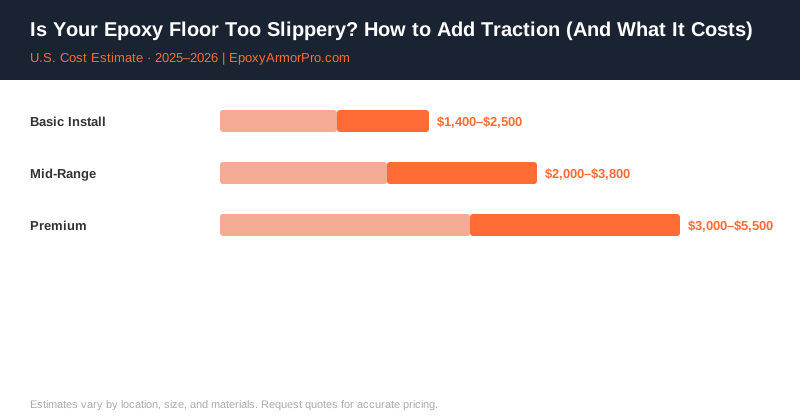
For a 400 sq ft garage, adding a traction topcoat to an existing floor typically runs $400–$800 with a professional contractor. A DIY kit with anti-slip clear epoxy runs $80–$180, but you’ll need to properly abrade the existing surface first — that’s the step most people skip, leading to peeling.
Adding Traction to an Existing Floor
If your floor is already down and slippery, here’s the process:
- Lightly sand or diamond-pad the surface — scuff the gloss to improve adhesion of the new topcoat
- Clean thoroughly — degrease, rinse, dry completely
- Apply anti-slip topcoat — either a clear aliphatic polyurethane with aluminum oxide broadcast, or a pre-mixed anti-slip epoxy product
- Allow full cure before foot traffic (24 hrs) and wet conditions (48 hrs)
This can be a DIY project on a smooth, in-good-condition floor. But if the existing floor has any adhesion issues — soft spots, peeling edges, lifting — fix those first. A new topcoat over a compromised floor just peels off too.
Check our garage epoxy flooring guide for a complete overview of what a well-specified floor system looks like.
Contractor Referral Disclaimer: EpoxyArmorPro is a contractor referral and cost information service, not a licensed flooring contractor. We connect consumers with independent, licensed, and insured contractors. We do not perform any flooring work directly. Cost estimates are averages based on market data and vary by location, project size, materials, and contractor. Always verify contractor licensing and insurance before hiring. Individual quotes may differ from estimates shown.