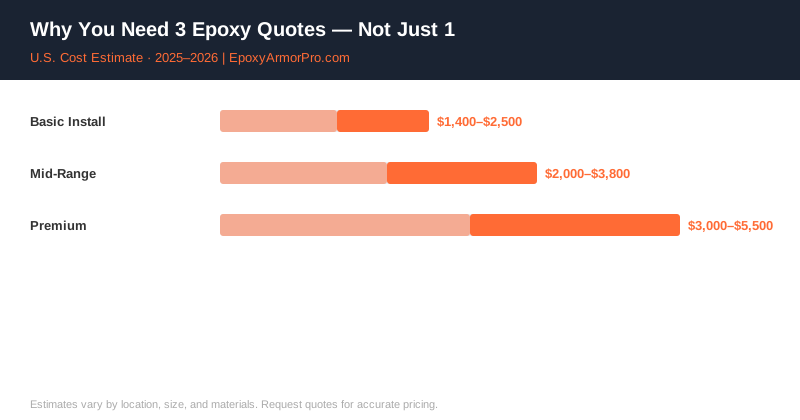
Same 2-car garage. Same zip code. Same week. Three epoxy quotes: $1,400, $2,800, and $4,200.
Which one do you pick?
If you got only one quote, you’d have no idea whether you were overpaying, about to hire someone who cuts corners, or looking at a genuinely premium system. That’s the problem. A single quote gives you a number with no context — and context is everything.
HomeAdvisor’s 2024 consumer data found that homeowners who obtained three or more quotes on flooring projects saved an average of $640 compared to those who accepted the first quote — and reported higher satisfaction with the completed work.
Three quotes isn’t about driving the price down. It’s about having enough information to make a smart decision.
What You Actually Learn From Three Quotes
Price is the obvious output. But the quoting process reveals far more than what each contractor wants to charge.
How they ask questions (or don’t). A good contractor asks about your floor’s history, how you use the space, whether there have been moisture issues, what you want the floor to look like in five years. A contractor who just measures and leaves is telling you how much thought they’ll put into the actual job.
What they’re actually proposing. Three quotes that look different in price almost always differ in scope. One contractor plans to acid-etch; another will diamond grind. One is using 70% solids epoxy; another is using 100% solids with a polyaspartic topcoat. These aren’t the same floor at different prices — they’re different floors. Getting three quotes forces you to understand what you’re actually comparing.
How they communicate. Responsiveness, professionalism, and detail in the proposal phase predicts performance in the installation phase. A contractor who takes a week to send a vague one-line quote is showing you something about how they run their business.
Where the price pressure is. If two contractors quote $2,800–$3,200 and one quotes $1,200, you now know that something is missing from the $1,200 quote — or someone is using cheap materials. If all three quotes cluster near $3,000, you have market-rate confirmation. Without multiple quotes, you’d have no reference point.
The Price Variance Is Real and Wide
To understand why one quote is never enough, look at actual market variance for a standard 2-car garage epoxy job (approximately 480 square feet) in US metro areas:
| Quote Scenario | Price Range | What’s Usually Different |
|---|---|---|
| Low (bottom 20% of market) | $800–$1,600 | Water-based materials, acid etch prep, thin coats |
| Mid-range professional | $1,800–$3,200 | 100% solids epoxy, diamond grinding, 2–3 coats |
| Premium system | $3,200–$5,500 | Full flake broadcast, polyaspartic topcoat, extended warranty |
| Commercial-grade residential | $4,500–$7,500 | Industrial materials, shot blasting, multi-layer system |
Within the same general tier, price variations of $600–$1,500 for identical-spec jobs are normal between contractors in the same market. That’s the savings homeowners who shop leave on the table.
The Three-Quote Process in Practice
Getting three useful quotes takes about a week and requires a little preparation on your end.
Start with your own documentation. Measure your floor. Photograph problem areas — cracks, stains, any previous coating. Decide what system you want (standard solid color, color flakes, decorative pattern). The clearer you are on scope, the more comparable the quotes you’ll receive.
Contact five to seven contractors. You’ll get responses from three or four. Some won’t call back, some will be too busy, some will give you a phone number without coming to see the floor. Contact more than three to end up with three.
Require an in-person visit for a final quote. Phone estimates are starting points. A contractor who quotes you over the phone based on dimensions you gave them is estimating, not quoting. Real quotes require seeing the floor.
Ask each contractor the same set of questions. Surface prep method, materials spec, solids content, coat count, thickness, timeline, warranty. This creates an apples-to-apples comparison. See our list of questions to ask every epoxy contractor for the complete set.
Get proposals in writing. A verbal quote isn’t a quote. You need something you can compare side by side — with scope, materials, timeline, and price documented.
How to Evaluate the Range You Get Back
Once you have three written proposals, here’s how to read them:
Throw out the lowest if it doesn’t explain itself. A quote significantly below the other two isn’t automatically a deal — it’s a question you need answered. Where is that money going? What’s different about the prep? What products are they using? If they can’t explain the gap credibly, the low quote is a risk, not a bargain.
Don’t automatically pick the highest. Premium pricing doesn’t always mean premium quality. Ask the highest bidder to walk you through what justifies the cost difference. If it’s a genuinely superior system — better materials, thicker application, stronger warranty — that’s worth evaluating seriously. If they can’t explain it, they’re just pricing higher.
Look for the best value in the middle. In most markets, the second or third quote (not the lowest) from a contractor who answered questions thoroughly, submitted a detailed proposal, and provided verifiable references represents the best value. You’re not necessarily saving the most money, but you’re making the best decision per dollar spent.
The Hidden Benefit: What Competitive Quoting Reveals
When contractors know they’re competing with two others, something changes. They’re less likely to submit vague proposals. They’re more likely to call back promptly. They’re more careful about what they promise, because they know you have something to compare it to.
A contractor who gives you a sloppy proposal when they know they’re competing — imagine what the job itself looks like.
Conversely, a contractor who responds quickly, asks good questions, submits a detailed written proposal with full materials specs and a realistic warranty, and follows up professionally is demonstrating their standard operating procedure. That’s the floor you want.
For more on how to evaluate what you receive, see our contractor quote evaluation guide and our overview of what a complete epoxy contract should include.
Contractor Referral Disclaimer: EpoxyArmorPro is a contractor referral and cost information service, not a licensed flooring contractor. We connect consumers with independent, licensed, and insured contractors. We do not perform any flooring work directly. Cost estimates are averages based on market data and vary by location, project size, materials, and contractor. Always verify contractor licensing and insurance before hiring. Individual quotes may differ from estimates shown.