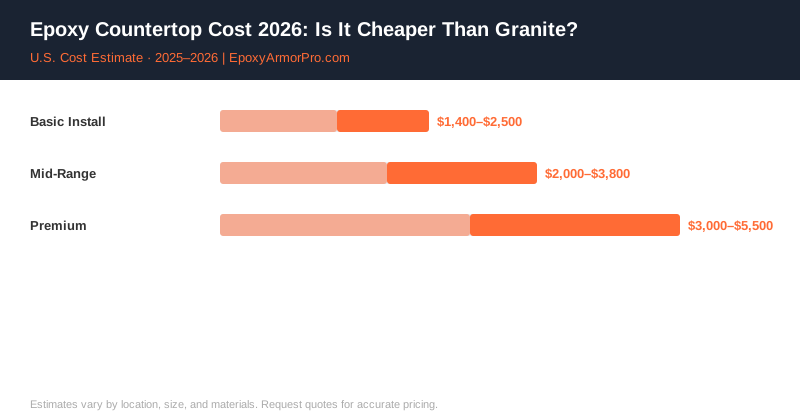
Is epoxy countertop coating actually cheaper than granite? Yes, dramatically — but only if you’re talking about resurfacing an existing countertop, not building a brand-new epoxy resin countertop from scratch. Those are two completely different products wearing the same name, and confusing them is the single biggest source of sticker shock in this category.
Countertop epoxy resurfacing is a coating applied over existing laminate, tile, or worn stone to give it a new, durable, waterproof surface. Epoxy resin countertops are a built-from-scratch product — a mold-poured slab, often incorporating wood, metal, or decorative elements, cured into a solid custom surface. The first is a budget refresh. The second is a custom fabrication comparable in cost to natural stone.
Two Products, Two Budgets
| Product Type | Cost per Sq Ft | Typical Kitchen Total | Notes |
|---|---|---|---|
| DIY epoxy resurfacing kit | $3–$6 | $150–$450 | Homeowner-applied, existing counters |
| Professional epoxy resurfacing | $6–$10 | $450–$1,200 | Contractor-applied, existing counters |
| Custom epoxy resin countertop (simple) | $40–$65 | $3,600–$7,800 | New fabrication, standard colors |
| Custom epoxy resin countertop (complex/wood inlay) | $65–$100+ | $7,800–$18,000+ | Live-edge wood, embedded objects |
| Granite (comparison) | $50–$100 | $4,500–$12,000 | Natural stone benchmark |
Why Resurfacing Is So Much Cheaper
Resurfacing uses your existing countertop as the substrate — no demolition, no new base material, minimal labor compared to fabrication. It’s essentially a specialized paint-and-coating job: clean, prime, apply a decorative epoxy layer (often with a marble or granite-look pattern), then seal with a protective topcoat. The whole process on a standard kitchen can be done in a weekend, which is why DIY kits have become popular for homeowners who want a stone look without a stone budget.
Why Custom Countertops Cost 10x More
A poured epoxy resin countertop is built like a piece of furniture — a mold is constructed, a substrate (often plywood or MDF) is prepared, decorative elements are arranged, and multiple layers of resin are poured and cured over days, with sanding and polishing between layers. Complex designs incorporating live-edge wood slabs, embedded objects, or intricate color work require significant skilled labor time, which is where the cost climbs closer to or beyond natural stone.
Heat and Scratch Resistance Vary Significantly by Product
Not all countertop epoxy handles a hot pan or a sharp knife the same way. Countertop-grade epoxy formulations are generally more heat- and scratch-resistant than general-purpose craft or table-top epoxy, but even the best epoxy surface benefits from trivets and cutting boards — it’s more durable than laminate, but it’s not indestructible the way granite or quartz can feel.
What to Ask Before You Buy or Book
- Are we talking about resurfacing my existing counters or building new epoxy countertops from scratch?
- Is the product countertop-grade, rated for heat and scratch resistance, or a general craft epoxy?
- What’s the condition of my existing substrate, and does it need repair before coating?
- For custom fabrication, what’s included in the mold and finishing process?
- What’s the expected lifespan and maintenance routine for the finished surface?
Contractor Referral Disclaimer: EpoxyArmorPro is a contractor referral and cost information service, not a licensed flooring contractor. We connect consumers with independent, licensed, and insured contractors. We do not perform any flooring work directly. Cost estimates are averages based on market data and vary by location, project size, materials, and contractor. Always verify contractor licensing and insurance before hiring. Individual quotes may differ from estimates shown.