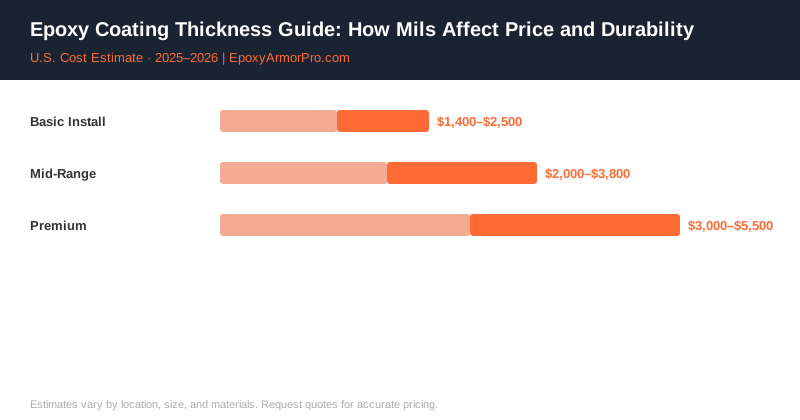
“Mil” is one of those contractor words that sounds technical but is actually simple. It just means thousandths of an inch. A human hair is about 2.5 mils thick. A piece of standard printer paper is about 4 mils. Your car’s paint finish is 4–6 mils. So when a contractor tells you their epoxy system is “20 mils,” they’re building a floor coating that’s as thick as five sheets of paper stacked together. And that difference — 4 mils versus 20 mils — is the single biggest variable in how long your floor lasts.
Why Thickness Matters More Than Most Specs
Epoxy coating is a wear surface. Every vehicle that drives across it, every spill that sits on it, every drag of a toolbox is eroding the coating from the top down. A thicker system has more material to lose before the underlying concrete is exposed. According to ASTM C779 (abrasion resistance of horizontal concrete surfaces), coating systems below 10 mils dry film thickness show measurably higher wear rates under vehicle traffic conditions than systems above 15 mils.
The relationship is roughly linear: double the thickness, double the functional life under equivalent conditions.
Mils Explained: Wet vs. Dry
Two measurements matter in epoxy work:
Wet film thickness (WFT): how thick the liquid coating is right after application, before it cures. Measured with a wet film gauge.
Dry film thickness (DFT): how thick the cured, hardened coating is after the carrier evaporates. For 100% solids products, WFT and DFT are nearly equal. For water-based or solvent-based products with lower solids content, DFT is significantly less than WFT.
This is where cheap products deceive you. A contractor can apply a 30 mil wet film of a 40%-solids water-based epoxy and end up with only 12 mils DFT. A 30 mil wet application of 100% solids gives you nearly 30 mils DFT. Same application, dramatically different actual coating thickness.
Always ask for DFT specifications, not WFT.
The Four Thickness Tiers
4–6 Mils: Consumer-Grade DIY Systems
| Metric | 4–6 Mil System |
|---|---|
| Typical product | Big-box epoxy paint, 1-part systems |
| Solids content | 30–50% |
| Application | Roller, one coat |
| Expected lifespan (vehicle traffic) | 1–3 years |
| Material cost per sq ft | $0.10–$0.25 |
This is what you’re getting from most big-box DIY kits. It looks good on application day. It looks serviceable for a year. Then the thin coating starts showing tire tracks, chipping at edges, and peeling in high-traffic zones. It’s not a failed product — it’s an underthick product being asked to do more than it was designed for.
Appropriate for: light foot traffic in interior utility spaces where appearance matters but vehicle traffic never occurs.
10–15 Mils: Entry-Level Professional Systems
| Metric | 10–15 Mil System |
|---|---|
| Typical product | Water-based 2-part, low-solids contractor grade |
| Solids content | 50–75% |
| Application | 2-coat system, primer + topcoat |
| Expected lifespan (vehicle traffic) | 5–8 years |
| Installed cost per sq ft | $2.00–$3.50 |
Many residential contractors install 10–15 mil systems and call them “professional grade.” They’re not wrong — they’re professionally installed. But this tier is the minimum viable thickness for a garage with daily vehicle traffic. It will last, but you’ll see wear at the entry point (where hot tires meet the floor) within 5–7 years.
Appropriate for: garages with moderate vehicle traffic, basement recreation rooms, utility spaces with regular foot traffic.
16–25 Mils: Standard Professional Chip/Flake Systems
| Metric | 16–25 Mil System |
|---|---|
| Typical product | 85–100% solids epoxy, broadcast chip topcoat |
| Solids content | 85–100% |
| Application | 3–4 coat system (primer + base + chips + polyaspartic) |
| Expected lifespan (vehicle traffic) | 10–20 years |
| Installed cost per sq ft | $3.50–$6.00 |
This is the standard for quality residential and light commercial installations. Three to four coats of high-solids materials build up 16–25 mils DFT. The vinyl chip layer adds both thickness and texture. A polyaspartic topcoat at the surface provides UV stability and chemical resistance.
Appropriate for: two-car garages, finished basements, whole-house epoxy projects, workshops.
30–80 Mils: Heavy Industrial Systems
| Metric | 30–80 Mil System |
|---|---|
| Typical product | Multi-layer 100% solids, quartz or mortar broadcast |
| Solids content | 100% |
| Application | 4–6 coat system with aggregate broadcast |
| Expected lifespan (vehicle traffic) | 20–30+ years |
| Installed cost per sq ft | $6.00–$15.00 |
Heavy industrial systems are engineered for specific conditions: forklift traffic, chemical splash zones, food service environments, manufacturing floors. They often incorporate quartz aggregate broadcast into the epoxy matrix, creating a structural composite rather than just a surface coating. See industrial epoxy flooring cost for the commercial specifications.
Appropriate for: warehouses, manufacturing facilities, commercial kitchens, chemical processing areas.
How Thickness Affects Price
Thickness and price are directly correlated because more mils = more product. On a 480-square-foot garage:
| System Thickness | Material Volume | Approximate Material Cost | Installed Cost |
|---|---|---|---|
| 4–6 mils (DIY) | ~0.5 gallons total | $50–$120 | $200–$400 |
| 10–12 mils (entry pro) | ~2 gallons total | $250–$450 | $960–$1,680 |
| 18–22 mils (standard pro) | ~4–5 gallons total | $600–$900 | $1,700–$2,900 |
| 30–40 mils (heavy pro) | ~7–9 gallons total | $900–$1,500 | $2,900–$4,800 |
The material cost jump from entry to standard professional isn’t just more coats — it’s also more expensive materials with higher solids content. A gallon of 100% solids professional epoxy at $150 covers less area but delivers 3–4× more actual coating per square foot than a $60 consumer kit. Epoxy price per gallon breaks down why gallon price is a misleading way to compare products.
What Thickness Do You Actually Need?
Match your system to your actual use case:
| Use Case | Minimum Recommended DFT | System Tier |
|---|---|---|
| Foot traffic only, utility room | 8–10 mils | Entry professional |
| Residential garage, light traffic | 15–18 mils | Standard professional |
| Residential garage, daily vehicles | 18–25 mils | Standard professional |
| Workshop, heavy use | 25–35 mils | Heavy professional |
| Commercial / forklift traffic | 40+ mils | Industrial |
Don’t over-specify for spaces that don’t need it. A laundry room with foot traffic doesn’t need a 25-mil industrial system. A 12–15 mil professional solid-color install handles that space for 15 years at half the cost.
Measuring Thickness: How Pros Verify It
Professional installers should use a wet film gauge during application and a dry film thickness gauge (magnetic or ultrasonic) after cure to verify the system met specification. For commercial projects, third-party inspection is common. For residential work, asking your contractor whether they verify installed DFT is a quick quality filter — anyone who takes their work seriously has the tools and does it.
Contractor Referral Disclaimer: EpoxyArmorPro is a contractor referral and cost information service, not a licensed flooring contractor. We connect consumers with independent, licensed, and insured contractors. We do not perform any flooring work directly. Cost estimates are averages based on market data and vary by location, project size, materials, and contractor. Always verify contractor licensing and insurance before hiring. Individual quotes may differ from estimates shown.