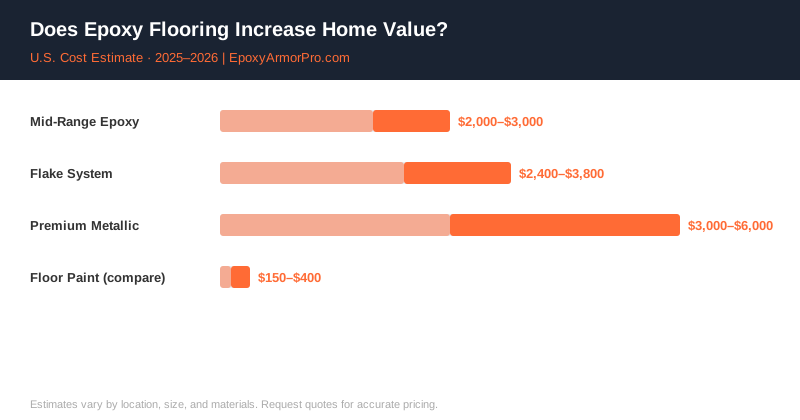
“Will I get my money back when I sell?” It’s the right question to ask before any home upgrade — and with epoxy flooring, the answer is more nuanced than a simple yes or no. Epoxy rarely shows up as a discrete line on an appraisal. But that’s not the same as adding nothing. The way it pays off is through buyer perception, faster sales, and a garage that reads as finished living space rather than a dusty afterthought.
Direct ROI vs. Indirect Value
Let’s separate two things that get muddled together. Direct ROI is the dollar increase in appraised value. Indirect value is everything else — how the home shows, how fast it sells, how it competes against the listing down the street.
Epoxy’s payoff is mostly indirect. The National Association of Realtors’ 2023 Remodeling Impact Report consistently finds that buyers reward functional, low-maintenance, move-in-ready features — and a sealed, finished garage floor signals exactly that kind of care. It tells a buyer the home was maintained.
| Garage Floor State | Buyer Perception | Effect on Sale |
|---|---|---|
| Bare, stained concrete | “Neglected / unfinished” | May invite lowball offers |
| Floor-painted slab | “DIY, will need redoing” | Neutral to slight negative |
| Professional epoxy | “Finished, maintained, usable space” | Helps justify asking price |
| Epoxy + finished walls/storage | “Bonus room / flex space” | Strongest differentiator |
Why a Finished Garage Sells
Garage space is increasingly treated as living space. Buyers picture home gyms, workshops, and hobby areas — and a clean epoxy floor is what makes those visions click. According to NAR buyer surveys, a large majority of home shoppers rank garage condition among the features they actively notice during showings.
When Epoxy Pays Off Most
The value boost is strongest when:
- You’re in a competitive market where listings need a differentiator
- The garage is large or doubles as workshop/storage space
- The rest of the home is well-maintained, so a finished floor reads as consistent
- Buyers in your area are car enthusiasts, tradespeople, or hobbyists
When It’s Less About Value
If you’re staying in the home for years, frankly, the resale question is secondary — you should install epoxy because you’ll enjoy the floor, not for a hypothetical future buyer. And in a hot seller’s market where homes move in days regardless, the marginal selling advantage shrinks. The floor still helps; it just matters less.
Frequently Asked Questions
Does epoxy flooring increase home value? Indirectly, yes. It rarely raises the appraisal directly, but a finished garage floor helps homes show better and sell faster — and signals overall maintenance to buyers, which supports your asking price.
What’s the ROI on epoxy garage flooring? There’s no single published recovery percentage like there is for kitchens, but the $2,000–$3,800 cost is modest relative to a home’s price, and the perceived-value lift at showings typically justifies it in competitive markets.
Is epoxy a good upgrade before selling? It can be, if the slab is sound. A clean epoxy floor is an affordable way to make a home feel move-in ready. Just don’t use it to mask structural slab problems an inspector will catch.
Does a finished garage count as living space? Not in official square-footage terms, but buyers increasingly treat a clean, finished garage as flex space for gyms and workshops — which is exactly the perception epoxy creates. Weigh it against the full project cost in our garage epoxy flooring guide.
How much should I spend if I’m only doing it for resale? Stick to a solid mid-range professional install rather than premium metallic finishes. Our cost factors breakdown shows where the money goes so you don’t over-spec a floor a buyer won’t pay extra for.
Contractor Referral Disclaimer: EpoxyArmorPro is a contractor referral and cost information service, not a licensed flooring contractor. We connect consumers with independent, licensed, and insured contractors. We do not perform any flooring work directly. Cost estimates are averages based on market data and vary by location, project size, materials, and contractor. Always verify contractor licensing and insurance before hiring. Individual quotes may differ from estimates shown.