42% of restaurant health code violations cited in the FDA’s 2023 retail food safety report involve floor, wall, or ceiling condition. That’s not a coincidence — it’s what happens when a commercial kitchen floor isn’t designed for the environment it’s in from day one.
The stakes are different than any other flooring application in this guide. A bad garage floor is an eyesore. A bad commercial kitchen floor is a health code failure, a slip-and-fall liability, and a potential closure. Getting the floor right the first time isn’t optional.
What Health Codes Actually Require
The FDA Food Code — which most states adopt with minor variations — requires that floors in food-prep, food-storage, and warewashing areas be:
- Smooth (no rough texture that can’t be sanitized)
- Easily cleanable (no grout lines, cracks, or seams that trap food particles or bacteria)
- Non-absorbent (concrete without a sealed coating is disqualifying)
- Durable under wet conditions (including slip resistance when wet)
Grout tile, which is common in older restaurants, technically fails the “easily cleanable” standard in most health departments — the grout absorbs grease and bacteria that mop water doesn’t reach. Seamless resinous flooring (epoxy or urethane cement) meets all four requirements by design.
The National Floor Safety Institute reports that slips and falls account for over 25% of all restaurant workers’ compensation claims, making anti-slip performance not just a code issue but a real liability issue.
Epoxy vs. Urethane Cement: The Right System for Each Zone
Not all commercial kitchen areas have the same requirements — and the coating choice should reflect that.
| Kitchen Zone | Recommended Coating | Why |
|---|---|---|
| Hot line / cooking area | Urethane cement | Handles thermal shock, steam, boiling spills |
| Prep area / counters below | Epoxy (100% solids) | Chemical resistance, seamless, lower cost |
| Dishwashing / warewashing | Urethane cement or chemical-resistant epoxy | Constant hot water, detergent exposure |
| Walk-in cooler / freezer | Cementitious urethane or cold-temp epoxy | Standard epoxy is brittle below 35°F |
| Dining room / front-of-house | Standard decorative epoxy or polished concrete | Light traffic, no thermal demands |
| Receiving / dry storage | Standard epoxy | Forklift-safe if needed, chemical-resistant |
The key distinction is thermal shock resistance. Standard epoxy has a low tolerance for rapid temperature change — when a line cook drops a full stock pot of boiling water onto an epoxy floor, the sudden temperature delta can cause micro-cracking or delamination. Urethane cement is formulated specifically for this. It’s also more flexible and handles the expansion and contraction of a commercial floor that heats up 40–60°F between opening prep and dinner service.
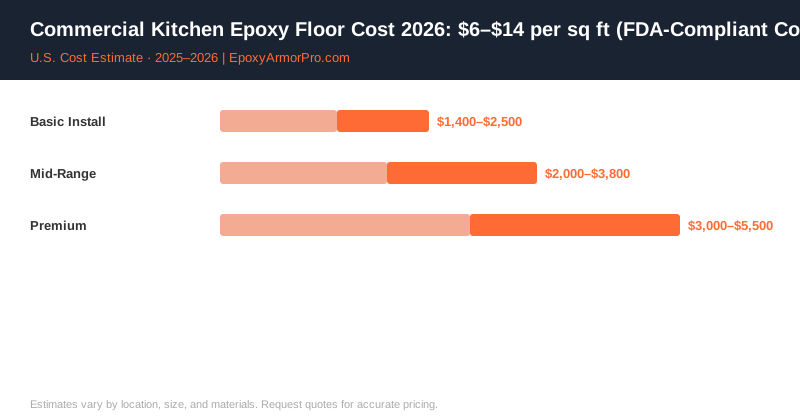
What It Costs by Kitchen Size
| Kitchen Size | Coating System | Estimated Total |
|---|---|---|
| Small café / food truck commissary (300–500 sq ft) | Epoxy full system | $1,800–$7,000 |
| Mid-size restaurant kitchen (600–1,200 sq ft) | Epoxy + urethane cement hybrid | $5,400–$16,800 |
| Large restaurant / hotel kitchen (1,500–2,500 sq ft) | Urethane cement full system | $15,000–$35,000 |
| Cafeteria / institutional kitchen (3,000+ sq ft) | Full urethane cement + cove base | $30,000–$60,000+ |
| Cost per sq ft — standard epoxy | — | $6–$10 |
| Cost per sq ft — urethane cement | — | $9–$14 |
| Cove base (linear ft) | — | $8–$15 per linear ft |
The spread within each range is driven by three factors: the condition of the existing floor, whether the existing coating needs to be removed (a full removal adds $1–$3 per sq ft), and whether the project requires overnight or weekend scheduling to avoid closing the kitchen during business hours. Off-hours labor typically adds 15–25% to the total project cost.
Anti-Slip Additives: Required, Not Optional
A glossy epoxy floor in a kitchen is a slip hazard that will fail any inspection. Every commercial kitchen floor needs an anti-slip aggregate broadcast into the topcoat while it’s still wet — aluminum oxide, shark-grip, or quartz broadcast are the standard options.
The trade-off: anti-slip aggregates make the floor harder to clean because the texture traps food particles. The solution is matching the aggregate size to the traffic: a coarser broadcast for areas near the fryer and grill, a finer broadcast in drier prep areas. Ask your contractor what aggregate size they recommend for each zone and why — if they give you one answer for the whole kitchen, that’s a sign they haven’t thought it through.
Drain Considerations
Drains are almost always the trickiest part of a commercial kitchen floor coating project. The floor must slope to the drain at 1/8–1/4 inch per foot to prevent standing water. If the existing slab doesn’t have adequate slope — common in older buildings — the contractor may need to apply a self-leveling underlayment before the coating goes down, adding $1.50–$3 per sq ft.
Timeline: What to Expect
A complete commercial kitchen floor project runs 3–5 days:
- Day 1 — Surface prep: Diamond grinding or shot-blasting the existing surface, crack repair, drain prep, cove base substrate.
- Day 2 — Primer and base coat: Moisture-mitigating primer if required, base coat application.
- Day 3 — Coating application: Main epoxy or urethane cement layer, broadcast anti-slip aggregate.
- Day 4 — Topcoat: Clear urethane or polyaspartic seal coat.
- Day 5 — Light cure / final inspection: Floor is walkable but not ready for equipment. Full cure for heavy equipment typically takes 5–7 days.
Contractors using fast-cure polyaspartic systems can compress this to 2–3 days, but that means less working time and a higher price — typically $1–$2 per sq ft more for the fast-cure topcoat. For a restaurant that can’t afford 5 days of closure, it’s often worth it.
What to Ask Contractors
Before signing anything, get clear answers on:
- What’s the total dry mil thickness of the installed system?
- Is urethane cement included near the cooking line, or just epoxy throughout?
- How will you handle the drain transitions?
- What anti-slip aggregate are you using and at what broadcast rate?
- Does the system carry NSF or FDA-compliant certification from the coating manufacturer?
- What’s the warranty, and does it cover delamination from thermal shock?
A contractor who can answer all six without hesitation has done commercial kitchens before. One who stumbles on question five probably hasn’t.
Contractor Referral Disclaimer: EpoxyArmorPro is a contractor referral and cost information service, not a licensed flooring contractor. We connect consumers with independent, licensed, and insured contractors. We do not perform any flooring work directly. Cost estimates are averages based on market data and vary by location, project size, materials, and contractor. Always verify contractor licensing and insurance before hiring. Individual quotes may differ from estimates shown.