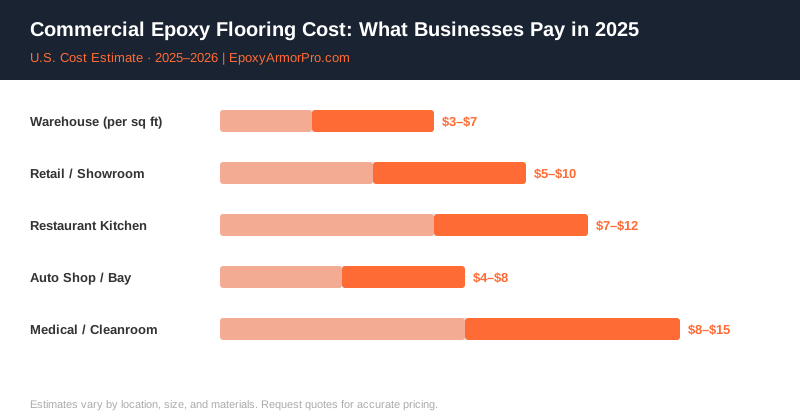
A 5,000-square-foot warehouse floor and a 1,200-square-foot restaurant kitchen both get “epoxy,” but they’re almost different products. One needs to survive forklift traffic and pallet drops. The other has to pass a health inspection and resist boiling grease. That’s why commercial epoxy pricing swings so wildly — anywhere from $3 to $12 per square foot installed, sometimes more.
If you’re a facility manager or business owner trying to budget this, the per-square-foot number you’ve been quoted only tells half the story. Let’s break down where the money goes.
What Commercial Epoxy Actually Costs
Commercial jobs are priced by the square foot, and the rate drops as the area grows — economies of scale work in your favor on big floors.
| Facility Type | Cost per Sq Ft (installed) | Typical Project Total |
|---|---|---|
| Warehouse / industrial | $3–$7 | $15,000–$70,000 (5k–10k sq ft) |
| Retail / showroom | $5–$10 | $5,000–$20,000 |
| Restaurant / commercial kitchen | $7–$12 | $8,400–$28,800 (1.2k–2.4k sq ft) |
| Auto shop / garage bay | $4–$8 | $4,000–$16,000 |
| Medical / cleanroom | $8–$15 | High — strict spec requirements |
The reason a restaurant kitchen costs more per foot than a warehouse isn’t the epoxy itself — it’s the system requirements. Kitchens often need an anti-slip aggregate broadcast into the topcoat, integral cove base at the wall-floor joint (so there’s no seam to trap bacteria), and a chemical-resistant urethane finish. Those add labor and material that a bare warehouse floor skips.
Where the Money Goes
The U.S. industrial flooring market keeps growing — Grand View Research valued resinous flooring (epoxy plus related coatings) at over $3 billion in the U.S. and projected steady annual growth through the decade, driven largely by manufacturing and food-processing demand. That demand is exactly why commercial-grade systems cost more than the garage epoxy you’d put in a home.
Here’s what you’re actually paying for on a commercial job:
- Surface prep — This is the single biggest variable. Commercial concrete usually needs diamond grinding or shot blasting to open the surface profile (contractors aim for a CSP 2–3 profile per the International Concrete Repair Institute standard). Old coatings, oil saturation, or cracks all add prep hours.
- Moisture mitigation — Concrete slabs emit water vapor. If moisture vapor transmission exceeds the coating’s tolerance, the epoxy delaminates. A moisture-barrier primer can add $1–$3 per square foot but it’s non-negotiable on slabs that test high.
- Coating system thickness — Warehouse floors taking forklift traffic may need a 30–40 mil system or even a troweled mortar floor, versus a 10–15 mil roller-applied system for light retail.
- Downtime coordination — Commercial work often happens overnight or on weekends so the business doesn’t close. Off-hours labor costs more. Fast-cure polyaspartic topcoats get a facility back online in 24 hours instead of 72.
Why Businesses Choose Epoxy Over Alternatives
Polished concrete, VCT tile, and sealed concrete all compete for the same floors. Epoxy wins in specific cases:
- Chemical and oil resistance — Auto shops, manufacturing plants, and labs need a non-porous surface that shrugs off spills. Bare concrete absorbs them permanently.
- Sanitation — The FDA and USDA effectively require seamless, cleanable flooring in food-processing and prep areas. Seamless epoxy with cove base meets that standard; grouted tile does not.
- Light reflectivity — A high-gloss epoxy floor can boost ambient light reflection significantly, cutting lighting costs in large warehouses. The U.S. Department of Energy notes that improving facility reflectance is one of the cheapest ways to reduce lighting load.
- Lifespan — A properly installed commercial epoxy floor lasts 10–20 years with routine maintenance, versus 5–7 years for VCT tile that needs constant stripping and waxing.
How to Budget Smart
Get at least three bids, and make sure each one specifies the same system — mil thickness, number of coats, prep method, and whether moisture testing is included. A $4/sq ft bid and a $7/sq ft bid often aren’t quoting the same floor at all.
For larger facilities, the per-foot rate is negotiable — a 10,000-square-foot job has far less setup overhead per foot than a 1,000-square-foot one. And timing matters: scheduling during your slow season often gets you better pricing and more flexible crews.
Bottom Line
Commercial epoxy flooring costs $3–$12 per square foot installed, with the spread driven by facility type, prep condition, and system spec — not by the epoxy brand. Warehouses land at the low end; restaurant kitchens and medical spaces at the high end. The biggest mistake businesses make is comparing bids on price alone when the bids describe different floors. Match the system to the use, insist on proper prep and moisture testing, and the floor will outlast the lease.
Contractor Referral Disclaimer: EpoxyArmorPro is a contractor referral and cost information service, not a licensed flooring contractor. We connect consumers with independent, licensed, and insured contractors. We do not perform any flooring work directly. Cost estimates are averages based on market data and vary by location, project size, materials, and contractor. Always verify contractor licensing and insurance before hiring. Individual quotes may differ from estimates shown.